A rural place with a story about itself
Laihia is known across Finland for jokes about being careful with money. The municipality has made that reputation part of its public identity, but the joke is only a doorway into the place. Laihia is a working rural municipality in Ostrobothnia, with farms and wooded landscapes alongside companies in several industrial fields, public services and an active cultural life. Its appeal lies in the way an ordinary community has kept its own history close: in a church landscape, small museums, an old garrison house and a hiking route that leads away from the main roads.
Statistics Finland counted 7,534 residents in the whole municipality on 31 December 2025. The figure covers Laihia as an administrative municipality, not only the centre. Vaasa is about 25 kilometres away, close enough to shape practical travel and services while Laihia keeps a distinct rural setting. The town is not a staged heritage village. It is a place where the visitor moves between daily life and the objects, buildings and stories through which residents explain their past.
Frugality as folklore, not a fact about every resident
The Finnish word nuukuus can mean thrift or stinginess, and the Laihia version is deliberately comic. Local stories include crows flying away with backpacks because, the joke says, people would not even feed a passing beggar. The municipality presents such tales as folklore, not as evidence that the story happened. It tentatively connects the town's reputation with difficult periods when saving was necessary; the popular anecdotes themselves should be read as humour and local self-irony.
That self-awareness has a home at Nuukuuren Museum, housed in a small former croft cabin believed to date from the 18th century. Its worn objects and economical domestic details make a bigger point than the punchline: thrift was once a practical response to limited means, and the joke has become a way to talk about local character. The tradition is included in Finland's inventory of living heritage. Nearby, the local-history museum takes a broader view of rural life. Its main house, Rapila, dates to 1827; the grounds contain 16 buildings, including a granary from 1731, and the collections hold more than 5,000 objects, from household and agricultural material to archaeological finds. The museum's 2026 public season has ended, and visits outside published seasonal hours should be arranged in advance.
Churches, a garrison house and civic memory
Laihia's parish history reaches back further than its best-known jokes. The cultural-environment survey says the independent parish was formed in 1576 from parts of Kyrö and Mustasaari. Local accounts place a first church in the area in the early 16th century and give 1508 as its consecration year, although its precise site is not known. A later church was built in 1642 and demolished in 1809. The present church, built in 1805 at its current site and substantially altered in 1913, anchors the church village and is recognised as nationally significant built heritage. In the north transept, a church museum preserves the original 1807 altarpiece by Vaasa artist Emanuel Alm.
Another building carries the story into the upheaval of 1918. Kapteenintalo, at Hulmi, was an officers' residence for the former garrison. The municipality records that the disarmament of Russian garrisons began there on the last Sunday of January 1918. Today the restored house is specially protected, but that status does not mean it is routinely open; check with the municipality before making it a stop. Local heritage listings also point to a veterans' museum, a Finnish Youth Association Museum and the home of Santeri Alkio, the writer and political figure who lived from 1862 to 1930. These places reveal different strands of civic life, but access arrangements vary.
Woods, everyday services and a useful base
For time outdoors, Rajavuori offers a marked nature trail of about five kilometres, with a roughly eight-metre lookout tower and lean-to shelters noted in municipal planning material. It is a modest excursion rather than a developed mountain resort: check the trail's current condition, access and maintenance before setting out. In the centre, the public library and swimming hall are part of the services residents use year-round, while shops and local businesses make the municipality a practical stop as well as a cultural visit. Hours change, so check current municipal notices.
Roads 3 and 18 connect Laihia with the wider Ostrobothnian corridor. The municipality's planning documents also place its railway station on the Vaasa–Seinäjoki line. Vaasa is the nearest major city named in local visitor information; bus and train services can be useful alternatives to driving, but departure patterns vary by day and season. A good visit pairs the local-history and Nuukuuren museums when they are open, a walk around the church village, and time on Rajavuori's trail. If access to Kapteenintalo or another collection matters to the plan, arrange it first. Laihia rewards visitors who look beyond the famous thrift joke and meet the community, landscape and history behind it.
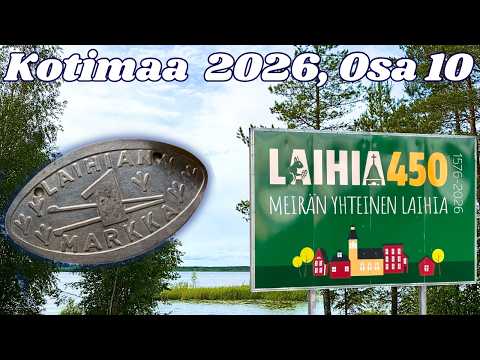 Three Laihia videos: local museums, Kapteenintalo and the Rajavuori trail
 The episode follows the story attached to Kapteenintalo and the opening events of Finland's 1918 civil war. Laihia's municipal heritage information identifies the house as a former officers' residence of the Hulmi garrison and records that disarmament of Russian garrisons began there on the last Sunday of January 1918. This context makes the building an important local-history stop, but the video does not establish that it is routinely open to visitors. Confirm access with the municipality before planning a visit.
 This video is devoted to the Rajavuori nature trail and is identified in its title as July 2020 footage. Municipal planning material describes a marked route of about five kilometres, with an approximately eight-metre lookout tower and lean-to shelters. The clip offers a distinct outdoor perspective from the museum and history episodes. Because it is older footage, it should not be used as a current trail-status update; check access, maintenance and weather conditions before setting out.