Kurikka is best understood as a small city spread across a wide rural landscape. Its present boundaries bring together the former municipalities of Kurikka, Jurva and Jalasjärvi, so a visitor encounters three centres with their own histories and practical services rather than one compact sightseeing district. That breadth is part of the appeal: one trip can follow the story of early electricity at Jyllinkoski, the furniture-making culture of Jurva and the unusual geology of Pirunpesä, with farmland and village roads connecting them.
A city built from three local identities
Kurikka had 19,441 residents on 31 December 2025, according to Statistics Finland. This is the population of the whole present-day municipal area, not only the central town. The city covers about 1,744 square kilometres and stretches roughly 100 kilometres from end to end in a straight line. Kurikka became independent from Ilmajoki in 1868 and received city status in 1977; Jurva joined in 2009 and Jalasjärvi in 2016. Its visitor information still reflects those local identities through separate heritage sites, museums, services and outdoor routes.
Agriculture and small-business activity remain visible parts of the local economy. The city describes Kurikka as a major milk and beef production area and lists around 2,000 businesses and nearly 800 agricultural entrepreneurs. Jurva adds a distinctive craft and manufacturing history: furniture and decorative woodwork became central to the village’s identity over more than a century. Rather than treating this as one industrial story, a visit can trace how farming, workshops and service businesses coexist across a dispersed region.
From a power station to forest trails
Jyllinkoski is one of the clearest places to see how landscape and industry meet. The former hydroelectric power station began producing electricity in 1913 and continued until 1970. A museum opened in the old plant in 1987, preserving its generators and controls alongside collections devoted to information technology, radios, cameras and related equipment. The site sits in a steep river valley, where a roughly 1.5-kilometre out-and-back nature route follows the wooded banks. The route is short but moderately demanding, with steep sections; the city warns that slopes, steps and boardwalks may be slippery in wet or freezing weather.
For a longer walk, the Samuli Paulaharju trail in Kampinkylä runs for 11.6 kilometres. Its two shelters, high viewpoints and eight interpretive signs connect the walk with the writer and folklorist’s work. A panoramic 360-degree video can help visitors preview the setting, but the municipality notes that some trail markers are difficult to see at present. Bring the current map and do not rely on the video alone for navigation.
Woodworking in Jurva, rural life in Jalasjärvi
Jurva’s Carpenter Museum offers a close look at furniture craft through an actual workshop. Its permanent display includes two workrooms, old woodworking machines, tools and a 1950s home interior; changing exhibitions are arranged for the summer season. A documentary series made with local heritage associations adds the wider story of style furniture, travelling sales and changes to the trade. Check the museum’s seasonal schedule before making it the anchor of a trip.
Jalasjärvi brings together more than 20 rural buildings in its local museum grounds, including an old village shop, a smoke sauna, a croft, sculptor Elias Ilkka’s home and a fish storehouse dating to the 17th century. Nearby, the wooden cruciform church was completed in 1800. These are not interchangeable stops: the buildings explain household life and craft, while Pirunpesä in Ylivalli is geological. The cavity is about 23 metres deep and 14 metres wide, formed by long-term weathering before the last glaciation. Local tradition gave it a devil’s-nest story, but the physical formation is a natural weathering feature. A short path and lookout tower make the site accessible in season; check the condition of stairs and the café’s opening days.
Getting around and planning a visit
Highway 3 is the main road approach. Visit Kurikka places Seinäjoki railway station about half an hour by car from central Kurikka and confirms bus connections between the station and the city. Buses and demand-responsive local services also link the Kurikka, Jurva and Jalasjärvi centres, but schedules are not frequent enough to assume a convenient connection without checking. Shops, eateries, lodging and visitor information are listed for the three areas; hours and seasonal availability vary. A car makes it easier to combine the dispersed sites, while public transport can work when planned around the actual departure day.
 Kurikka on film: a forest trail, active travel and Jurva’s furniture craft
 Visit Kurikka’s short film Aktiiviiliikkujan Kurikka introduces the destination from the perspective of an active visitor. It works as a broad orientation to the city’s outdoor and sports offer, which ranges from riverside walking to routes in the former Kurikka, Jurva and Jalasjärvi areas. It is not a timetable or trail-condition notice, and it should not replace the municipality’s current route pages. Use it to decide which kind of day interests you, then verify location, difficulty, opening and transport details before setting off.
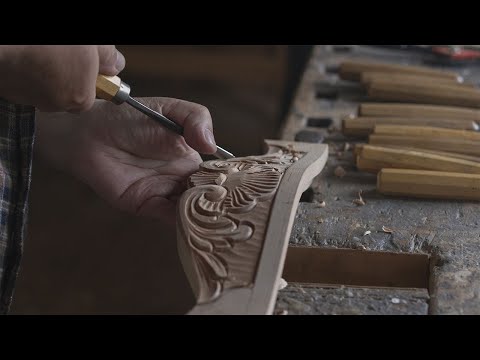 Story of Jurva’s episode on style furniture belongs to the locally produced documentary series Puuseppien kylä. The project was made with Jurva’s woodworking museum and heritage association, and its first episode focuses on the village’s furniture-making tradition and skilled cabinetmakers and decorative carvers. The series places that craft in a history of more than a century and asks how it can be carried forward. This is the most focused film in the selection for understanding why furniture craft became part of Jurva’s identity; museum hours remain seasonal.