A coastal municipality, not one compact town
Malax lies on Finland’s Ostrobothnian coast, about 25 kilometres from Vaasa, but it is better understood as a municipality of villages and shorelines than as a single town centre. Its present form dates from 1973, when Malax, Petalax and the island municipality of Bergö were joined; northern parts of Pörtom followed in 1975. Statistics Finland counted 5,392 people across the whole municipality on 31 December 2025. In the same year, Swedish was the mother tongue of 84.4 per cent and Finnish of 9.2 per cent of residents. Swedish is the natural local edition for this bilingual municipality, while Finnish is also an official language.
The geography helps explain the variety of a visit. The municipality covers 1,954 square kilometres, including a large sea area, and has 338.7 kilometres of shoreline. A day here is a route between the church village, the river, Åminne’s maritime setting and, with a ferry crossing, Bergö. A car or bicycle is useful because the attractions and trailheads are spread across the municipality.
Church hill and the river that once powered work
Malax Church anchors a cultural walk around Kyrkbacken. The municipality has marked a 4.6-kilometre route with 16 information signs and QR codes; it is designed to be accessibility-adapted and can be shortened. The current church is the parish’s third. Built in 1829 by Henrik Kuorikoski to plans by Charles Bassi, it replaced an older building that local heritage records say could no longer safely hold its congregation. Earlier churches stood in the area, including a church built in 1602. The parish became independent in 1607; these dates belong to parish history, not to the formation of the modern municipality.
From the church hill, the Malax River leads toward Åminne. It runs for about 11 kilometres within the municipality and once served both transport and industry: small rapids drove flour and saw mills. A historical economic map covering 1753–1801 records 24 mills in the parish, seven along the river near the rectory. Långfors mill survives as a museum landmark. The stone bridge beside the rectory dates from 1888; its granite piers were shaped to face the spring ice, and the crossing took its present form in 2006. Together, river and bridge make the local landscape legible as a working place rather than a backdrop.
Nearby, the red Sockenmagasinet is identified by the municipality as Malax’s oldest building. It was built in 1754 as a reserve for surplus grain, then put into use from 1814 as both a store and a grain-loan institution. The building’s present exterior dates from 1810, and tree-ring analysis of its timbers supports the early date. It is a compact way to see how local communities prepared for shortages before modern supply systems.
Boats, farm life and the archipelago
Åminne is the municipality’s strongest maritime stop. The Kvarken Boat Museum displays 119 boats and canoes, 168 engines and more than 4,000 other objects connected with fishing, seal hunting, boatbuilding and archipelago life. The collection is spread across 15 buildings in a historic shore setting, so allow time to move through it. The museum’s public season is in summer; in 2026 it opened from 23 June to 9 August, Tuesday to Sunday, with other visits by arrangement. Nearby summer services include a restaurant, cottage accommodation, guest harbour, beach service, swimming beach and mini golf, but hours and availability vary by season.
Brinken Museum offers a different perspective: an open-air collection of 20 buildings, a restored garden and exhibitions about everyday life in the region. The Iron Age Trail adds a much older layer. Its 800-metre and 1.8-kilometre paths pass burial cairns and cup-marked stones; the municipality dates settlement evidence in the area to 200–700 CE. This is evidence of activity in the landscape, not proof that a modern village was founded in the Iron Age. The trail is officially open from May to September. Fäbodstigen, a one-kilometre path, marks 15 former summer grazing cabins, while the Bergö trail offers 3.5- and 8-kilometre options through forest, bog and rocky ground.
Bergö itself has no fixed road connection. A scheduled vehicle ferry links the island with the mainland, where the village’s boat sheds and shoreline invite a slower stop. Check the ferry timetable before setting out, especially if planning to combine the island with a museum or walk on the mainland.
Work, services and getting there
Malax’s economy is broader than its coastal image. A municipal employment profile in the 2024 housing policy program places care and social services and manufacturing among the largest sectors, followed by construction; agriculture, forestry, fishing, trade, education and transport also feature. The municipality maintains business areas at Brinken and Norra Brinken, and at Bofjärden in Petalax. The landscape of fields, working shoreline and industrial plots is part of the same lived municipality.
From Vaasa, Malax is roughly 25 kilometres away. The municipality says public bus services between the two are operated by Ab Strandlinjetrafik with regional authority support; use Matka.fi or the operator’s timetable to check stops, fares and departures for your date. There is no fixed road to Bergö, so visitors need the ferry. Once in Malax, local walking routes range from the accessible-adapted Kyrkbacken cultural circuit to forest and wetland trails, but surfaces and access differ. Check the municipality’s current trail notes, museum opening dates and ferry timetable before travelling.
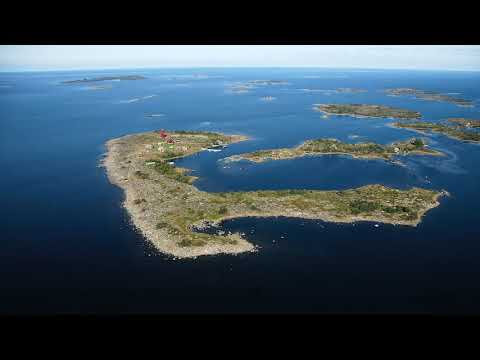 Malax in three films: welcome, boat heritage and local dialect
 This short film is specifically about the Kvarken Boat Museum, a useful match for one of Malax's strongest visitor experiences. The title is given in Swedish, Finnish and English, and the video metadata identifies it as a 2011 publication by Ilias Missyris. The museum's own current information documents the scale of the collection and its summer opening season. Watch this as an audiovisual introduction, then check the museum's official page for present access, dates and services.
 Malax residents have traditionally been called stojetare. This archival clip is a reading of local poet Uno Fogde's text about the nickname, performed by Siri Hagback; the National Library of Finland's archive record connects the text with a book published by the Malax Museum Association. It offers a language-and-memory perspective that the landscape films cannot provide. The recording is an older cultural document, not a practical guide, and its value lies in hearing a local voice explain a local expression.