A municipality shaped by a river and a wide horizon
Ilmajoki lies in South Ostrobothnia, where the Kyrönjoki crosses broad fields before continuing toward the coast. Statistics Finland counted 12,405 residents in the whole municipality on 31 December 2025; that figure covers Ilmajoki’s villages and countryside as well as its central settlement. The municipality dates its chapel parish to 1516, while its modern municipal foundation came in 1865. Those dates tell different parts of the story: a long-lived parish landscape and a much later local-government unit.
Alajoki: a working landscape, not a backdrop
The open fields of Alajoki are one of the area’s most distinctive experiences. From the road and river crossings, the land reads as a broad, low plain, broken by farms, bridges and the Kyrönjoki itself. It is a landscape of active cultivation as well as heritage; the view changes with the season, from spring water and new growth to summer crops and the quieter geometry of winter. The region’s agricultural character can also be read in the large South Ostrobothnian farmhouses that appear in the cultural route materials. Ilmajoki’s visitor identity therefore rests less on a single monumental sight than on seeing how settlement, farming and the river fit together.
Jaakko Ilkka, the church and a layered civic memory
Ilmajoki is strongly associated with Jaakko Ilkka, a historical landholder and leader of the peasant forces during the Cudgel War of 1596–97. Municipal material records that he was executed in 1597. The Ilkan kenttä memorial area keeps this past visible, with a statue, museum, old cemetery and nearby monuments. The historical record and the later heroic image should be kept distinct: the memorial landscape shows how the rebellion has been remembered locally, but legend and commemorative language are not extra proof of what happened. Nearby, the present Ilmajoki church was completed in 1766. Its church museum and the Ilmajoki Museum offer a way to move from national history to parish and household life.
Museums, craft and the village of Koskenkorva
The compact Ilkan kenttä area can anchor a half-day walk. Municipal cultural mapping places the Ilmajoki Museum, church museum, Yli-Laurosela house museum, Opera Arena, Aallon artillery heritage house and several memorials within walking distance. The museum’s church-like exterior and local collections give the area a distinctive civic centre. A separate outing leads to Koskenkorva, a village whose name is familiar far beyond Finland. The Koskenkorva Museum interprets the history of alcohol production and the village; the neighboring Könni Museum tells another local story through the work of clockmakers. They are seasonal or appointment-based attractions, so check the current opening information before travelling. Local guides can also arrange walking or bus tours for visitors who want the longer story behind the monuments and farmsteads.
A cycling circuit and an opera by the water
The seven-bridge cultural cycling route is one of Ilmajoki’s most practical ways to connect its dispersed points of interest. Municipal material maps around 70 cultural stops, while the annual public ride has been described as a loop of more than 30 kilometres around the river, with a longer option through Huissi and Koskenkorva. Visitors can choose a short section rather than attempt the entire circuit. Each stop has its own access conditions: some are visible outdoors, while museums, homes and workshops keep seasonal hours. In summer, Ilmajoen Musiikkijuhlat adds opera and concerts at the riverside Opera Arena. Its program changes from year to year; it is a genuine cultural event rather than a permanent attraction open every day.
Getting there and planning time
Seinäjoki is the nearest major rail gateway. From its railway station, regional buses serve the Seinäjoki–Ilmajoki corridor; the municipality participates in the wider route continuing toward Kurikka, Kauhajoki and Teuva. Visitors can also reach the area by road, with the river villages and museums spread across a large rural municipality. Check the live Matkahuolto planner for the date and stop you need, then confirm whether a booked museum or event is open. A rewarding first visit pairs the Ilkan kenttä walk with one museum, then follows the river landscape toward Alajoki or reserves a separate trip for Koskenkorva. The value of Ilmajoki is in those transitions: from memorial to farmyard, from open plain to village, and from everyday countryside to a festival stage.
 Ilmajoki in three films: the river plain, the visitor landscape and opera
 Ilmajoen Musiikkijuhlat presents the riverside Opera Arena, a venue tied to the municipality’s recurring summer opera and concert program. The film helps visitors picture the setting and understand why music is part of Ilmajoki’s cultural profile. It does not establish what will be staged in a future season; consult the festival’s current program, ticket information and access details before planning around a performance.
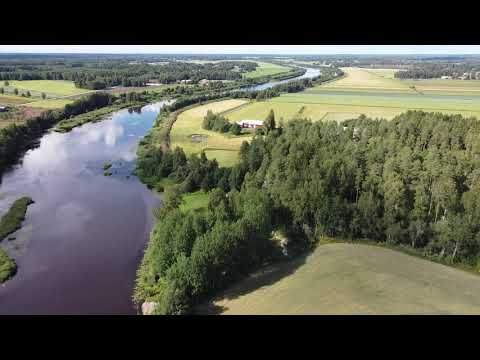 Nordic Skyview’s aerial view of the Kyrönjoki offers a visual sense of the broad river corridor that shapes the surrounding plain. It is useful as landscape context for a visit to Alajoki and the river crossings, while the video itself should not be read as a ground-level route guide. Pair the view with mapped public roads and cycling information, and follow local conditions near the water.