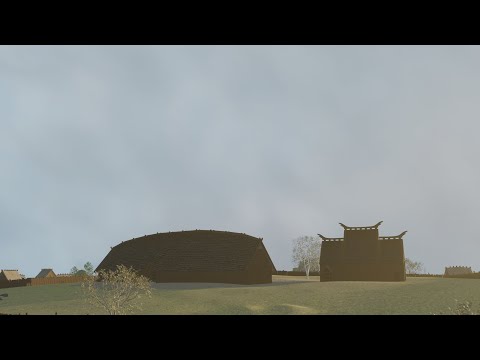
Uppåkra is not a compact town with a traditional centre. It is a place-name on the open Lund plain, best known for an extensive archaeological landscape beside farms and the present-day parish church. The visitor experience now has a clear focus: the archaeological remains, a new interpretation centre and a quiet walk through an exceptionally long human story. The 2023 Swedish population tables do not give Uppåkra a separate statistical locality count. For context only, Statistics Sweden counted 27,152 residents in the whole municipality of Staffanstorp on 31 December 2023; that figure is not a population estimate for Uppåkra itself.
A settlement still being interpreted
The Uppåkra archaeological foundation dates the Iron Age settlement from sometime in the 100s BCE to about a thousand years later. The site spreads across roughly 45 hectares, but only a small fraction has been excavated, so the ground still holds far more evidence than visitors can see. A first dig exposed cultural layers in 1934; systematic work returned in 1996. Archaeologists have documented imported and locally made objects that place the settlement in long-distance exchange, while a major building now studied as a hall remains the subject of research. The name Härskarhall belongs to the foundation's interpretation and project, not proof that a specific ruler lived there. The current Hallen på höjden investigation is planned through 2026, and conclusions may change as new evidence is examined.
What visitors find today
A new archaeological centre opened on 7 November 2025. Its exhibitions, guided activities and café make the site more than a field visit; the centre also presents ongoing research and recently interpreted finds. Outside, an independent gravel path lets visitors walk around the remains and read the landscape at ground level. The foundation lists step-free access features, toilets and free parking when spaces are available. These facilities and opening schedules can vary, so check the centre's own visitor page before setting out.
Uppåkra church adds a different historical layer. The brick neo-Gothic building was completed in 1864, replacing a medieval church on the same site that dates to the 1100s. Its altar retable came from the earlier church; the wooden structure is from the 17th century and its paintings were added in the 18th. The parish publishes seasonal opening hours, not a permanent daily visitor schedule.
Open fields, nearby services and routes
The surrounding countryside is still agricultural, while the visitor centre and church anchor a small but distinctive cultural destination. The municipality also identifies a commercial area in nearby northeast Hjärup, by Gamla Lundavägen and Väståkravägen. For a wider rural outing, local cycle routes run through open fields and link cafés and farm shops across the Staffanstorp area.
Regional bus 130 runs between Lund and Malmö and stops at Uppåkra Väståkravägen; the walk from there to the archaeological centre takes about 15 minutes. Cyclists can approach on paths from either city, using Gamla Lundavägen and following local signs. By car, the centre directs visitors from E22 via Lund södra and Route 108. Check the Skånetrafiken journey planner, excavation notices and opening times before travel; routes and access can change during works.