
A small centre beside the Ätran
Svenljunga sits in the inland river landscape of Kind, where the Ätran passes through a compact town centre and older road lines meet. It feels more like a practical gathering place for its rural surroundings than a resort built around a single attraction: the square, municipal services, shops and everyday facilities are part of the visit, while woodland, farms and water are close beyond the streets. Statistics Sweden counted 3,717 people in the statistical built-up locality, or tätort, Svenljunga, on 31 December 2023. This is SCB's mapped town area, region 1465TC106, not the larger municipality of Svenljunga and its scattered villages. The river is a defining feature, but a visitor should know that the old stone-arch bridge is closed and fenced after a partial collapse in 2022. Do not step onto it or approach the barrier; the municipality warns that doing so can be life-threatening.
The locality's history makes sense through movement. The municipality describes the site as a crossroads from the early medieval period: one route linked the coast along the Ätran valley with Falbygden, while another ran between Jönköping and Gothenburg. That position helped turn a small settlement into a place to meet, trade and administer the surrounding district. Today, the same central-place role is visible in public services, the bus terminal, town-centre shops and the community facilities around Moga Fritid and Hammarlind.
Records of a court village, markets and industry
The first written mention of Svenljunga dates to 1427, when the name appears as Swinalyongha. The municipality explains the name through pigs and heather-covered land; it is a local linguistic interpretation, rather than a confirmed account of exactly how the place was named. More firmly documented are the village's administrative and travel roles. Svenljunga became the court place for Kinds härad in 1627, and an inn followed under the 1636 inn ordinance. In the sixteenth century, records describe barley and rye fields that could not meet all local grain needs. Cattle raising was better suited to the area and supplied meat, hides and butter; ironworking, turning and textile crafts also contributed. The town's story grew from countryside exchange, not from a single dominant trade.
That balance changed with the railway. The Borås–Svenljunga line opened in 1885, strengthening the station settlement and linking local producers to larger markets. A town centre with more urban-looking two-storey houses took shape near the market square. In the first decades of the twentieth century, the local economy diversified into tanning and leather processing, sawmilling, dairy and brewing, woodworking and clothing. The cultural-building inventory records that the fur-processing and dyeing company Skandinavisk Pälsberedning och färgeri had about 300 workers in 1946. These are historical facts, not a description of present-day employment. Svenljunga became a köping in 1945 and the current municipality was formed in 1971. Today the town is the administrative and service centre for a wider landscape, with public services, local businesses, retail and rural livelihoods sharing the local economy.
The old stone bridge over the Ätran is a reminder of the crossroads that predate the railway. A building inventory says it was probably built in the eighteenth century and repaired in 1864. But its current condition matters more than its age: a section collapsed in November 2022 and the municipality has decided to leave the surviving structure as a monument while it evaluates options. It remains behind a permanent barrier. Local folklore attaches a tragic tale of Sköna Magnhild to the bridge and sometimes calls it “Mordbron”; that story belongs to tradition, not verified documentary history. Admire the landmark only from a safe, publicly open viewpoint.
Culture and everyday places
For local stories, Svenljunga Municipality's digital Museum Hammarlind preserves a collection donated to the municipality by the Hammarlind family. The separate activity house Hammarlind is a community venue for meetings and activities; it should not be confused with the online collection. The library and Teaterbiografen add more accessible cultural stops, while exhibitions, screenings and events vary through the year. Around the square, shops, cafés and restaurants give the centre a useful everyday rhythm. Moga Fritid has sports and outdoor facilities, but its swimming hall is currently closed for a major renovation that began in summer 2026 and is expected to last until about spring 2028. The municipality says the gym and sports hall remain available on ordinary schedules during the work; check for updates before planning a visit.
Walks, nearby countryside and a practical route
Several uneven, unprepared exercise loops start at Moga Fritid, ranging from short circuits to five- and eight-kilometre options; a five-kilometre lighted track also starts at Högvalla sports ground. They are close to town but are woodland routes, not paved promenades, so footwear and conditions matter. For a more historical landscape, Röstorp culture trail in Örsås passes ancient field systems, settlement traces and graves before reaching remains of nineteenth-century crofts. It is a nearby rural excursion rather than a route through the centre. The Ätran valley also offers a natural way to understand the old links south toward Falkenberg and west toward Kind's neighbouring market communities.
For an arrival by public transport, Västtrafik lists bus line 361 between Svenljunga and Borås, with the Svenljunga terminal as a stop. Exact connections and onward services change by date, so use the journey planner rather than relying on a remembered timetable. The municipality's visitor map gathers experience sites and current practical information. Confirm transport, route conditions, the bridge safety restriction, event times and Moga Fritid's renovation status before setting out.
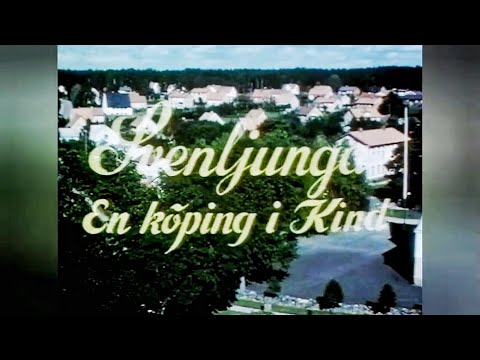 Svenljunga through time, road and community
 This short cycling video describes a ride from Falkenberg to Svenljunga, mostly on Ätradalsleden, then on gravel roads after the route's first stage by Fegen. It is a useful idea for an active approach to the Ätran landscape, but not a substitute for current route maps, surface conditions or closures. Check the local route information and plan the full distance to suit your ability.
 Svenljunga Municipality's documentary follows three residents who had to leave their countries of origin and found a new home in the town. The verified description says local volunteers made the film in spring 2025. It offers a contemporary community perspective alongside the archival and cycling selections; it is a long documentary rather than a quick travel guide, and the review makes no claims about specific scenes beyond the published description.