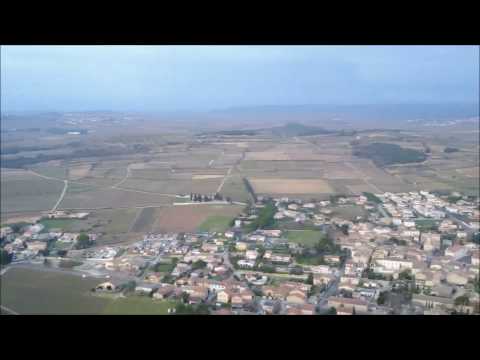
A village shaped by vineyards
Plaissan sits in the Hérault department of Occitanie, within the Communauté de communes Vallée de l’Hérault. INSEE’s 2023 reference figures for the whole commune are 1,718 municipal residents and 21 counted separately, or 1,739 in total; these legal populations took effect on 1 January 2026. They describe the municipality, not a seasonal visitor count. The national statistics office places Plaissan in the Lodève arrondissement and Gignac canton, in Montpellier’s attraction area and the Clermont-l’Hérault living area. The intercommunal description gives the village a clear shape: a compact old Quartier Haut among vineyard slopes, with pine woodland above it.
Church, gate and the expanding wine village
The local tourism office says that medieval Plaissan began as scattered rural holdings. The parish church of Saint-Pierre is documented from the 12th century and, according to that account, moved three times; its latest rebuilding in the faubourg dates to 1875. The regular quadrilateral street plan and the remains of an entrance passage called the Portalet help explain how the settlement’s core was organized. The office says the village does not appear to have been fortified before the 14th century, a qualified interpretation rather than a precise building date. A substantial residence known locally as the château has overlooked the site since the late 18th century. Nineteenth-century viticulture then helped spread building beyond the old walls. The effect is visible in the contrast between the tighter older quarter and later growth outside it.
The landscape’s other marker is Saint-Mamert chapel, now in ruins among the pine-covered heights. The community’s commune page says the chapel was connected to Gellone Abbey and describes it as visible from the surrounding area. A regional welcome brochure mentions Fontaine Roqueblave and a walk toward the chapel remains. These references establish a local heritage destination, but not today’s access conditions.
Work, services and a route to verify
Winegrowing remains part of Plaissan’s documented identity, while current local listings also show food businesses, small shops and independent creative trades. INSEE recorded 31 employer establishments at the end of 2024; the small total spans agriculture, construction, trade and services, and public, education, health and social activity. It is a dated business count, not a complete portrait of employment. The official tourist directory lists, among other things, a pizzeria, restaurant and makers in ceramics, visual arts and leatherwork; confirm opening and booking details with each operator.
For walking, a 2023 issue of the Vallée de l’Hérault community magazine announced an 11-kilometre Balcons de Saint-Mamert outing starting at the mairie. A 2026 community record gives 11.5 kilometres and also describes this itinerary among routes still being developed and checked. Because the published lengths differ and the latest record does not settle the current track or its marking, treat those figures as route references rather than a guarantee of an open, signed walk. Ask the mairie or tourism office for the current map, and check local access and forest-fire orders before heading into the woods. Service-Public lists mairie reception Monday 09:00–12:00 and 13:45–18:45, Tuesday 09:00–12:00 and 13:45–17:00, Wednesday 09:00–11:30, Thursday 09:00–12:00 and 13:45–17:00, and Friday 09:00–11:30; urban-planning reception is Thursday only. Hours can change, so confirm before travelling.