the Diary City, a rebuilt town and the landscapes of the Tiber
Pieve Santo Stefano’s most distinctive attraction gives ordinary people a voice. In this Upper Tiber valley town, a national archive and a small museum turn letters, notebooks and personal memories into an encounter with Italian history. Outside the centre, the Tiber, Montedoglio reservoir and paths towards Cerbaiolo provide a second itinerary through water, woods and scattered settlements.
| Municipal population at 1 January 2026 (estimate) | 2,966 |
|---|---|
| Municipal area at 1 January 2025 | ≈ 156.09 km² |
ISTAT population estimate at 1 January 2026, aligned with the provisional 2025 demographic balance. Area at 1 January 2025, from the classification updated in February 2026. Both figures cover the whole municipality, including outlying settlements, rather than only the historic centre.
An old settlement with a largely rebuilt centre
Archaeological finds reveal human activity before the Middle Ages. The Tiber encouraged movement and use of woodland resources, while the medieval settlement later experienced the changing powers of the surrounding territory and Florence. Its present name does not identify a town preserved unchanged since antiquity.
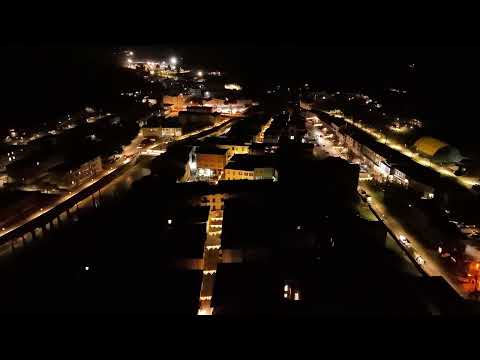
Two disasters altered Pieve profoundly: the flood of 1855, which also destroyed documents and artworks, and demolition during the German retreat in 1944. Reconstruction accounts for the modern appearance of many houses. A visit focused only on medieval façades would miss its strongest subject: the relationship between loss, remembrance and a community’s renewed life.
The National Diary Archive
Saverio Tutino founded the archive in 1984 to collect autobiographies, diaries and correspondence written by ordinary people. A foundation promoted by the municipality followed in 1991. Individual experiences illuminate larger changes in work, war, families and migration.
The manuscripts are more than exhibition objects: they are preserved, catalogued and made available for study. The annual Premio Pieve Saverio Tutino helps bring new writing into the collection. Anyone seeking material for research should arrange access with the institution. A museum admission does not provide unrestricted access to its archival holdings.
The small museum of diaries
Opened on 7 December 2013 and dedicated to Tutino, the Piccolo Museo del Diario interprets part of this material through an interactive visit. Drawers, recordings and pages encourage attention to individual lives. Booking a time slot is advisable rather than treating the museum as a room to enter at any moment.
Two works convey its unusual character: the autobiography of Sicilian road worker Vincenzo Rabito and the bed sheet on which Clelia Marchi, a farm woman from the Mantua area, wrote her life after losing her husband. These stories came from other regions. Their importance here extends well beyond a chronicle of the host town.
Walking beyond the archive
The town hall and churches provide reference points for understanding Pieve before its destruction. Glazed terracottas connect the town with the spread of Della Robbia art through the valley. A walk can follow the meeting of surviving buildings and reconstructed spaces without assigning the same date to every façade.
The octagonal Tempietto di Santa Maria del Colledestro stands near the Tiber. The tourist office also highlights a mural celebrating the Filarmonica Ermanno Brazzini and a musical tradition dating from 1717. Local memory includes community associations and performances as well as manuscripts and religious buildings.
Cerbaiolo and the pilgrimage paths
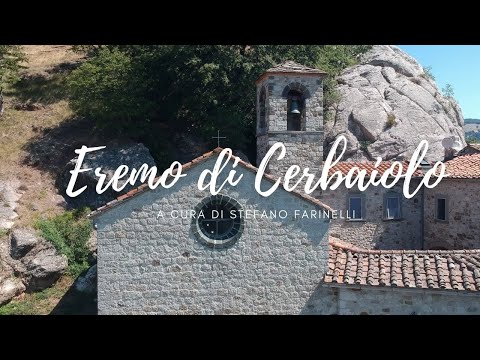
The Cerbaiolo hermitage lies outside the centre in rocky Apennine country. Monastic and Franciscan history connects it with the Upper Tiber valley’s pilgrimage routes. It remains a religious community, with a rhythm and expectations different from those of an urban monument open continuously to visitors.
Its own information lists pilgrim accommodation on specified days by prior arrangement. A bed should not be assumed available on arrival without a booking. Plan a current walking route, suitable footwear and the ascent separately from the town circuit: this is an excursion into the hills rather than another doorway beside the museum.
Montedoglio and neighbouring places
Montedoglio is an artificial reservoir. Local visitor information places it about ten kilometres from Pieve and describes water activities and birdwatching. Access points, equipment hire and available activities vary by shore and season; the whole edge is not one continuous serviced beach.
Sansepolcro, Anghiari and Caprese Michelangelo add painting, historic streets and Michelangelo’s birthplace. To the north, the wider area connects with Romagna. The Tiber’s source on Monte Fumaiolo is a trip outside this municipality and should be distinguished from the river flowing through Pieve itself.
Food and somewhere to stay
Mushrooms, truffles and woodland ingredients feature in valley cooking when available. Il Portico is the restaurant that Euro Hotel identifies in the town centre. It can fit around the museum visit, subject to its actual service and booking arrangements.
Euro Hotel has rooms by the E45 at kilometre 150 and advertises electric vehicle charging. The hotel and its central restaurant are separate arrival points. There are therefore overnight options within the municipality as well as religious hospitality by agreement. The exact location matters more than the shared town name when choosing somewhere without a car.
Connections and a longer stay
The E45 links the area north towards Cesena and south towards Sansepolcro and Perugia. Arezzo offers another road and rail gateway. Public transport requires checking the last connection: changes announced by Autolinee Toscane in October 2026 include services via Pieve limited to school-calendar days.
An exploratory stay can combine a museum day with ordinary weekday journeys and services. Shops and reliance on a car differ between the main town, hamlets and countryside. The municipal visitor office supplies contacts for visits, bicycle hire and sports facilities, useful for discovering what is available beyond a brief motorway stop.
Sources
- Regione Toscana: storia, monumenti e territorio
- Archivio Diaristico Nazionale: fondazione e raccolte
- Premio Pieve: manoscritti e percorso museale
- Ufficio turistico: museo, lago e luoghi del territorio
- Comune: servizi e contatti per organizzare le visite
- Eremo di Cerbaiolo: vita religiosa e accoglienza
- Euro Hotel: ubicazione, pernottamento e ristorante Il Portico
- Autolinee Toscane: collegamenti della Valtiberina, ottobre 2026
- ISTAT: resident population estimate, 2026
- ISTAT: classifications and municipal area