Poppi is not simply a castle with a village below it. It is a hilltop centre that grew around a seat of power and still faces the Casentino, the upper valley of the Arno, from a position visible across the surrounding plain. ISTAT’s provisional estimate for resident population on 1 January 2026 is 5,732 for the whole municipality of Poppi, including its smaller settlements; it is not a count of the walled historic centre alone. The distinction matters: the medieval lanes are one part of a larger inhabited territory that reaches into the Apennine foothills and the forested uplands.
A castle documented before it took its present form
The castle’s earliest documentary attestation is dated 1169 in its own historical account. The surviving building, however, is the result of later phases. During the second half of the thirteenth century, Count Simone da Battifolle transformed an earlier fortified site into a more imposing residence and political centre for the Guidi family. The castle’s compact outline, elevated tower, inner courtyard and stone stairways make the history of that authority legible in the townscape. The attribution of parts of the design to Lapo or Arnolfo di Cambio belongs to architectural tradition and remains an attribution, not a signed commission; claims that Poppi Castle directly served as the model for Florence’s Palazzo Vecchio should likewise be treated cautiously.
In 1289 the plain below Poppi was the setting for the Battle of Campaldino, fought between Florentine Guelph forces and the Ghibellines of Arezzo. Dante Alighieri is closely associated with the battle and the Casentino in local and cultural accounts, but details about his later stays at the castle or the composition of particular passages of the Comedy are not equally secure. A good visit can hold those stories in view without turning tradition into proof. In 1440, the Guidi lost control of the castle to Florence; it became the seat of the Florentine vicar for the valley, shifting from feudal residence toward administration. Today the castle still has a civic role: the municipality identifies it as the home of the town administration, as well as a cultural monument.
Walking the centre around the tower
Begin in Piazza della Repubblica, where the castle occupies the high end of the old settlement. From there, follow Via Cavour and the arcaded street toward the lower approach, pausing to look back at how the tower holds the axis of the village. Poppi’s appeal is in this long, slightly rising sequence: stone façades, doorways, small squares and glimpses outward to the Casentino floor. Inside the castle, the municipal description highlights the Biblioteca Rilliana, with more than 25,000 volumes including manuscripts and incunabula, and rooms used for exhibitions and cultural events. A chapel with a fourteenth-century fresco cycle attributed to Taddeo Gaddi is among the principal works associated with the building. Check what is open on the day, since the castle operates with seasonal hours and may have exceptional closures; the municipality’s current visitor information also says that facilitated access for visitors with disabilities is not presently provided.
Below the castle, the Oratory of Madonna del Morbo adds a different scale and mood. Built between 1651 and 1659, it is an unusual small, hexagonal church with a domed roof. Its name and local account preserve a devotional memory of protection from plague in nearby areas; that is a religious tradition attached to the building, not a medical explanation of disease. The Abbey of San Fedele offers a much older thread. Written evidence places its predecessor monastery at Strumi by 992, before the community and its religious house moved toward Poppi during the twelfth and thirteenth centuries. The church, crypt and link with the hermit Torello show how monastic life became part of the valley’s settlement history.
From a lived valley to the national park
Poppi’s setting explains why a visit often grows into a Casentino itinerary. The valley’s working countryside, chestnut groves, pasture and woodland stand alongside the protected landscape of the Foreste Casentinesi National Park. Nearer cultural journeys include the Romanesque parish church and castle remains at Romena, while Camaldoli and La Verna connect forest scenery with long religious histories. These places are not interchangeable day-trip attractions: their distances, access and opening patterns differ, and the park’s trails may require a separate plan. The national park publishes routes and visitor information; check conditions, seasonal restrictions and trail notices before setting out.
Poppi is also part of a regional economy that cannot be reduced to visitor traffic. The wider Casentino has agricultural and pastoral traditions, woodland work and local craft knowledge, while the castle, heritage sites and outdoor activities support a visitor sector. Contemporary services are spread between the historic hilltop and settlements in the municipality; the rail stop at Poppi is in the valley rather than beside the castle, so arriving by train still means planning the final walk or local connection. This separation between station, valley floor and hill centre is useful to understand before choosing accommodation or carrying luggage.
How to arrive and plan time
Trasporto Ferroviario Toscano operates the Arezzo–Stia line, with Poppi among its stops. The train gives a direct public-transport approach from Arezzo and links onward through the Casentino; Tiemme also lists local bus services in the valley, including seasonal services toward regional destinations. Frequencies and service patterns change by date, weekday and season, so check the current timetable and passenger notices before travelling. Drivers can reach the town from the regional road network, but the historic centre is steep and compact; confirm parking arrangements locally rather than assuming a vehicle can reach every lane. Allow time for both the castle and a slower walk through the centre, then use Poppi as a base only if onward transport to the forests and nearby villages fits the day’s schedule.
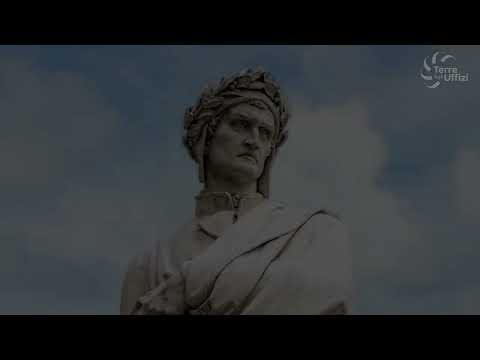 Poppi on film: the Guidi Castle, the Casentino and Dante’s disputed link
 Luigi Livi’s film focuses on the castle itself and on Poppi’s position above the Casentino. The description identifies the hilltop settlement and explains the approach from the valley road at Ponte a Poppi; the video is useful as a visual preview of the silhouette and setting before a visit. It is an independent short rather than an institutional history, so its broad framing should be read alongside the castle’s documentary chronology. The upload date shown for this video is 16 December 2018. It offers a distinct, place-centred view from the more curated Uffizi portrait.
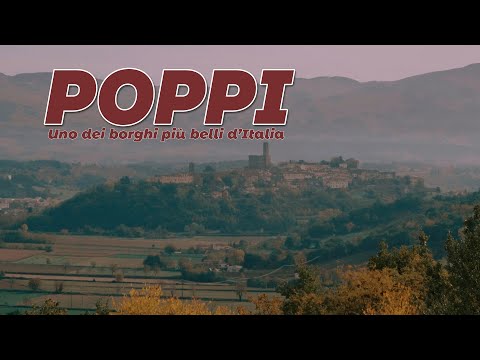 Eats&Travels’ feature follows a visitor’s route through Poppi and its castle and brings together views of the historic centre with stories about Dante and local folklore. Its value is the on-the-ground, itinerary-style perspective: viewers see the town as a visit rather than only as an architectural subject. Some of the narrative concerns—such as the precise place where Dante stayed or composed a particular passage—are presented as local tradition and should not be mistaken for established fact. The video was published on YouTube on 5 November 2020. Check current transport, opening and accessibility information separately before planning a trip.