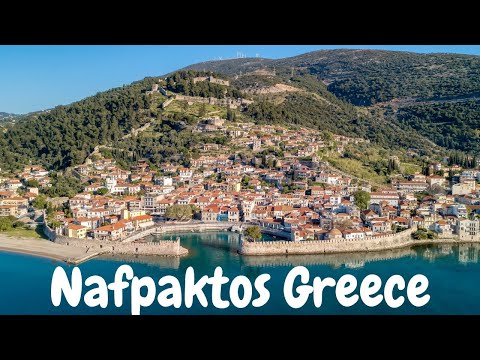
Nafpaktos faces the Gulf of Corinth from a sheltered harbour framed by stone towers. Behind them, fortifications climb the hill in successive enclosures. Greece's national tourism organisation explains that the site was defended in antiquity, while much of the visible complex took its present form under Venice. Calling it simply an ancient castle or simply a Venetian town would miss the sequence of rebuilding.
From acropolis to harbour
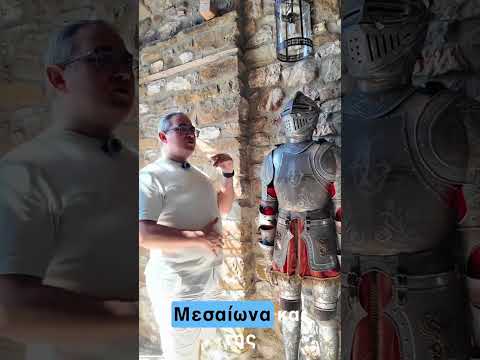
A walk can begin at the narrow harbour mouth and continue uphill through gates, streets and walls. Five defensive enclosures once linked the upper acropolis to the sea. The Fethiye mosque and later churches show how different communities used the area. Higher up, museum displays and remnants of earlier buildings add context to the commanding view. The historic centre is still part of a living town with businesses and residential streets.
Nafpaktos is also associated with the naval battle of 7 October 1571, commonly called Lepanto in western European histories. The engagement took place in the wider Gulf rather than inside the tiny harbour. Annual commemorations use the waterfront as a public stage, but that setting should not be confused with the exact location of every ship. A statue of Cervantes at the harbour recalls a participant whose later writing became internationally famous.
A coast town with inland connections
Patras lies across the gulf and is an important nearby city; the Rio–Antirrio crossing connects the two sides of the region. Roads also lead into mountainous Aetolia. The port, castle and coastal promenade are easy to combine in a visit, while the climb to the upper walls requires more time and suitable footwear. Restaurants and accommodation exist in the town, but current options and opening should be checked. For residents, Nafpaktos offers everyday services beyond its heritage role; employment, housing and traffic deserve their own assessment. Its unusual strength is the nearly continuous line from hilltop defences to inhabited harbour.