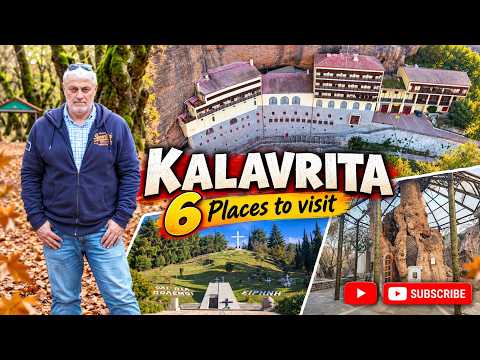
Kalavryta is a mountain town of Achaea reached by a remarkable rail line from the coast. The rack railway from Diakopto opened in 1896 and follows the Vouraikos gorge. Its engineering drew travellers into the hills, but any account of Kalavryta must also face the destruction inflicted by German occupation forces on 13 December 1943. The town should not be reduced either to a scenic train ride or to a single tragic date.
Remembering the massacre
The Municipal Museum of the Kalavrytan Holocaust occupies the former school where women and children were confined as the male population was taken away. Its photographs, documents, belongings and testimony describe the town before the war, the occupation, the killings and the aftermath. The execution site on the hill and its memorial form another part of the visit. The museum's own account records homes and shops burned. A respectful visit allows time to read the evidence rather than treating the site as a brief photo stop.
The railway has its own history. The national tourism organisation describes the gear system that lets trains climb the steep gorge and the sequence of stops between Diakopto and Kalavryta. It is a practical connection as well as a cultural attraction. Services can be interrupted by weather or maintenance, so confirm operation before planning around a timetable.
Town and surrounding mountains
Kalavryta has central streets, accommodation and food services, as well as routes to monasteries and mountain recreation. Nearby sites add further chapters of the Greek independence era, but each needs its own context. Patras and Aigio are important larger connections; the railway links the town to the coast through Diakopto. Anyone considering residence should look at winter access, employment and public services. The strongest portrait holds the scenic landscape and the documented violence of 1943 together without allowing one to erase the other.