a bishops’ town on the Poprad, spa gardens and the Slovak border
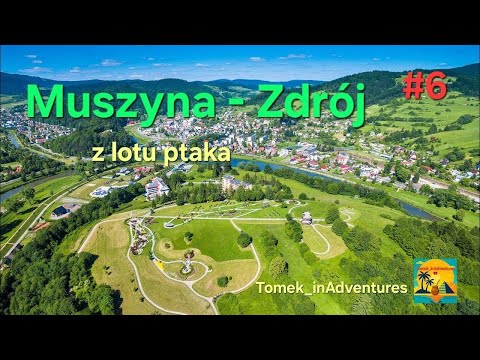
Muszyna occupies the Poprad valley in the Sądecki Beskids, close to Slovakia. Its market, castle hill and gardens at Zapopradzie reveal different aspects of the resort: a historic trading centre, the seat of a bishops’ estate and modern recreation grounds. GUS counted 4,356 people within the town and 10,995 across the whole municipality on 30 June 2026.
| Municipality | Muszyna |
|---|---|
| Whole municipality population, GUS 30 June 2026 | 10,995 |
| Town population within urban boundaries, GUS 30 June 2026 | 4356 |
| Whole municipality area, GUS 1 January 2026 | 141.43 km² |
| Town area, GUS 1 January 2026 | 24.43 km² |
The whole-municipality figure includes other settlements; it is not the population of this individual town or village.
A medieval settlement on a trading route
The earliest secure documents naming Muszyna date from 1288. They concern a settlement between the heirs of Wysz of Niegowić and Paweł of Przemanków, Bishop of Kraków. The frequently repeated date of 1209 rests on a misidentified document and a later forgery.
Muszyna had become a chartered town before 1364. Documents issued under Casimir the Great show a centre receiving settlers and organising trade. The popular date of 1356 cannot simply be treated as an undisputed surviving charter for this town.
In 1391 Władysław Jagiełło granted Muszyna and adjoining estates to Jan Radlica, Bishop of Kraków. Governors administered this extensive property. The expression Państwo Muszyńskie refers to the historic estate and its jurisdiction. Cross-border dealings with Bardejov, now in Slovakia, included supplies of wine and beer.
Castle hill and the recent reconstruction
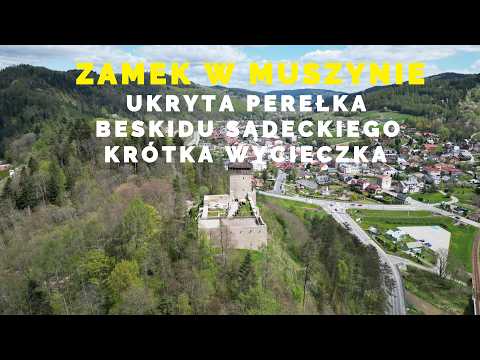
Baszta hill overlooks the meeting of the Poprad, Muszynka and Szczawnik valleys. Its fortified residences developed in stages, and the precise chronology of the earliest structures remains debated. Hungarian forces caused substantial destruction in 1474, followed by rebuilding.
The present attraction combines surviving remains with a modern reconstruction opened on 30 September 2023. Its tower and terraces explain the defensive value of the site. Earlier photographs showing exposed ruins record a different phase of the building’s history.
The operator’s notice checked in November 2026 announces that the castle is closed, with visitors expected back in the spring 2027 season. An interior visit should therefore be left out of a winter itinerary.
Wine cellars beneath the market and museum works
The town hall in the market was built in 2019–2021 above surviving sixteenth-century wine cellars. Tourist information, a mineral-water drinking room and a café occupy the new building. The underground displays also use reconstructions.
An earlier town hall burned in the eighteenth century; its later wooden successor was removed in 1916. The present building restores a focal point to the square, while the cellars provide the direct historic link with the wine trade.
The Państwo Muszyńskie Regional Museum at Krzywa 1 explores local history and culture. It is closed for renovation as of November 2026. A municipal project covers its roof, interiors, multimedia equipment and grounds, with an implementation period extending to the end of 2027. The project deadline does not establish a confirmed reopening date for the exhibitions.
Gardens, drinking rooms and the river valley
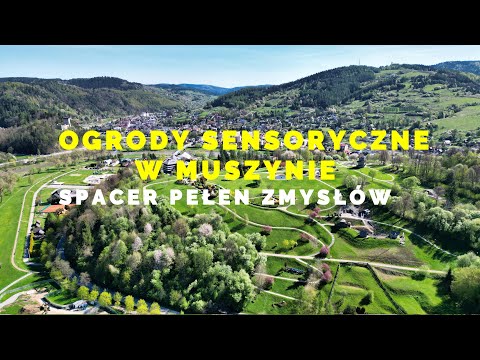
The Sensory Gardens on Sucha Góra are a freely accessible spa park. Eight areas use plants, water, sound and contrasting textures; higher paths overlook the valley. Access from Mściwujewskiego Street is more convenient with a pushchair than the staircase rising from the Antoni drinking room.
The Biblical Gardens beside St Joseph’s parish form a separate attraction. Their themed areas refer to biblical narratives and plants. Individual entry is free, while guided visits require arrangements with the organiser. They fit naturally into a walk through the older side of Muszyna.
Riverside walks, mineral-water drinking rooms and the wider Sądecki Beskids provide options for a longer stay. A gentle park route and a forest ascent require different amounts of time and effort. Accommodation on a particular hillside or riverbank can make a practical difference to daily walks.
Accommodation and places to eat
Jaga guesthouse at Jasna 4 offers rooms and cabins within Muszyna, on a hill above the Muszynka. The municipal listing also describes breakfasts and evening meals by arrangement. Consider the slope when arriving with luggage.
Pensjonat Klimek in the Złockie spa area advertises rooms, a relaxation area and the Strakija restaurant. It is a separate establishment from Hotel Klimek SPA, whose own website announces a suspension of operations until further notice. Availability at one does not establish that the other hotel is operating.
Rzym at Rynek 25 serves Polish and Italian food and pizza. The town-hall café offers another stop in the centre. Listings in Powroźnik, Szczawnik or Żegiestów refer to separate settlements within the municipality and involve an additional journey.
Living here and approaching from Poland or Slovakia
Spa services, guesthouses, restaurants and recreation facilities shape local activity. For a prospective move, useful checks include the walk to the station, the gradient around a property and everyday services outside peak holiday periods. An individual current housing offer provides a sounder budget than an unverified average rent for the entire municipality.
Rail journeys from Kraków and Tarnów run through the Nowy Sącz area; choose the service and destination station from the current timetable. Road approaches connect through Krynica-Zdrój or the Poprad valley from Piwniczna-Zdrój.
Poprad in Slovakia is another relevant travel hub. During published seasonal periods in 2026, Koleje Małopolskie and ZSSK operated Muszyna–Poprad-Tatry trains through Plaveč, Stará Ľubovňa and Kežmarok. A summer timetable does not apply throughout the year. Confirm operation for the actual travel date before relying on this cross-border connection.
Sources and practical information
- Instytut Historii PAN: Muszyna w średniowiecznych dokumentach
- Muzeum Ziemi Sądeckiej: opracowanie historyczne Leszka Migrały
- CKiC: dzieje zamku i otwarcie po odbudowie
- CKiC: zamknięcie zamku do sezonu wiosennego 2027
- Miasto: nowy ratusz i historyczne piwnice
- Miasto: Ogrody Zmysłów, wejścia i dostępność
- Miejski informator: Ogrody Biblijne
- Miasto: modernizacja muzeum, projekt w realizacji
- Krynicka Organizacja Turystyczna: atrakcje i zamknięcie muzeum na remont
- Miejski wykaz noclegów: Jaga, Jasna 4
- Pensjonat Klimek: noclegi i restauracja Strakija
- Hotel Klimek: komunikat o wstrzymaniu działalności
- Restauracja Rzym: kuchnia i adres Rynek 25
- Koleje Małopolskie: sezonowe połączenie z Popradem w 2026 roku
- GUS: ludność według gmin, tablica 11, stan na 30 czerwca 2026
- GUS: powierzchnia gmin i miast, tablice 19–20, stan na 1 stycznia 2026