a royal town on the Ropa, Gothic architecture and the history of merchants and pharmacists
Biecz stands on the Ropa in eastern Małopolska, within Gorlice county. A compact centre, tall town-hall tower, substantial church and surviving fortifications recall a place whose administrative and trading importance once far exceeded its present size. Museums occupy several historic buildings, while nearby villages extend a stay into timber architecture and the Carpathian foothills.
| Municipality | Biecz |
|---|---|
| Whole municipality population, GUS 30 June 2026 | 15,756 |
| Town population within urban boundaries, GUS 30 June 2026 | 4180 |
| Whole municipality area, GUS 1 January 2026 | 98.25 km² |
| Town area, GUS 1 January 2026 | 17.72 km² |
The whole-municipality figure includes other settlements; it is not the population of this individual town or village.
A stronghold, a trading settlement and town rights
Evidence of habitation in the Biecz area reaches back into prehistory, but this does not establish a continuously occupied town from antiquity. An early medieval stronghold and a later market and craft settlement are more directly relevant to the town’s development. Written references occur in the twelfth century.
Magdeburg town rights are associated with the mid-thirteenth century and Duke Bolesław the Chaste. The municipal history treats the precise incorporation date as uncertain. Casimir the Great confirmed the rights in 1363. The stronghold, urban incorporation and later confirmations represent different stages rather than interchangeable foundation dates.
Biecz became a royal town with judicial, administrative and defensive functions. Rulers stayed in local residences. Surviving towers and wall sections record that importance, although the fortifications no longer form a complete continuous circuit.
Southern trade and a changing economy
Routes towards the Kingdom of Hungary connected Biecz with a network of Carpathian towns, including places now in Slovakia. Merchants, crafts and wine trading helped sustain the economy; clothmaking and linen production were among the important occupations.
From the seventeenth century, warfare, epidemics and changing routes weakened its position. Austrian rule followed the first partition of Poland, and Biecz county was abolished in 1783. Regional oil development later created new opportunities for employment.
Today the town supplies services, education and cultural institutions for a wider urban-rural municipality. GUS figures for June 2026 distinguish 4,180 residents within the town from 15,756 across that municipality. Its surrounding villages are separate settlements rather than neighbourhoods beside the same historic square.
The market and Corpus Christi Collegiate Church
The tall town-hall tower provides an immediate landmark and, when the viewing terrace is open, an elevated perspective over the centre. Tower and underground visits belong to the museum’s visitor offer and should not be confused with municipal office hours.
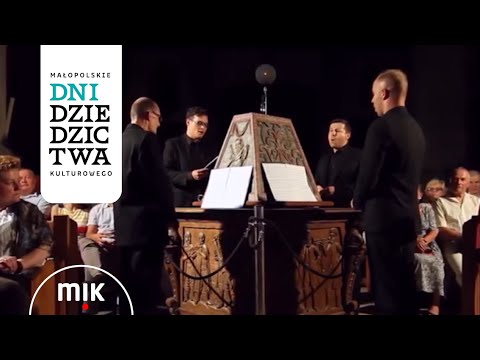
Corpus Christi Collegiate Church was built around the turn of the sixteenth century. Its late Gothic hall contains furnishings from several periods, including Renaissance and Baroque altars, carved stalls and a music lectern from 1633. Włodzimierz Tetmajer completed the chancel painting in 1905 with Apolinary Kotowicz’s participation.
The bell tower and neighbouring defensive remains deserve time as well. Together, the large church, town walls, Renaissance houses and lower river valley show how defence and trade influenced the townscape.
Two museum houses with different stories
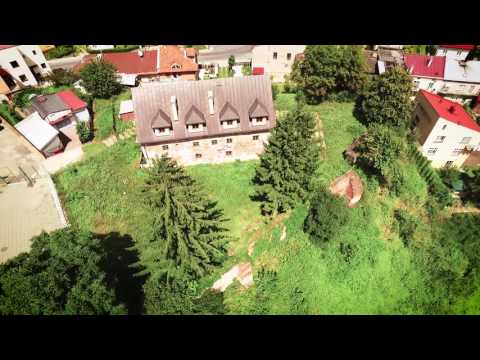
The Museum of Biecz Land operates at separate sites. Dom z Basztą, the House with a Tower, combines the Barian-Rokicki Renaissance residence with an earlier defensive tower. Its pharmaceutical exhibition relates to the pharmacy established there in the sixteenth century, opening a window onto urban occupations.
Kromerówka at Kromera 3 commemorates Marcin Kromer, the historian, diplomat and bishop of Warmia born in Biecz in 1512. It was not his family home. The house dates from 1519 and belonged to the merchant Chodor family before passing to the poet Jan Januszowicz, who remodelled it in 1612.
The Renaissance doorway and vaulted rooms form part of the building’s interest independently of temporary displays. Other museum-managed places concern the town prison and town hall. Confirm which individual sites are accessible, particularly outside the main season.
A charitable hospital, legal history and Jewish memory
Queen Jadwiga’s hospital foundation dates from 1395, while the surviving building is later. It belonged to an older system of support for poor people rather than a hospital operating on a modern clinical model. Restoration work and interior access require separate confirmation.
The town’s judicial role explains the presence of an executioner and the stories surrounding that occupation. Today’s School of Executioners is a museum of historical law. Its name does not establish that a medieval teaching institution of the modern kind existed here: local conference material distinguishes records of the office from the subsequent legend.
Biecz Library occupies the former synagogue. An exhibition recalls Jewish residents whose community history was violently interrupted during German occupation. This adds an essential dimension to a town often introduced chiefly through royal privileges and defensive architecture.
Binarowa and wider excursions
St Michael the Archangel’s timber church at Binarowa forms part of the UNESCO-listed wooden churches of southern Małopolska. Binarowa is a separate village in the municipality, outside Biecz’s urban centre. Its richly decorated interior warrants an additional visit arranged around services and visitor access.
Nearby Gorlice and Jasło offer larger-town services and possible extensions to a stay. Local heritage routes also include First World War cemeteries and places connected with oil extraction. Choose a route according to whether the visit is a walk around town, a driving itinerary or a longer cycling outing rather than assuming every attraction is within the walls.
Staying and eating in the right settlement
Hotel and Restaurant Grodzka at Kazimierza Wielkiego 35 provides accommodation and Polish and regional food. Its restaurant publishes current hours, menus and arrangements for celebrations. Ask about private functions when planning a weekend meal.
Villa Historia at Węgierska 13 is listed by the municipality as guest rooms rather than a large hotel. Its position allows a stay within the historic centre. For a more economical option, the municipal directory also lists the school youth hostel at Parkowa 1; availability should be arranged with the institution.
Hotel and Restaurant Mimoza is at Libusza 1, outside Biecz itself. Farm accommodation in Korczyna or Strzeszyn likewise means a stay in another village. That distinction matters for a short visit without a car as well as a quieter base for several days.
Rail from Kraków and regional approaches
Biecz station lies on the Stróże–Jasło railway near the historic centre. The Koleje Małopolskie timetable checked in November 2026 includes Jasło services and a selected train to Kraków Główny. The latter took approximately two hours thirty-seven minutes in that schedule: an example of a particular service rather than a fixed duration for every journey.
From Kraków or Tarnów, match a direct train or interchange to the actual date. Jasło is a natural regional connection for an approach from Rzeszów. Drivers reach the area along the national road 28 corridor between the Jasło and Gorlice areas.
For someone considering a move, weekday work connections, the uphill walk from the station and a property’s distance from services deserve attention. There is no verified single current average rent covering both the town and every village in the municipality. Compare actual listings and everyday transport before choosing a home.
Sources and practical information
- Gmina Biecz: historia osadnictwa i miasta
- Gmina: zabytki, rynek, mury i szpital
- Muzeum Ziemi Bieckiej: rzeczywiste dzieje Kromerówki
- Muzeum: kolegiata i jej wyposażenie
- Muzeum: organizacja zwiedzania
- Konferencja Biecz–Bardejów: legenda Szkoły Katów
- Gmina: ekspozycja pamięci mieszkańców żydowskich
- Muzeum: kościół UNESCO w pobliskiej Binarowej
- Gmina: obiekty noclegowe i restauracje wraz z adresami
- Grodzka: oferta restauracji i aktualne godziny
- Koleje Małopolskie: stacja Biecz i aktualny rozkład
- Gmina: miejscowości, instytucje i usługi
- GUS: ludność według gmin, tablica 11, stan na 30 czerwca 2026
- GUS: powierzchnia gmin i miast, tablice 19–20, stan na 1 stycznia 2026