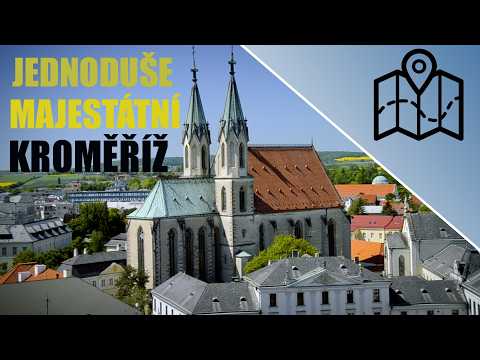
Kroměříž lies on the Morava River in the Zlín Region. Its old centre, Archiepiscopal Castle and two markedly different gardens tell the story of a former administrative and cultural seat of the bishops of Olomouc. The castle, Castle Garden and Flower Garden have been on the UNESCO World Heritage List since 1998. That designation applies to a defined ensemble of buildings and gardens, not indiscriminately to every part of town. Kroměříž also has a main square, museums and the everyday life of a regional city.
From market settlement to bishops' town
Municipal historical material gives 1110 as the first written mention of Kroměříž. In the thirteenth century, Bishop Bruno of Schauenburg raised a market settlement to a fortified town; the castle administration gives the date as 1261. A castle was built on the site of the later residence and adapted as the bishops' needs changed. These records establish medieval beginnings for the present city. They do not support a claim that Romans, Greeks or another ancient people founded it. Earlier occupation of the wider region would be a separate question from the origin of this particular town.
Wars and fires damaged the buildings, but the bishops repeatedly invested in the residence and city. In the second half of the seventeenth century, Bishop Karl of Liechtenstein-Castelcorn was associated with the Baroque castle and formal gardens. The residence preserves ceremonial rooms, a picture gallery and a historic library, but the spaces available differ by tour. The tower gives a view over the city plan and the positions of both gardens. It is a different experience from a guided visit to the rooms, so check what a chosen ticket includes.
Two gardens with different designs
The Castle Garden, Podzámecká zahrada, begins beside the residence. It has Renaissance origins but changed repeatedly, becoming an extensive landscape park in the nineteenth century. Paths, water and groups of trees invite a relatively free walk. The Flower Garden, Květná zahrada or Libosad, follows another idea entirely. Developed in the second half of the seventeenth century, it is a geometrically composed garden with symmetrical axes, a colonnade and garden buildings. The heritage administration describes an approximately 485 by 300 metre plan. Visiting both reveals why UNESCO recognizes them as one exceptional ensemble: they preserve contrasting approaches to designing outdoor space.
Ordinary streets of the old centre connect the gardens. Velké Square is a place to pause and look towards the castle tower. The Museum of the Kroměříž Region and other cultural institutions can add the area's history to the account told by the bishops' residence. A two-day stay makes sense for visitors who want to see interiors and both gardens without rushing. Opening seasons for the different parts need not coincide; check each operator's current information.
It helps to consider the different purposes of these spaces. The castle was a centre of administration, ceremony and art collecting. The Flower Garden was a carefully designed place for leisure and display, with architecture directing the visitor's view. The Castle Garden took on the character of a landscape park over time, its paths winding more freely between trees and water. Moving between them shows how ideas about the relationship of residence, city and surrounding land changed across the centuries.
Food, accommodation and arrival
Accommodation and restaurants are available in Kroměříž, so visitors need not sleep in Zlín. The municipal tourist information centre on Prusinovského Street provides current information about hotels, guesthouses, food and cultural events. Choosing a business by its present availability and location is more useful than relying on an old list. Brno and Zlín are starting points for road and public-transport journeys, with some services requiring a change. The city has railway and bus stations; check connections for the specific date. Drivers should review parking rules for the historic centre before arrival.