Charlieu is not simply a preserved medieval centre: it is a small Loire town where a monastic foundation, a market settlement and a living textile industry overlap. INSEE counted 3,766 residents across the commune in 2023. The abbey gives the visit its oldest landmark, while the timber-framed houses and the museums reveal how trade and silk weaving shaped later generations. Take time to move between those layers; Charlieu’s character comes from the fact that its heritage still sits inside an inhabited service town.
From Saint-Fortuné to Cluny
The Benedictine abbey was founded around 875 and joined the Cluniac network in the middle of the 10th century. Its Romanesque remains reward a slow visit: the sculpted portal and tympanum, the narthex and capitals are among the most distinctive details. The Gothic cloister and its garden offer a quieter counterpoint. Nearby, the Philippe-Auguste Tower gives the town a second strong silhouette; local heritage information connects its name with the protection granted by King Philip Augustus in 1180. Charlieu stood on routes linking Burgundy and the Loire country, and the town formed around the monastery rather than remaining only a religious precinct.
Beyond the abbey, streets around Place Saint-Philibert preserve stone and timber-framed houses from the medieval and early modern periods. The town’s visitor route can include the Cordeliers convent at Saint-Nizier-sous-Charlieu. Those sites make a useful half-day itinerary, but the local museums explain another chapter that the stone façades cannot: the work of weaving and hospital care.
Silk, workshops and civic life
The Silk Museum opened in 1992 in Charlieu’s former 18th-century Hôtel-Dieu, where it presents the region’s textile history and weaving techniques. The Hospital Museum shares the historic complex and interprets medical care and the building’s former function. This is not only a story of a vanished craft. Tissages de Charlieu dates its industrial site to 1902 and continues to manufacture textiles, giving the town a direct connection between heritage displays and present-day production. The mairie also lists nearly 200 professional premises, most of them in the historic centre, so visitors will find the old streets working as a local commercial heart rather than as a museum set.
Charlieu’s traditions remain visible in its calendar and food culture, including the Fête de la Soierie and the andouille associated with the town. Check current event dates rather than planning around an annual celebration without confirmation.
Access and nearby routes
Charlieu lies 19 kilometres from Roanne, the nearest railway station named by the mairie, and 97 kilometres from Lyon. Regional coach L25 links Roanne and Charlieu; the town also identifies a coach connection from Pouilly-sous-Charlieu. Timetables vary by day and some departures are limited, so check the current route and return journey before setting out. Drivers can approach from the A6 near Belleville or the A72 near Balbigny, then continue on local roads. Cyclists can reach Charlieu from the Véloire greenway via Briennon and Pouilly-sous-Charlieu; the final link includes a short shared-road section, so plan the approach carefully.
A rewarding visit pairs the abbey and cloister with both museums, then leaves time for the central lanes, independent shops and a meal. The town’s appeal is not one monument alone: it is the dialogue between Cluniac architecture, working looms and a compact centre that still serves its surrounding countryside.
 Charlieu in three films: abbey, medieval streets and the town today
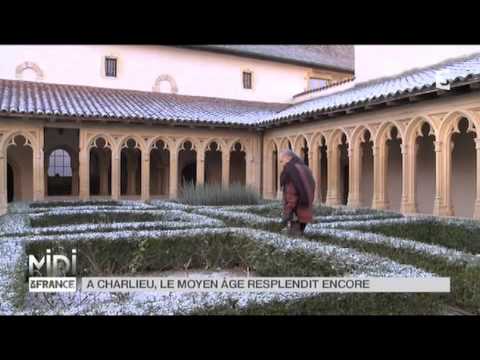 The Midi en France guide to Charlieu turns from the abbey to the medieval town itself. Its focus on the surviving historic centre complements the first video and helps visitors think about the streets and houses as part of the heritage visit.
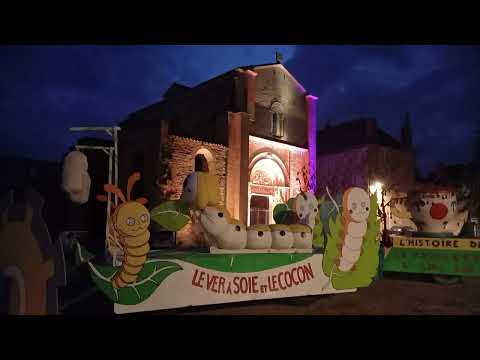 Les Chemins de la Bohème presents Charlieu as a medieval town in a 2024 film. This independent visit adds a contemporary travel perspective to the two television features, while the municipal museums offer the deeper story of silk and hospital life.