A town shaped by an abbey, but not reduced to it
Cluny’s centre is compact enough to cross on foot, yet its scale changes as you move through it. The remains of the abbey open into a wider town of stone lanes, market streets, old houses and working services. A visit works best when the monumental site is treated as the beginning of a walk rather than the whole story: Cluny is a lived-in small town in southern Burgundy, with a Saturday market and an equestrian calendar alongside its medieval inheritance.
The commune had 4,942 residents in 2023, according to INSEE’s municipal population count. A further 264 people were counted separately, making the total population 5,206; the figure used here is the municipal count for the whole commune. INSEE recorded 2,658 jobs located in Cluny in 2023 and 242 employer establishments at the end of 2024. Commerce, transport and services accounted for nearly three quarters of those establishments, while education, health and public services also help give the town a regional role.
From a 910 charter to a European monastic network
The abbey’s documented beginning is precise: on 11 September 910, William the Pious gave the estate of Cluny for a monastery under the protection of Saints Peter and Paul. The monks followed the Rule of Saint Benedict. The foundation’s unusual freedom from local secular control and its growing resources helped it develop into a network of priories across Europe. Under Abbot Hugh of Semur, work on the vast Maior Ecclesia began in 1088; for centuries it ranked among the largest churches in Western Christendom.
Cluny’s story also includes rupture. The last mass in the abbey church was celebrated in 1791, and after the monks were expelled, the complex was seized and sold in 1798. The great church was gradually dismantled for its stone. Today, the missing scale is part of the visit: surviving transept walls, enclosure towers, eighteenth-century convent buildings and the thirteenth-century Farinier allow visitors to read the site as both an achievement and a loss. A story that Saint Peter appeared to the monk Gunzo to reveal the church’s plan belongs to medieval religious tradition; it is not a documented construction event.
Look beyond the abbey walls
The visitor route joins the monastery to the town’s other layers. The Farinier retains its timber roof and displays capitals from the abbey church; the lower Cellier is another part of the monastic complex open to visitors. The Art and Archaeology Museum occupies the Gothic flamboyant palace of Jean de Bourbon. Its sculpture collection draws on finds from both the town and abbey, and a reconstruction of part of the great Romanesque portal helps visitors imagine what was dismantled. For a wider view, the Cheese Tower rises above the former enclosure; its 120 steps lead to a panorama over the abbey town.
On nearby streets, Romanesque and Gothic houses, churches and the Hôtel-Dieu make a second itinerary possible without leaving the centre. The market square and the streets around the abbey show how the historic core still functions as a place to shop and meet. Saturday morning brings seasonal produce, bread, cheese, honey, meat and textiles to the stalls; in summer, evening markets add local makers, food and music in the abbey park. Confirm seasonal dates with the town before planning around an event.
Horses, work and the surrounding Clunisois
Cluny has another identity that becomes visible away from the medieval stones: horses. The Haras National, equestrian centre, hippodrome and Equivallée event complex bring training and competitions into the town’s present-day life. The tourism office lists a varied calendar of events, with many competitions between March and October. The venues make a useful contrast to the abbey: one represents a long monastic past, the other an active regional equestrian network.
Local activity is broader than tourism. INSEE’s employment data show a strong concentration in services, retail, transport, education, health and public administration. The town also supports everyday commerce and community services for nearby villages. A visitor can spend a day among the abbey, museum and market, then use Cluny as a base for the lanes and villages of the Clunisois. Tournus, Cormatin and Taizé are natural extensions of a southern Burgundy route; check local opening arrangements before adding smaller sites to an itinerary.
How to reach Cluny
Cluny has no railway station. The practical rail approach is to travel to Mâcon-Ville or Mâcon-Loché TGV and continue by MOBIGO bus 701; the local tourism office gives an approximate 30-minute journey between Mâcon and Cluny. Other regional connections include line 709 toward Digoin via Paray-le-Monial and Charolles, and a bookable demand-responsive service toward Montceau-les-Mines. By car, the A6 route from Mâcon Sud follows the N79; another approach from Tournus uses the D215 through Cormatin and Chapaize. Timetables and road conditions should be checked before departure.
Once in town, the abbey, museum, market and most of the historic centre are close together. The tourism office identifies visitor parking and notes that the old lanes are paved and sometimes narrow, while the abbey, museum and visitor office have wheelchair access. That practical detail matters in a place whose medieval fabric still shapes the walk.
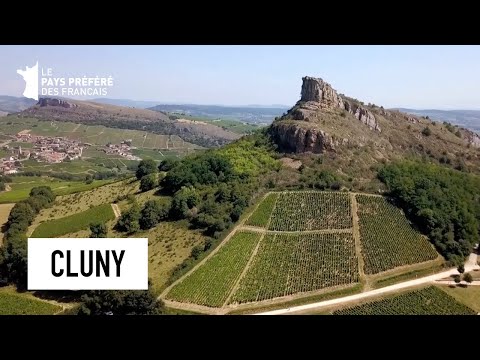 Cluny in three films: abbey, town and the national stud farm
 France 3’s short 360-degree sequence takes viewers inside the abbey setting and gives a visual sense of its scale. The accompanying programme description links Cluny’s monastic remains with the Haras National and the town’s horse culture. The footage dates from 2018, so it should be watched as an interpretation of the heritage site, not as an update on present-day facilities or event schedules. Current visitor information is available from the official abbey.
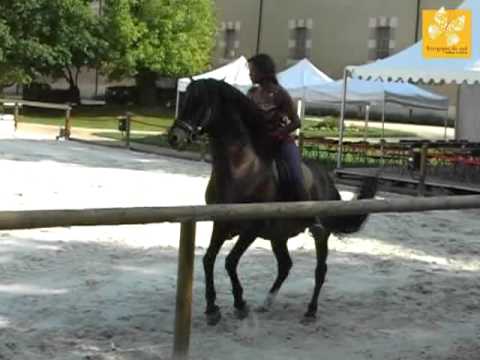 This film presents the Haras National de Cluny as a place to visit in southern Burgundy. It adds a distinct perspective to the abbey-focused videos by turning to the town’s equestrian life. The clip was published in 2011 and is brief, so its value is introductory; it cannot confirm current access, demonstrations or competition dates. The local tourism calendar is the right source for planning a visit to the stud and Equivallée venues.