Dardagny is a rural commune at the western edge of the canton of Geneva, close to the French border and within easy reach of the city. At the end of 2025 it had 1,863 residents, according to the Geneva cantonal statistical office; the figure covers the municipality, whose settlements include Dardagny and La Plaine as well as smaller hamlets such as Malval. This is not simply a château village. The municipality combines vineyard slopes, a river valley, fields, woodland and several distinct communities, with the station at La Plaine and the historic centre of Dardagny serving different parts of a visit.
A Roman-era site and a medieval village, carefully distinguished
Archaeological finds on the château site—Roman roof tiles, fragments of wall paintings and pottery—attest a Gallo-Roman villa there in the first century CE. That evidence belongs to the site’s long history; it does not mean that today’s château or the present village was founded by Rome. The municipality dates the first written mention of the name Dardagny to 1100. Two fortified houses stood where the château now rises by 1298, belonging to separate local lords. The fiefs were reunited in 1646, and the buildings were joined and enlarged over the following decades. Jean Vasserot’s family reshaped the residence in the eighteenth century, giving it much of the appearance that visitors recognize today.
The château’s modern history is unusually local. The commune bought it in 1904 intending to replace it with a school and municipal building. In 1916, when demolition appeared imminent, residents and heritage advocates protested. The authorities ultimately chose restoration, carried out between 1926 and 1932. Today the building continues to serve community purposes, including the school; access to interiors depends on events and opening arrangements, so a walk around the village should not be mistaken for a guaranteed château tour.
Wine houses, village life and the Allondon valley
Follow the lanes around the château and the church to see the compact group of winegrowers’ houses, fountains and small public spaces that gives Dardagny its character. Vineyards remain central to the local landscape and economy, with winegrowers producing Geneva wines and welcoming visitors by arrangement. A small inn, cafés and local services make the centre a practical stop, while La Plaine has its own station and more dispersed settlement. Dardagny received the Wakker heritage prize in 1978 and joined Switzerland’s network of notable villages in 2021; those distinctions reflect conservation of a lived-in rural setting, not a claim that the whole commune is a museum.
Walkers can choose between the cultivated slopes and the watercourses below. The Rive Droite circuit links Dardagny and Malval with vineyard country and other villages on Geneva’s right bank. Along the Allondon, a protected valley leads toward the nature centre at Malval; nearby, a small medieval chapel stands in a meadow. The Roulave stream and forest paths offer a different, shadier landscape. Stay on marked paths, respect working vineyards and check seasonal access, especially after rain or during high water.
Getting there and planning a visit
From central Geneva, take the regional train to La Plaine, then connect with a TPG bus toward Dardagny château or Malval. The bus network serves several hamlets, but the most useful line and waiting time depend on the day and destination; consult the live journey planner before setting out. By road, follow the Mandement countryside west from Geneva. A good visit leaves time for both the historic centre and a walk through the vines or river valley. Arrange tastings directly with winegrowers, and check château access, the nature centre’s programme, food service and bus timetables before travel.
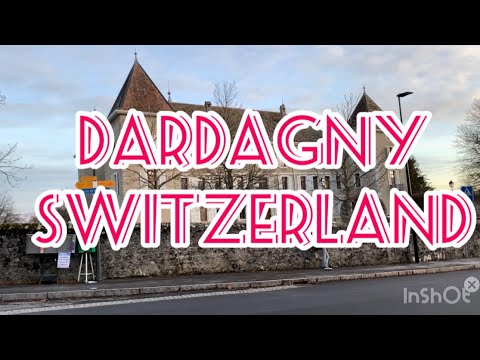 Dardagny on film: château, village and vineyard paths
 ALTITERRA presents a recent short feature explicitly centred on Dardagny. Its value for a prospective visitor is visual: it offers an additional look at the village and its rural surroundings, rather than a practical timetable or a complete heritage account. Use it to get a sense of place, then check the municipal pages for access arrangements and Geneva’s visitor information for current walks and services.
 This Portuguese-language video frames Dardagny as a walk through the vineyards. That perspective is useful because the vines are not a backdrop alone; they remain working land and part of the commune’s wine economy. The images may help set expectations for a countryside outing, but they cannot confirm which paths are open or whether a winery is receiving visitors. Follow marked routes and arrange tastings directly with producers.