Tournus is a small city on the right bank of the Saône, where an imposing Romanesque abbey rises above colorful streets and the river’s slow movement. It is often introduced through Saint-Philibert, and rightly so, but a worthwhile visit takes in more than one monument. Tournus has two old centres with different origins, a long hospital story, working shops and services, a station on the regional rail network, and a riverfront shaped by boats and trade. Its atmosphere is southern Burgundy: a compact old town, broad water, and a landscape that opens toward vineyards and limestone hills.
INSEE counted 5,701 municipal residents across the whole commune in 2023; the separate total including people counted apart was 5,925. The figures in force from 1 January 2026 make clear that Tournus is not simply a visitor precinct around the abbey. The town recorded 3,488 local jobs in 2023 and 299 employer establishments active at the end of 2024. Commerce, transport, services, hospitality, manufacturing, construction, public administration, schools and healthcare all contribute. The 2024 public-facilities inventory lists grocery shops, bakeries, pharmacies and doctors, as well as schools and a library. Those everyday resources give the centre a lived-in rhythm beyond the hours of the monuments.
Two historic centres and a thousand-year abbey
Tournus grew in two closely connected quarters. The older civic core clustered around Sainte-Madeleine and an ancient fortified enclosure near a route that followed the Saône. Archaeological records identify remains from several periods, including Gallo-Roman structures and a late-imperial castrum. They show a long sequence of settlement, not a simple Roman foundation story for the modern town. A second centre developed on the neighboring rise around the abbey, whose two Romanesque towers still guide visitors through the surrounding streets.
The abbey’s written chronology begins in 875, when Charles the Bald granted the monastery, the castrum and the town centre to Benedictine monks who had come from Noirmoutier with relics associated with their patron, Saint Philibert. The monumental church took shape over the following centuries. Its altar was consecrated in 1019; the nave received its unusual transverse barrel vaults between 1066 and 1107, and the church was dedicated again in 1120. Today the complex brings together the abbey church, crypt, Saint-Michel chapel, cloister, chapter house, refectory and cellar. Inside, the alternating vaults create a striking rhythm of stone and light. The medieval zodiac mosaics, visible in the ambulatory, reward a slower look than a quick photograph from the square.
Saint-Philibert is a place of worship as well as a major heritage site, so visitors should respect services and check access arrangements. A visit can include the crypt and the upper chapel, whose stairway is steep and low in places. The former monastic precinct also gives a sense of how religious life shaped the town: lanes and small squares gather around the church, while the abbey buildings sit close to the old civil quarter.
From medieval lanes to the Hôtel-Dieu
The tourist walk called “Sur les pas de Gerlannus” takes about an hour and a half and links narrow streets, colored façades, passageways known locally as traboules, and the banks of the Saône. It is an easy way to see that Tournus is not only a monumental skyline. The older houses have an unusual mix of Burgundian forms and warm, southern-looking façades; courtyards and small passages reveal themselves between the main streets. Families can pick up a puzzle trail or photo-rally booklet from the tourist office, which also provides walking and cycling maps for the wider area.
South of the abbey, the Hôtel-Dieu tells a different story of care and civic life. Built in the seventeenth century and enlarged through the late eighteenth, the former hospital preserves three patient wards with oak enclosed beds and original furnishings. A central stove once helped heat the rooms. Today the complex houses a hospital museum along with fine-arts and archaeological collections. Its restored rooms make the history of medicine tangible, from how patients were housed to how the institution served the town. The municipality publishes seasonal opening information; the Greuze museum space is listed as closed during the 2026 season, so confirm which galleries are open before planning a visit.
Food, river life and local work
Tournus is known well beyond the immediate region for its gastronomy, but the town’s food culture has a practical, local side too. Restaurants, bakeries and food shops serve both residents and visitors; the tourism office sells products from local growers and artisans and can direct travellers to tasting visits across the Mâconnais. Vineyards lie in the wider landscape, while the Saône brings a separate kind of movement: official visitor information describes Tournus as a popular stop for recreational boaters. Walking along the quays gives the town a different scale from the abbey hill and helps explain why river transport and trade mattered to its development.
There is more to do than eat and admire architecture. The town’s cultural listings include Sainte-Madeleine, the Saint-Laurent chapel, the Hôtel-Dieu and the privately run Musée du Vélo, whose collection explores cycling through machines and objects. Seasonal concerts, exhibitions and markets animate the old streets. These activities sit alongside a broad service base: Tournus functions as a local centre for shopping, health, education and public services, with the INSEE figures showing that hospitality is only one part of a diverse economy.
Arriving by train and exploring the region
Tournus railway station stands at Place de la Gare, within practical walking distance of the historic centre. It has a ticket machine but no ticket counter; the regional operator lists the tourist office as a place to obtain travel information and tickets, with a scheduled weekly SNCF-agent service there. Current trains connect Tournus with Dijon and Lyon, and regional services also link it with Chalon-sur-Saône and Mâcon. A published TER route page currently gives a fastest Tournus–Chalon journey of 13 minutes, but departures and replacement buses can change. Check the live timetable and the day’s connections before travelling.
Once in town, the abbey quarter, Hôtel-Dieu, shops and riverfront are straightforward to explore on foot. A bicycle is useful for following the Saône and the regional cycle routes. For a longer stay, Brancion offers a medieval hilltop village and Cluny another major monastic landscape; both are promoted by the local tourism territory as natural extensions of a Tournus visit. The appeal of the town lies in how these journeys begin at the river: first the abbey above the rooftops, then the everyday streets, and finally the open Burgundy countryside beyond.
 Tournus in three videos: abbey, Hôtel-Dieu and river town
 The Tournus tourism channel’s 2012 clip is titled after the Hôtel-Dieu and Musée Greuze. It points toward the town’s hospital heritage and museum collections, complementing a visit to the abbey with a different account of urban life. Because it predates current seasonal arrangements by many years, viewers should treat it as a heritage introduction rather than practical guidance. The municipal visitor page provides the current status of the Hôtel-Dieu and its galleries.
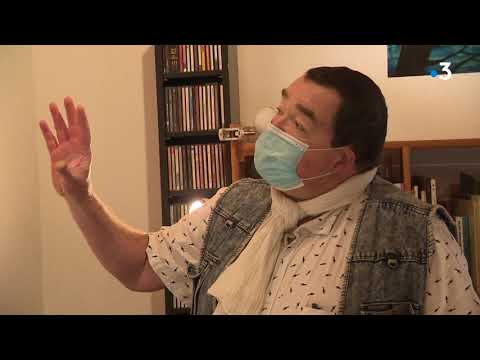 France 3’s 2021 “Rendez-vous chez vous” episode takes viewers to Tournus in Saône-et-Loire. The channel description identifies the presenter and the destination but does not give a detailed scene-by-scene account, so the review does not attribute specific stops to the film. It works as a regional portrait and a quick sense of place; use official local information to plan monuments, food stops and river activities.