Blaye stands on the right bank of the Gironde estuary in north Gironde, where the river is both landscape and route. INSEE counted 5,066 municipal residents in the whole commune in 2023, with a density of 789.1 people per square kilometre; the commune’s population grew by an average 0.8% a year from 2017 to 2023. Blaye is also an administrative and service centre for Haute-Gironde. The scale of its everyday economy is visible in the INSEE figures: 219 employer establishments were active in the final week of 2024 in the Flores survey’s defined field. Of those, 64.8% were in commerce, transport and varied services, and 24.2% in public administration, education, health and social action. Those figures exclude defence and individual employers, so they describe a specific business sample rather than every job or livelihood in town.
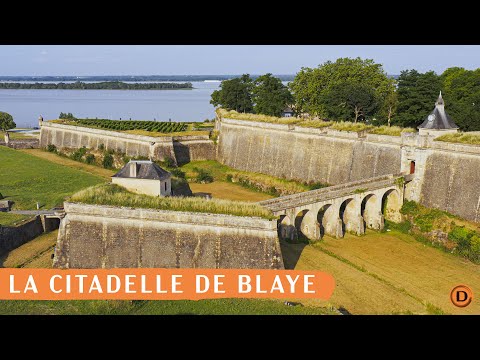
The citadel is the town’s most striking landmark, but it contains several historical layers. The Ministry of Culture records a castrum defending Blaye from the fourth century, with later rebuilding and enlargement. Vauban’s redesign in 1686–1689 folded older works into a new system of bastions, demi-bastions, moats, glacis and three demi-lunes. The regional Vauban network describes the broader estuary defence, assembled between 1685 and 1692 with Fort Médoc across the water and Fort Pâté on an island in mid-channel. Their positions were intended to cross-fire across the river; Fort Pâté is not open to visits and is best understood from the estuary. The citadel became part of UNESCO’s serial World Heritage property in 2008 and was classified as a French historic monument in 2009. Medieval traces remain inside the later stronghold, including the Rudel castle, the Liverneuf gate and the Éguillette tower. A local tradition places Roland’s tomb at the vanished Saint-Romain church; the municipality itself identifies this as a medieval legend, not a proven burial.
Walk in through the monumental gates and the defensive site feels more like a small town than an isolated ruin: lanes, former military buildings, the Minimes convent, workshops and places to eat occupy the enclosure. The Vauban network says the citadel grounds are freely accessible throughout the year; guided visits, especially underground tours, follow a separate timetable and should be booked or checked with the tourist office. The office sits beside Porte Dauphine. Below the walls, the Allées des Soupirs host municipal markets on Wednesday and Saturday mornings, currently listed from 8:30 to 12:30. The annual calendar also includes wine and seasonal fairs. The Johel-Coutura municipal media library offers a different stop, with 500 square metres of public space and nearly 25,000 items, including more than a thousand videos. Blaye’s public hospital serves the wider Haute-Gironde area; it is a working health service, not a visitor attraction.
The waterfront links the fortification to present-day travel. The departmental ferry connects Blaye and Lamarque in the Médoc; the crossing covers 4.5 kilometres and usually takes about 20 minutes, but tides, weather, marine conditions and seasonal timetables affect the journey. Ferries may be cancelled or depart earlier than the printed time, so check the current Gironde schedule and arrive with a margin. Regional coaches connect Blaye with Bordeaux and nearby towns. By road, the RD137 runs toward Bordeaux to the south and toward Mirambeau and Saintes to the north; the RD669 follows the estuary and vineyards toward Bourg-sur-Gironde, while the A10 is about 20 kilometres away. These routes make Blaye a useful base for the right bank, the opposite Médoc shore and estuary sites, but crossings and guided attractions need their own checks.