Bordeaux had 267,991 residents within the commune in 2023, according to Insee. The city is best understood by following the Garonne: its quays link the old port economy to public promenades, neighbourhood life and cultural venues. A first visit may start at Place de la Bourse, but Bordeaux’s identity also unfolds in the streets of Saint-Pierre, the former wine-trading district of Chartrons and the newer riverfront. The result is not a single monumental centre but a sequence of places shaped by exchange, work and urban change.
The river shaped commerce and the city
Bordeaux has been a port since antiquity, and its relationship with the Garonne continued to shape trade, settlement and urban planning. The Chartrons developed from the fourteenth century around a Carthusian abbey and later became associated with wine merchants. Warehouses and trading houses left a distinctive imprint on the district. The eighteenth-century Place de la Bourse, built between 1730 and 1755, opened the city toward the river with a formal ensemble of façades and a public square. The contemporary Miroir d’eau now reflects those buildings, but it is a modern work inaugurated in 2006, not a historic fountain.
A walk through different neighbourhoods
From the quays, visitors can move into the lanes of Saint-Pierre, where cafés and restaurants occupy a dense historic street pattern, or head north to Chartrons, where former wine warehouses and merchant streets now sit alongside independent shops and cultural spaces. The Miroir d’eau’s programmed water and mist effects are seasonal; the tourist office notes winter maintenance from November through April. That small practical detail changes the experience of the central waterfront, so check before planning a visit around the reflections. The broader riverfront also has museums and science venues, with routes possible on foot, by bicycle or by tram.
A major city with a regional wine economy
Bordeaux is a large service centre. Insee counted 14,432 employer establishments in the commune at the end of 2024; commerce, transport and other services represented 80.7 percent. Wine remains important, but the metropolitan area’s figures describe a regional chain rather than Bordeaux city alone: Bordeaux Métropole identifies viticulture and wine as a structural sector for Gironde, with jobs, exports, trading firms and tourism extending across the department. Visitors can learn about that economy through museums and the surviving warehouse landscape without assuming that every vineyard lies within the city limits.
Arriving and getting around
Bordeaux Saint-Jean is the city’s main railway station, with trains toward Paris, the Atlantic coast and other parts of Nouvelle-Aquitaine. The visitor office describes a network of tram lines, buses, bikes and river shuttles; many central areas are easier to explore on foot, with trams useful between neighbourhoods and the station. A practical day can link Place de la Bourse and the water mirror with Saint-Pierre, then continue to Chartrons along the river. The city is too large to cover in one short loop, so choose a few districts and check current train, tram and attraction schedules before setting out.
 Bordeaux beyond its wine label: river, streets and changing city
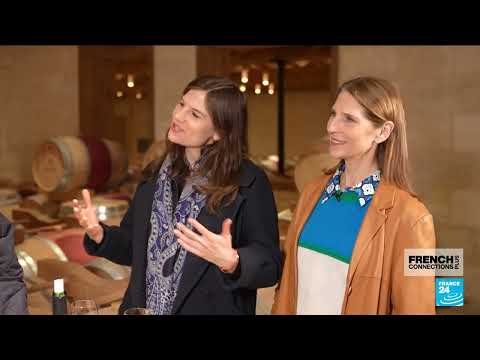 FRANCE 24 explicitly looks beyond the wine image, introducing the southwestern metropolis through its wider urban offer. Its English-language perspective helps international visitors see why the city merits more than a quick stop on a vineyard itinerary. Its wider lens is most useful as a prompt to explore the riverfront, civic centre and trading history as connected parts of the city.
 This France 3 retrospective contrasts memories of darker stone façades and earlier riverfront conditions with the transformed city residents see today. Its value lies in that before-and-after perspective, not in replacing a current map or practical visitor guide.