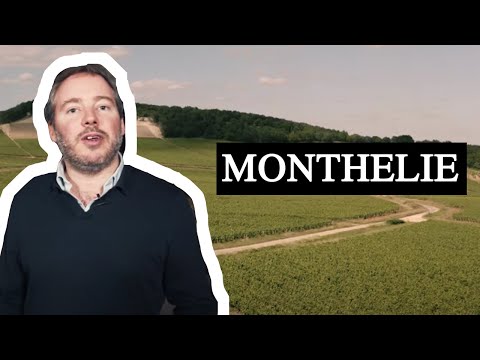
Monthélie is a small wine-growing commune just above Meursault, between Meursault and Volnay on the Côte de Beaune. Old houses gather along a steep hillside, often with cellars below, while vines rise around the settlement. Its appeal lies in the whole working landscape: narrow lanes, stone houses, church, château and vineyard slopes sit close together.
A population figure with a clear scope
INSEE’s 2023 reference population for the whole commune is 144 municipal residents, plus three people counted separately, for a total of 147. Published on 29 December 2025 and effective from 1 January 2026, these figures still refer to census year 2023, not a live headcount. The scope is the entire commune, not only the visible village lanes.
Vines, wine and local activity
Viticulture defines Monthélie’s landscape and economy. The appellation was recognized in 1937 and covers red wines based chiefly on Pinot Noir and whites based on Chardonnay. The official Bourgogne wine board lists 15 Premier Cru Climats, including Clos des Toisières, La Taupine, Les Champs Fulliots, Le Château Gaillard and Le Clos Gauthey. These are named vineyard sites, not separate villages. The board describes limestone, clay and marl slopes, around 230 to 370 metres above sea level, with exposures that vary around the hillside.
INSEE records 18 economically active non-agricultural legal units in 2023; 11 are in trade, transport, accommodation and food services. That category does not count agricultural work, so it is not a full account of winegrowing. The Beaune tourist office highlights the April Printemps de Monthélie, when participating growers open cellars for meetings and tastings. Dates and participating estates vary; check the current programme and arrange visits rather than assuming every cellar is open.
Saint-Germain-d’Auxerre and documented history
The parish church on Rue de l’Escalier is more than a Romanesque outline. The regional heritage inventory describes a twelfth-century nave and choir with a semicircular apse. In the fourteenth century, larger traceried windows replaced earlier openings; the façade was substantially altered in 1765, with a new doorway and circular opening, followed by works in 1766. It is protected as a historic monument, a status recorded in 1991. The tourist office presents the site as Cluniac; that association is distinct from the documented architectural phases. Interior access is not guaranteed at all times.
Notice the steep lanes, close-set stone houses, cellar doors and château enclosed within the village. The château is a landmark rather than a guaranteed public visit. Respect private property and vineyard work, and contact growers directly about tastings.
Walking, nearby villages and practical stops
The Beaune and Pays Beaunois tourist office lists hiking circuit no. 14 as a way to explore the Côte de Beaune. Confirm the current map, starting point, distance, waymarking and closures before setting out; the Monthélie page does not supply those details. Meursault and Volnay make natural nearby stops on a Côte de Beaune day. Allow time for hills and narrow lanes, and stay on public paths instead of crossing planted rows.
The mairie is at 1 place de la Mairie. The government directory currently lists hours on Mondays and Thursdays from 16:00 to 18:00, but schedules can change; check or phone before a dedicated visit. For lodging, meals and winery visits, contact providers directly. Confirm seasonal openings, appointments, transport and trail conditions before travel.