Luhanka is a small municipality on Lake Päijänne, where the shoreline, a working countryside and a handful of village centres shape the visit. Statistics Finland counted 695 residents across the municipality on 31 December 2025. The best-known meeting point is the church village, where the market square faces the lake and the wooden summer church rises just behind it. Tammijärvi, farther inland, has its own everyday services and outdoor facilities. Luhanka is not a conventional resort: its appeal lies in a lived-in rural landscape, reached by road or, strikingly, by boat directly into the village centre.
A harbour that opens onto the village
Päijänne is not just a view from the shore. The municipal harbour lets boaters arrive within walking distance of the village square, grocery shop, dining and accommodation. The harbour also has fuel, an electric-car charging point, water points, a laundry area and a grill shelter nearby. Luhanka's harbour was voted Finland's Lake District guest harbour of the year in 2023, a recognition tied to the mix of marina facilities and the compact village setting. Availability and seasonal services can change, so boaters should confirm current conditions before planning a stop.
On land, Luhanka sits along the Päijänne Scenic Road, a summer route described by the municipality from Vääksy and Pulkkilanharju through Kalkkinen and Sysmä, then Luhanka to Korpilahti. It suits a measured drive or cycle tour, with the lake repeatedly drawing the route back into view. The official visitor guide lists Jyväskylä 62 kilometres away, Lahti 115 and Tampere 165. Leivonmäki National Park is about 30 kilometres from Luhanka. These are useful regional connections, but they do not mean that every attraction has frequent public transport.
A summer church built for a lakeside congregation
The large wooden church beside the market square is Luhanka's defining landmark. Designed by architect Josef Stenbäck, it was completed and dedicated in 1893. The municipality describes it as one of Finland's largest wooden churches, with room for as many as 2,000 listeners. Its scale makes a striking contrast with the small population around it. The building has no heating and is used in summer; candle and oil lighting give services and concerts a different atmosphere from a modern, continuously open church. Its acoustics have also made it a concert venue.
Not far away, Reethi's old churchyard preserves an earlier chapter. The wooden church there was built in 1766 and demolished in 1892. Sections of its log coffin fence and burial chambers remain, along with a memorial erected in 1956. The municipality notes that visitors must leave cars more than 100 metres away and follow a grass track to reach the site. That small practical detail matters: this is a quiet heritage place, not a fully developed museum grounds.
Farm cottages, forest and a harder-to-see past
At Tammijärvi, Peltola Crofters' Museum preserves the buildings and objects of a tenant-farming settlement. The municipal page counts 19 log buildings and around 3,000 objects; it says the buildings remain in their original locations and the last resident left in the 1960s. The local heritage association maintains the site, which opens in summer. Rather than presenting rural life as scenery alone, Peltola lets visitors encounter the small buildings and domestic material culture that formed a village community.
Other traces of the past are more difficult to reach. On Avosaari, faint images of three deer survive on a rock face. The municipality assesses them as Stone Age and suggests, cautiously, that they may belong to the Comb Ceramic period. They are visible only from a boat and can be hard to distinguish against the rock; the steep shore is difficult to approach on foot. Treat the site as a boat-based observation, not an invitation to climb the bank. At Latamäki, six wind turbines and a viewing shelter show a newer layer of rural life: local landscape and energy production now occupy the same horizon.
Swimming, skiing and a small local economy
Luhanka's two municipal swimming beaches make the lake practical as well as scenic. Mämminiemi is in the church village and another beach is at Tammijärvi; both have sand, a pier, swim ladder and changing shelter. In winter, Tammijärvi's ski route runs nearly 20 kilometres out and back between the school and Erä-Iitti, with lean-to shelters on the way. A lit loop of about one kilometre circles the school area. Snow and trail maintenance determine whether the routes are usable, so check local updates before setting out.
The local economy is made up of small rural businesses: farms, dairy and forestry, direct-sale shops, retail, transport, construction, cafés, food services and accommodation. A village grocery, a fuel stop and local cafés help visitors, but services are distributed between the church village and Tammijärvi and opening hours can be seasonal. The municipality's business directory is more useful than assuming a resort-style service centre exists.
Arriving and planning the last mile
Road access is the practical choice for many visitors, while the harbour gives boaters a direct arrival at the centre. The municipality's transport page lists a school-day bus between Luhanka and nearby Joutsa that other passengers may use, along with limited, pre-booked service rides between the church village or Tammijärvi and Joutsa. The published rides are infrequent and schedules may change; check current details with the municipality and transport operator. A car or bicycle is helpful for reaching Tammijärvi, Peltola, Reethi and dispersed lakeside sites. Confirm church and museum opening times, trail conditions and business hours before departure.
 Luhanka kolmessa videossa: nähtävyydet, Peltola ja veneily
 Lonelyurbanex’s long-form video is devoted specifically to Peltola Crofters’ Museum in Tammijärvi. Its description identifies the site as a preserved group of 19 original buildings with more than 3,000 objects about tenant farmers’ lives around the turn of the twentieth century. The video offers a focused introduction to the museum’s subject; the local heritage association’s seasonal opening information remains essential when planning a visit.
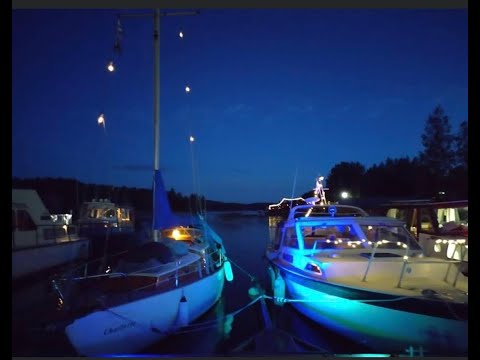 Ossy 57’s video connects sailing on Päijänne with the Venetian evening at Restaurant Reeti’s harbour in Luhanka. It adds a boating and event perspective to the other films’ church and museum subjects, and its title pins the story to a real local harbour. This is a record of a particular gathering, not a guarantee that the event or restaurant hours repeat; check current harbour and business information separately.