Padasjoki is best understood as a lake municipality rather than a single village. Statistics Finland counted 2,656 residents across the municipality on 31 December 2025. Its municipal information page gives a total area of 732 square kilometres, including 207 square kilometres of water. The centre is modest, but its shore opens onto Päijänne, Finland’s second-largest lake, and a broad network of smaller villages, forests and islands. The harbour at Laivaranta is the practical meeting point between the everyday town and the lake landscape: people come for services and events, while boaters use it as a launch for the national park. A visit works best when planned around the distance between those places and the season in which water transport and cafés operate.
A long local record, not a mythical foundation
The municipality lists 1442 as its founding year. That is a municipal historical marker, not evidence that today’s centre began as a Roman outpost or a single ancient settlement. The church hill has had a church since at least the fifteenth century. The present Padasjoki Church was built in 1926–28, the fourth church on the same site. Designed by W. G. Palmqvist, it is a brick and plastered long church with a gabled tower; its altarpiece by Aleksandra Frosterus-Såltin depicts the Resurrection. The hill therefore holds a layered history: a long-lived religious centre and the modern building that replaced its predecessors.
Another chapter belongs to the Club War, the peasant uprising of 1596–97. The municipality records that some of the conflict’s bloodiest battles took place in Padasjoki and identifies Nyystölä as the site of one decisive engagement. A memorial stands there today. The event is documented local history; the memorial does not turn the fighting into a heroic legend. It points instead to the costs borne by people in a rural area caught between armed forces, taxation and political authority. Visitors can connect the monument with the nearby Päijänne–Ilves route, which passes through village and field landscapes before entering forest.
Local food traditions also say something about work and place. The municipal history page names potato soup, salted fish and rye hole-bread among traditional foods, and notes that sahti, a farmhouse beer, is still made in the locality. These dishes belong to the region’s lake and farm economy, rather than to an invented “ancient Finnish” menu. A visitor may encounter them at local events or food businesses, but availability varies; check the current programme rather than expecting a particular dish at every café.
Laivaranta: a working harbour and a gateway to the islands
Laivaranta makes Päijänne accessible from the centre. The municipal harbour page describes seasonal guest berths, summer dining, events and a tourism information point that serves during the school holiday period from Midsummer to around mid-August. The marina also provides boating services, and in 2025 it received the national Guest Harbour of the Year award; the municipality says it earned an honourable mention in the 2026 harbour vote. The award refers to the harbour’s visitor facilities, not to the lake being a resort with every service open year-round.
In summer, the municipal information lists scheduled passenger boat service on Jenni–Maria III, kayak access and boat-taxi service to Päijänne National Park. The park lies across Padasjoki, Asikkala and Sysmä; about fifty undeveloped islands and skerries and parts of inhabited islands form its protected landscape. Kelvenne, at roughly eight kilometres long, is the best-known esker island. Its long ridge, sandy shores and sheltered lagoon-like inlets make it a destination for hiking, paddling and boat stops. The island trail is about 9.7 kilometres, so it is a substantial day walk rather than a short harbour stroll. Boat transfers and services are seasonal. Confirm departures, landing places, fire-site rules and the return trip before setting out, and carry what you need if you plan to stay on the island.
The harbour connects nature with local tourism. It has a summer restaurant and seasonal visitor berths, while accommodation across the municipality includes cottages, villas, campsites, caravans and a guesthouse. Padasjoki’s business and tourism pages list cafés, restaurants, rental cabins and services, but these are spread among the centre and villages. If you arrive by bus, book an overnight stay and check whether the activity you want is within walking distance; a harbour launch does not place every trailhead next to the bus stop.
Walks from the harbour and through the villages
Kullasvuori is the closest introduction to the terrain. Its nature trail loops for about one kilometre through rocky ground and pine forest near Laivaranta. Interpretive signs address the ridge forest and local history, and the route ends at viewing towers above Päijänne. The municipality rates the walk as moderately difficult because of stones and elevation changes. It is short in distance but not a paved promenade. The trail was created by the local village association and nature group in 2016; check the current map and weather before treating it as an easy family walk.
The 13-kilometre Päijänne–Ilves route starts at Laivaranta and continues toward the Tarus hiking area and Evo. Metsähallitus describes it as a multi-use route for walking and mountain biking. It begins on a paved path through the town, crosses village roads and farmland, then moves into woodland and forest trail. On the way, walkers pass the Nyystölä area and the memorial connected with the Club War; a bird tower is a short side visit. The final sections are more uneven, and the route takes several hours one way. A lean-to shelter lies around ten kilometres from the harbour, with the end point at Iso-Tarus. Arrange return transport or plan an overnight itinerary rather than assuming there is a bus at the trail’s far end.
Other municipal routes let visitors choose a shorter or more village-centred day. Kirkkolampi’s loop is about seven kilometres; Kullasvuori’s sports area has ski trails of one, two, three and five kilometres when conditions permit. In Kasiniemi, a marked loop is about 1.7 kilometres; the Korkiaismäki and Linnamäki routes near Maakeski are approximately 3.2 and 3.6 kilometres. Auttoinen’s Jallinharju trail crosses a ridge with views of the Päijät-Häme cultural landscape, while the municipality’s route page names a protected old pine as a natural monument. Many smaller trails are maintained by village groups, not the municipality. Look at the latest map, keep to marked paths and follow fire warnings.
For water-based exploration, Padasjoki Latu rents paddling equipment and organizes group paddles according to its current programme. The municipality lists several canoe routes, including outings toward Kelvenne. These routes depend on wind, boat availability and experience on open water. Lake conditions can change quickly; use current weather and boating information and do not treat a video or promotional map as a safety briefing.
Churches, local collections and the Mainiemi sawmill
Inside the centre, the church is not the only cultural stop. The Makasiini Museum occupies a former parish granary built in 1850, on the land of Saksala Manor. Padasjoki Society has assembled objects from across the parish since the 1950s. The museum opens by arrangement and for society events; a municipal visitor page notes summer Sunday openings with a café in some seasons. Confirm dates in advance. The exhibition can place tools and household objects beside a wider story of farming, forest work and parish life.
The village landscape adds smaller destinations. The municipality lists Enni Idi’s artist home in Kellosalmi, where a vividly decorated cottage preserves the environment of a local folk artist; the municipal page gives summer Sunday opening information. In Vesijako, the Palsa mill museum interprets milling and sawmilling history, but visits are by appointment for groups in summer. These are intimate places that reward a planned stop, not walk-in institutions with daily staffing.
Mainiemi brings industrial history directly to the Päijänne shore. A sawmill was established there in 1880, at a time when sawmilling expanded sharply. The municipality’s account says finished timber travelled by water through Vääksy Canal toward Lake Vesijärvi. The first wooden mill burned in 1910 and was rebuilt; a renewed power plant beside the mill was completed in 1923. Operations ended after the 1960s. Since 2022, the old site has been restored for community and cultural use, with events rather than timber production at its centre. Sahan Valot, a late-summer gathering, and other events show how a working industrial landscape can acquire a new civic role without erasing its past.
The local economy today mixes public services, small businesses, agriculture, forestry, lake tourism and seasonal holiday-home activity. The municipality’s own vitality pages foreground rural services, nature and the community; Mainiemi’s history gives a concrete example of how livelihoods once relied on the forest and water routes. Summer brings more boaters and cottage residents, while services are fewer in shoulder seasons. Check restaurant hours, accommodation availability, museum visits and boat bookings before making a long trip.
Arriving from Lahti
Lahti is the practical transport hub for a visitor without a car. The current LSL information identifies bus route 42 between Lahti and Padasjoki, via Vääksy. The municipality says passengers can board in Padasjoki near the ABC service station or outside the library. Lahti is connected to the Finnish rail network, so a common itinerary is to travel by train to Lahti and transfer to bus 42. The bus route and timetable vary by date and season; search the exact day and return journey in LSL’s trip planner before buying tickets. Road distance from Lahti is about 50 kilometres, and the drive follows regional roads through Vääksy toward Padasjoki; winter and lake-shore weather can alter travel times.
There is no need to force a grand tour into one day. A first visit can combine the church, Kullasvuori towers and harbour with lunch by the lake. A longer stay can add Kelvenne by boat, the Päijänne–Ilves route or one of the village museums. If you come for an event at Mainiemi or the sailing regatta, reserve accommodation early and check the schedule, because event dates concentrate demand. Padasjoki’s appeal lies in the connection between its small centre and the wider lake district: the history is specific, its outdoor routes are varied, and the harbour makes a real landscape accessible, provided the visitor plans around distance, season and conditions.
 Padasjoki in three videos: a local invitation, Kullasvuori and Päijänne
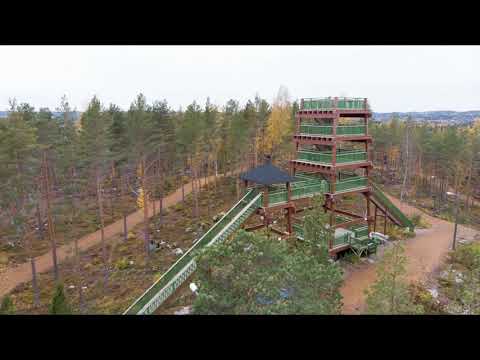 This short film follows the Kullasvuori nature track near Laivaranta. The rocky pine terrain, changes in elevation and viewpoints above Päijänne help explain why the municipality describes the roughly one-kilometre route as moderately difficult despite its modest length. The footage is useful for setting expectations about the ground and scenery; it cannot confirm that a path is clear or safe on the day of a visit. Check local trail information and weather, and wear footwear suited to uneven rock rather than treating the route as a paved promenade.
 Padasjoki’s municipal channel presents water tourism on Päijänne, foregrounding the lake as a route into the archipelago and national-park landscape. The subject is especially apt here: Laivaranta is a practical departure point, while island visits depend on seasonal boats, private craft or other arrangements. The video is an introduction to the experience, not a timetable or a boating-safety briefing. Check the harbour’s current information, boat services, weather and return options before planning a trip to Kelvenne or another island.