Joutsa is best understood as a broad lake-and-forest municipality rather than a single compact old town. Its centre gathers shops and services beside Finland’s Route 4, while villages such as Leivonmäki and Rutalahti lead to national-park country, shorelines and local heritage. Statistics Finland counted 4,079 residents in the municipality on 31 December 2025. The municipality covers 1,066 square kilometres, including 199 square kilometres of water, and describes its landscape as containing nearly 200 lakes. That scale matters: the church and most cultural venues are near the centre, but nature excursions often require a separate drive or careful transport planning.
The road setting shapes the local economy as well as travel. Joutsa’s 2026–2030 strategy describes a stable base of about 440 businesses over 2021–2025. It identifies retail, construction, forestry and logging among the largest sectors by turnover, says services account for 65 per cent of jobs, and records a 2022 estimate in which tourism revenue exceeded forestry turnover. These are dated municipal indicators, not a claim about current visitor spending. The strategy also names Route 4, holiday-home residents and Joutsa’s service-centre role as strengths. Visitors encounter that mix in roadside shopping, cafés, restaurants, small accommodation providers and outdoor services, alongside everyday rural services.
Church village, old street and village memory
The municipality dates Joutsa to 1860. Its present shape also reflects the 2008 merger with Leivonmäki, a settlement that retains its own identity and offers a nearby base for visiting the national park. The wooden cross-shaped parish church was completed in 1813 after an earlier project stalled and construction restarted in 1811. Its separate bell tower followed later; the year 1820 on its weather vane is understood as either the building or completion date. Along Jousitie, the old main street, municipal sources identify surviving commercial buildings from the 1910s; nearby are evocative ruins from a brewery established in 1876. They speak of a working rural centre, not an ancient foundation unsupported by the record.
Joutsa Talomuseo turns everyday rural history into a walkable visit. Most buildings in its farmyard, including the main house and windmill, date from the nineteenth century; the oldest granary comes from the early 1700s. The local heritage association maintains the site, which opens seasonally and hosts summer theatre and community events. The Joutopäivät summer gathering was held for the 54th time in 2026. In Leivonmäki, Kotiseututalo Simola preserves another strand of village memory. Rutalahti’s route “Ei täällä kehnosti eletty” (“We did not live poorly here”) interprets local life through information boards rather than a made-up origin legend.
Leivonmäki’s ridges, mires and lakes
Established in 2003, Leivonmäki National Park protects 31 square kilometres of Central Finnish ridges, lakes, mires and forest. Its best-known landform, Joutsniemi, is an esker projecting into Rutajärvi; nearby, the Rutajoki river runs through rapids. Metsähallitus lists about 28 kilometres of marked trails, allowing anything from a short boardwalk walk to a longer day outdoors. The 1.8-kilometre Kirveslampi loop crosses pine forest and open mire to a nature tower. It is rated easy, though the start has a steeper rise; there is no water point, toilet or rubbish bin, and no winter maintenance. Bring water and carry waste out.
The park also has a 1.3-kilometre accessible route at Harjujärvi, classified as demanding, and a winter ski track when conditions allow. Check current notices because winter tracks and walking routes can have different rules. Closer to town, Myllykoski reserve offers a shorter outing among branching channels, bridges and duckboards beside an old red mill and bird tower. Valklammi’s route is four kilometres, about 1.5 kilometres on boardwalk, and starts by the old sports ground. At Tammimäki, an observation tower looks out from a 242-metre summit that is also one of Finland’s stations on the Struve Geodetic Arc. Haapasuo shows a landscape in transition: its 111-hectare biodiversity area on former peat-production land includes a 70-hectare wetland completed in 2026 with Neova and the regional ELY Centre.
Art, lake routes and visitor services
Joutsa’s cultural offer is varied for a small municipality. Taidelaitos Haihatus is a contemporary-art centre with summer exhibitions and artist activity; KITA presents kinetic art in a former house. The municipal cultural route also points to Joutsan Kino, a local cinema in the old youth-association building, and Taitoshop’s weaving and craft spaces. A canoe route links the waters from Puula toward Päijänne through Suontee, Joutsansalmi and Angesselkä, offering a view of the lake district from the water. The municipal directory lists cafés, restaurants, a bed-and-breakfast, cottages, a campsite and outdoor operators in the centre and countryside. Opening periods and availability vary, especially outside summer.
Joutsa lies on Route 4, and the visitor site lists bus connections from Helsinki, Lahti and Jyväskylä to the centre. Local transport is less frequent: some municipal rides run only on set weekdays and must be booked the previous day. Direct Outdoor Express trips from Jyväskylä to Leivonmäki were scheduled only on selected weekends in July–September 2026; those dates have passed, so do not assume a park bus is running now. A manageable visit can combine the church, Jousitie and one cultural venue, then reserve a separate half-day for the park or lakes. Confirm transport, trail conditions, museum openings and business hours before travelling.
 Joutsa in three videos: Myllykoski, the peatlands and Haihatus art
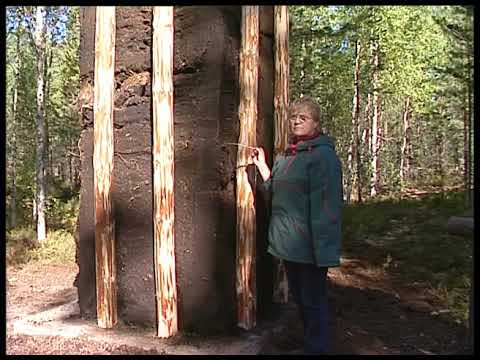 The local Leivonmäki National Park association posted this shortened version in 2021 under the title “The peat pillar tells its story.” The association explains that the short film uses a column of peat to tell how the mire formed. That subject adds a geological perspective to Joutsa’s wetlands and complements the walking routes: the landscape is not only scenery, but a record of long environmental change. The review is based on the title and organizer’s explanation, not a claim about particular camera shots.
 Jaakko Autio’s June 2024 upload documents the opening of Haihatus’s 25th-anniversary summer exhibition in Joutsa. The title and description identify the event and exhibition dates, 15 June–25 August 2024, so this is an archival view of the centre’s contemporary-art programme rather than current opening information. It broadens the town’s video portrait beyond nature and heritage. Check Haihatus’s own visitor information for the present exhibition, access and schedule.