Mäntyharju is best understood as both a small lakeside centre and a large South Savo municipality. Statistics Finland records 7,034 residents on 31 December 2025 across the municipality as it stood after Pertunmaa joined on 1 January 2025. That figure belongs to the whole expanded area, not just the streets around the station and church. The central settlement sits beside Highway 5 and the Savonia railway, while forest, water and scattered villages shape the wider territory. The result is a place where an easy town walk can turn into a long outdoor journey, and where local life continues well beyond the summer season.
A parish at the meeting of old regions
The documented story begins in 1595, when Mäntyharju became an independent parish. Its founding brought together communities associated with Savonia, Tavastia and Karelia, a reminder that the modern regional boundary does not capture the older geography. The parish’s church and administrative centre settled at Kyttälä, where waterways made travel through the forested interior more practical. The present centre retains that religious and civic anchor, but its landmarks reveal different periods rather than a single preserved “old town.” There is no need to dress this history in a foundation legend: the date and institutional change are recorded, while more dramatic tales should be treated as folklore unless a local source documents them.
The church and the old civic landscape
Mäntyharju’s timber church is the most commanding historic building in the centre. It is the parish’s third church. Builder Matias Salonen prepared the first design, and architect Charles Bassi’s revised plans were completed in 1819; construction began that year, and the first service in the new building took place in January 1822. The cross-shaped timber interior, galleries and high lantern above the crossing make the scale legible from both outside and within. The altar painting, depicting the Ascension, dates to 1839 and was made by Berndt Godenhjelm. The church has about 1,700 seats and is among Finland’s largest wooden churches. Access and opening times are seasonal, so check the parish’s current visitor information before setting out.
Around the church, the old centre reads as a group of public buildings and former service places rather than a single museum street. Iso-Pappila, the former vicarage, dates to 1812 and is an important example of Finnish parsonage architecture. The wider protected cultural environment includes the old school, civic buildings and the former Domander pharmacy and post office by the shore. These buildings speak to the practical roles a parish centre once had: worship, education, health, communication and lodging were close together because the surrounding settlements were spread across a broad landscape.
Salmela: a historic house turned summer arts centre
On the shore of Pyhävesi, Taidekeskus Salmela brings contemporary art and music into buildings with earlier public lives. Its principal exhibition house is a former parish hall whose present form dates to the 1850s. It served, at different times, as a gathering place for churchgoers, a bank, a library, a municipal hall and a wartime canteen. The art-centre idea took shape after the municipality decided to sell the building in 1989; the first exhibition season followed in 1990. The grounds later expanded to include the Domander courtyard, where the pharmacy built in 1874 and a post house from around 1910 became exhibition spaces. Visitors encounter art in rooms and gardens rather than a purpose-built white gallery, with concerts and food service adding a strong summer rhythm. Salmela’s 2026 exhibition season ran from 6 June to 15 August; future dates and individual event availability should be checked directly.
Walks that begin close to the train
Mäntyharju is unusually straightforward to explore without a car once you arrive. The station is roughly 500 metres from the centre, and the marked Citypatikka links the station area to the old church village through shore and woodland scenery. The visitor guide gives its length as about 8.5 kilometres, with historic and natural points along the way. Near the church, Immonpolku offers a much shorter lakeside option: the municipality describes a 900-metre accessible nature trail crossing Katiskalahti on a curved wooden bridge toward the open-air nature church. Check the current trail surface and access notes if mobility is a concern, particularly after weather changes.
For a longer outing, the Mäntyharju–Repovesi network connects the municipality’s trailheads with Repovesi National Park. The official route guide locates the hiking and mountain-bike start at Kisala sports centre, about a kilometre from the station. It describes roughly 33 kilometres from the town towards Olhava and about 45 kilometres to the Lapinsalmi parking area; those are distinct endpoints, not a short village loop. Some cycling sections require carrying a bike. A separate 50-kilometre paddling route begins near the station and follows the Hallan route toward Repovesi, passing lakeside rest places and Miekankoski. These are journeys to plan with a current map, suitable equipment and a return or onward-transport arrangement, not routes to improvise from a brief stop.
Services, seasons and local work
The centre has the everyday services that make a visit workable: shops, cafés and places to eat, accommodation, a library, a market square and sports facilities. Mäntyharju’s municipal information says the library lends more than books, including games and children’s life jackets; visitors should ask the library about current availability and borrowing rules. A tourism information hut operates at the market square in summer, with a staffed period in July and self-service brochures at other times. Along the longer hiking and cycling routes, accommodation is available in the centre and at intervals of roughly twenty kilometres, but individual businesses set their own opening seasons. Salmela’s café and restaurant are seasonal, and Miekankoski’s café and log-floating museum are also seasonal destinations; check directly before planning around them.
The 2026 municipal service directory describes the local economy as a mix of specialised industry, tourism, wellbeing services, local food producers, construction and retail. That breadth matters to a visitor: Mäntyharju is not only a summer-cottage landscape or a trail gateway. The railway, shops and schools serve permanent residents; seasonal residents and cultural visitors bring a second pulse to the lakeshore and market. The municipality’s wider service pages list hundreds of lakes and around six thousand leisure homes, figures that help explain the summer population without confusing it with the year-end resident count.
Getting there and making a useful first visit
According to the municipal visitor information, several long-distance trains stop at Mäntyharju each day, with direct services from Helsinki taking about two hours. Highway 5 crosses the municipality and Highway 15 skirts its eastern side. The official transport page also lists daily bus connections, but express coaches on Highway 5 may stop away from the centre; it specifically warns that there is no regular connecting service from some motorway stops, so arrange a taxi in advance if needed. Mikkeli is about 45 kilometres away by road. Confirm train and bus times, seasonal connections and the exact stop before travel, because timetables change.
For a first day, walk from the station along Citypatikka, visit the church and Salmela, and leave time for the Pyhävesi shore. Add Immonpolku if you want a gentle nature walk. A longer stay can include Iso-Pappila, the market and an excursion to Miekankoski or Repovesi, but these outlying places need transport and opening-hour checks. Mäntyharju rewards visitors who let its layers sit together: a parish founded in the sixteenth century, a monumental timber church, a repurposed nineteenth-century civic house, a summer arts centre and a network of contemporary outdoor routes. The guide’s central practical advice is simple: decide whether you are visiting the compact centre or the wider municipality, then plan the distances accordingly.
 Mäntyharju in three videos: Repovesi trails, winter life and Salmela
 Visit Mäntyharju’s winter film belongs to the municipality’s “With Love, Mäntyharju” series. Its description presents the place through winter nature, culture, businesses and the role of holiday-home residents, countering the idea that the area exists only for summer. It is an atmospheric municipal introduction, not a report on current snow or trail conditions. Published in 2018, it cannot tell visitors which ski tracks, skating areas or businesses are open today; check local updates and weather before choosing an activity.
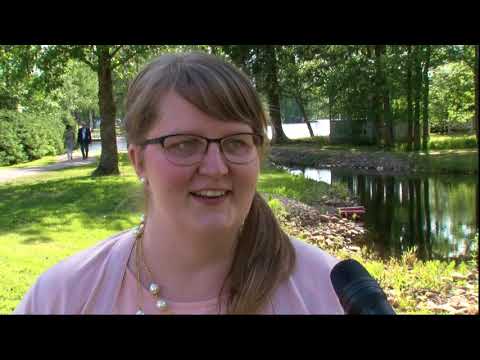 This Salmela channel video looks back at the art centre’s 2018 summer. Festival director Eveliina Mäenpää introduces that season, and painter Paavo Pelvo speaks about work shown in the Postitalo building in the Domander courtyard. The clip gives a focused sense of how the former parish and service buildings became a place for temporary exhibitions and summer cultural events. It documents a particular past programme, not the current exhibition list. Salmela publishes new artists, concerts and opening dates each year, so use its current calendar when planning a visit.