A town read from the waterline
Douarnenez is best understood as a collection of places shaped by the sea. A working fishing harbour, an old commercial ria, a marina, steep lanes and beaches all belong to the same town, but each tells a different story. The Bay of Douarnenez opens toward the Atlantic; inland, the landscape quickly turns to fields, villages and the granite-built heritage of western Finistère. Visitors who arrive expecting only a postcard port will find a more layered place: a fishing and canning town, a centre of maritime memory, a Breton community and a practical base for exploring the coast.
The commune counted 14,068 residents in INSEE’s 2023 reference population, effective from 1 January 2026. The figure applies to Douarnenez municipality, whose boundaries include former neighbouring communes, not just the old harbour. The population had edged upward from 13,902 in 2017. A municipal history explains how the present town took shape: in 1790 the port area separated from the parish of Ploaré, then a 1945 merger brought together Douarnenez, Ploaré, Tréboul and Pouldavid. The older names still help visitors understand why the town feels like several quarters joined by water, hills and roads.
From Roman fish sauce to the sardine economy
The story of seafood here reaches back far beyond the modern cannery. On the heights of Plomarc’h, the municipality documents a first-century Roman garum factory: more than fifteen masonry vats were used to ferment salted fish into a condiment prized across the Roman world. The site followed fishing knowledge used by the Osismi, the Gallic people of the peninsula, and it is evidence of an ancient industry, not proof of a mythical city beneath the bay.
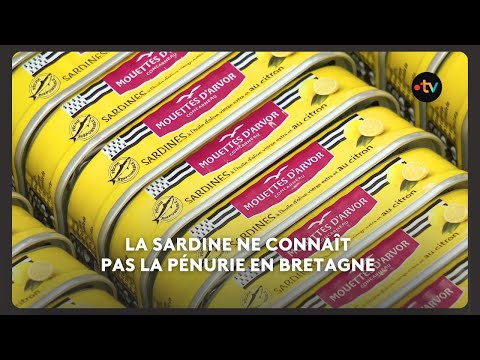
Douarnenez’s more recent growth was built around sardines. The municipal history traces the town’s rapid expansion in the nineteenth century to factories linked to the fishery. Sardines were first salted and pressed, and from 1853 canning technology helped turn the port into a major industrial centre. The city’s own walking route, the Chemin de la Sardine, uses seventeen interpretive panels to connect the old harbour, lanes, canneries and later changes in the fishery. Following it makes the geography of work visible: the steep streets were not an ornamental backdrop but routes between homes, workshops and the waterfront.
The 1924 strike of the Penn Sardin—women employed in the sardine factories—is central to this history. Beginning in November, the dispute over pay and working conditions lasted 46 days and ended with gains that included better wages, night-work premiums and recognition of union rights. It drew support across the town and national attention. Joséphine Pencalet, a worker involved in the movement, was elected to the municipal council in 1925; the election was later annulled because women were not yet legally eligible. These are documented events, and they give the town’s industrial heritage a human and political dimension often missing from a purely nautical account.
Fishing remains part of the working port, though it is less dominant than in the town’s industrial heyday; local canneries, fish trade and maritime crafts preserve some of that connection. Around Port-Rhu, the visitor office describes boatbuilding and restoration yards, training in traditional sailing trades and a floating collection of historic craft. Tourism, food businesses and coastal recreation now share the waterfront with working maritime life. The mix is more interesting than the idea that the port has simply become a museum.
Three harbours, one maritime museum
Port-Rhu is the place to begin. Once a commercial harbour linking Brittany with wider routes, it is now a sheltered basin closed by a lock. The lock and pedestrian bridge shape daily access between the two sides of the ria and the Tréboul quarter; visiting boats enter according to tide and lock times. The Port-musée sits at Place de l’Enfer. Its indoor galleries tell the story of boats and seafarers in Douarnenez and elsewhere, while vessels alongside the quay bring the scale of working and traditional boats close to the visitor. Check which ships are open and the seasonal museum hours before travelling.
From the museum, a quayside walk passes the restored wooden-boat yards, a boat cemetery and the Jean Marin footbridge, with views back toward the ria and out to Île Tristan. The old fishing port of Rosmeur has a different tempo: it faces the bay and carries the marks of a town organized around landings, processing and the fish market. Across the water, Tréboul combines former fishing streets with a marina, coastal paths and Sables Blancs beach. The local bus network links these quarters with Pouldavid and Ploaré, so a visitor without a car can connect the museum, old port and beach, while checking the day’s route and timetable.
Île Tristan and the coast beyond the town
Île Tristan looks close enough to reach from the waterfront, but the crossing is governed by the tide. The island is protected, and access is offered only on a published calendar, either on foot during designated low-tide openings or by organized boat and guided visits. The tourist office warns that times are indicative, conditions can shorten a crossing, and rising water or strong currents can make it unsafe. Treat the crossing as a planned excursion: check the day’s access notice, footwear and booking requirements, and never rely on a photograph or yesterday’s tide table.
At Tréboul, Sables Blancs offers swimming and seasonal options such as kayak and sailing-board hire; the beach has an amphibious chair for visitors with reduced mobility. The GR34 coastal path continues from here along exposed headlands toward Pointe de la Jument. The local visitor office describes a demanding, steep walk with uneven rock steps and says sturdy footwear is essential; it is not a casual stroll for every visitor. For a gentler outing, the harbour quays and the Sardine walk stay closer to the urban landscape. Further afield, the regional coach network connects Douarnenez with Quimper and Audierne, and a summer service toward Audierne also serves Locronan. Timetables change by season.
Food, language and local memory
Sardines remain the most obvious food story, but Douarnenez is also closely associated with kouign-amann. The local tourism office recounts its origin in 1860, when baker Yves-René Scordia improvised a cake from bread dough, butter and sugar; this is the town’s familiar origin account, not a reason to turn a culinary anecdote into an archaeological fact. Today the cake offers an edible way to encounter the Breton words kouign (cake) and amann (butter), while the morning market and fish shops keep the sea present in everyday meals.
Breton is part of the town’s cultural landscape, and the municipal motto “Dalc’h mad” means “hold fast.” French remains the language of municipal and visitor information, so this edition is written in French for the local-language version. The Bay’s best-known story, the submerged city of Ys, belongs to Breton legend. It has inspired art and storytelling, but the evidence for Douarnenez’s history lies in the Roman vats, the port records, the sardine factories and the social movements. Holding legend and record apart makes both more interesting.
The nearest railway station is in Quimper; regional coach 951 connects it with Douarnenez, and Tud’Bus serves the town’s principal quarters and nearby communes. That connection makes it possible to reach the coast without driving, although the return trip should be planned around the published schedule. Douarnenez rewards a stay long enough to walk one harbour, visit the museum, taste a local cake and then see how the bay changes the town’s pace. Before setting out, confirm bus times, museum openings, island access and coastal conditions.
 Douarnenez on film: sardine work, the 1924 strike and sailors’ memories
 This An Taol Lagad segment follows a heritage walk marking the 1924 sardinières’ strike through Douarnenez. The route and public artworks provide a way to encounter the labour story in the actual streets where the town’s fish-processing economy took shape. It also makes clear that the strike is remembered as a civic event, not only as an episode in factory history. The film was made for the centenary programme, so its commemorative setting belongs to 2024 even though the history it explores remains part of the town today.
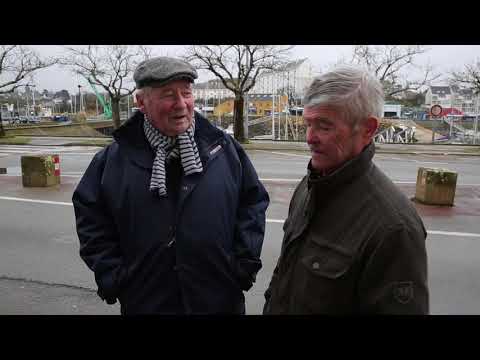 Marins à l’ancre is a local oral-history project led by Emglev Bro Douarnenez with the Port-musée. This episode, titled around Robert Olier and Jean Pencalet, belongs to a wider collection of recorded memories about fishermen’s lives ashore, cafés and the old fishing school. Its value is the voices and local perspective; it is not a complete account of every harbour or a current visitor-information film. The public video page does not expose a reliable upload date, so none is supplied here.