Quimper is a city of waterways and lived craft. The Odet and Steir meet near its historic heart, where cathedral spires, stone quays and timber-fronted houses shape a walkable centre. South across the river, Locmaria keeps another story in view: pottery workshops, a medieval church and the long local tradition of painted faience. INSEE counted 64,385 residents across the whole commune in 2023; that reference population became legally effective on 1 January 2026. With 46,441 jobs located in the commune in the same year, Quimper is also a working regional centre, not simply a picturesque stop.
Start with Saint-Corentin and the old streets
The Cathedral of Saint-Corentin anchors the centre. Its Gothic scale and the surrounding former episcopal quarter make it easy to link architecture, religion and civic history in one short walk. The official visitor route points out houses from the sixteenth and seventeenth centuries, remnants of the old fortifications and the quays along the Odet. Place Saint-Corentin has a longer public history than its present cafés suggest: the municipal guide records medieval fairs and markets there after the Gothic cathedral was built. Nearby, the Breton Departmental Museum occupies the former bishops’ palace, while the Museum of Fine Arts holds a collection spanning the sixteenth century to today, with a notable body of Breton painting.
Allow time to follow the river rather than crossing the centre in a rush. Bridges and quays provide changing views of the cathedral towers and the compact street grid. The Odet gives the city a softer edge, but the streets remain active: markets, shops and cafés make the historic centre useful for an everyday visit as well as a heritage walk. Quimper’s name in Breton, Kemper, is associated in local visitor material with a confluence; the joining of the Odet and Steir is a visible landscape fact, not a licence to turn every origin story into certainty.
Locmaria and the craft that made Quimper known
Locmaria sits on the left bank of the Odet, a short walk from the old centre. Its church dates to the eleventh and twelfth centuries, and the neighbouring priory grounds and gardens give the quarter a quieter pace. The district is inseparable from faience. The city describes it as one of France’s last major centres of this craft still in activity, and the local museum traces more than three centuries of production through over two thousand pieces. Plates, figures and decorated objects show both changing artistic fashions and the skilled handwork behind the familiar Quimper palette. The tradition is not only a museum subject: workshops continue to shape the city’s identity and local economy.
Quimper’s wider economic life is diverse. At the end of 2024, INSEE counted 3,051 employer establishments in the commune; commerce, transport and services made up 71.7%, and public administration, education, health and social action 13%. This mix helps explain why the centre supports public institutions, schools, museums and a broad range of everyday services alongside artisan production and tourism. The city also sustains Breton-language and cultural programmes, making music, dance and craft part of contemporary life rather than display alone.
Arriving and planning time nearby
Quimper’s railway station links the city with Rennes and Brest through TER BreizhGo services, and local QUB buses connect the station and neighbourhoods. From Rennes, the direct regional route makes Quimper a practical rail destination; from Brest, services run along the Finistère corridor, with journey options varying by day. The historic centre and Locmaria are both manageable on foot, though the distance between them crosses the Odet and is easier with time to spare. Quimper also works as a base for exploring Cornouaille’s coast and inland villages; check regional coach connections separately if travelling beyond the city. Museum openings, workshop visits and seasonal services change, so confirm schedules before you set out.
 Quimper in three views: old town, cathedral and faience
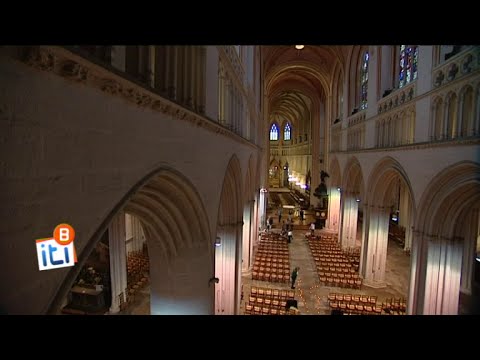 France 3 Bretagne’s report focuses on Saint-Corentin Cathedral, the architectural anchor of the old centre. It adds visual context to a visit and encourages a closer look at the building’s position among the historic streets. The report is about the cathedral, not a current visitor schedule; check municipal or parish information before planning entry.
 This film turns to the Henriot faience works, a living craft associated with Quimper for more than three centuries. It complements a walk in Locmaria and a visit to the faience museum by showing the production side of the tradition. Workshop tours and public access vary by season, so confirm current arrangements with the maker before going.