A small town with a working harbour
Roscoff occupies a low granite headland on the north coast of Finistère, facing Île de Batz and the broad sweep of the Bay of Morlaix. The setting invites a seaside reading, but the town's character comes just as much from work: maritime trade, market gardening, ferry traffic, fishing, seaweed gathering and marine science. INSEE counted 3,334 residents in the municipal population of the whole commune in 2023; that figure became the legal population in force on 1 January 2026. The same census series counted 3,187 jobs located in Roscoff in 2023, a workplace total that also includes people who live elsewhere.
Merchant streets and an Atlantic past
Archaeological finds around the present-day territory include Upper Paleolithic tools, megalithic remains, an Iron Age underground structure and Gallo-Roman traces. They point to a long human presence in the area, not to a proven Roman founding of the town or uninterrupted occupation. The written record becomes clearer in the sixteenth century, when Roscoff shipowners and captains traded on their own account through the Channel and beyond. The island channel sheltered vessels moving between the Netherlands, French ports and the Iberian Peninsula. Merchants began building Notre-Dame de Croaz-Batz around 1500; stone trading houses, several dated 1603–1607, still give the old centre its distinctive scale and profile.
Roscoff's later story also follows the coast's changing routes to market. The municipality dates the seasonal journeys of the Johnnies, onion sellers who crossed to Britain, to around 1815. Their bicycles and braided onion strings became a familiar image in British towns. The tale that Henri Ollivier was the first to begin the trade is presented by the local museum as a story told, so it is best kept in that category. Roscoff onion later gained AOC recognition in 2009 and European AOP protection in 2013.
Ports, produce and marine science
The town has two different harbour settings. The old central port still serves fishing and pleasure craft, while the deeper-water port at Bloscon handles passenger ferries, freight, fishing activity and a large marina. Sailings connect Roscoff with Britain and Ireland; routes and departure days vary by season. On land, the oceanic climate and sandy-loam soils support specialized market gardening. The municipality also describes local seaweed harvesting, with goémoniers and hand collectors supplying processors for food and cosmetics. This is a practical working landscape rather than scenery staged for visitors.
Science is another part of everyday Roscoff. The Station Biologique, founded in 1872, is a marine research and teaching centre affiliated with CNRS and Sorbonne Université. Its presence grew from the variety of marine life around a coast with strong tidal movement. It is an active research institution, so visitors should not assume that laboratories or campus buildings are open for casual tours.
What to see and how to use the town
Walk the old harbour and the merchant streets, allowing time to study the stone façades and Notre-Dame de Croaz-Batz. The Maison des Johnnies and de l'Oignon de Roscoff gives context to a crop and migration story that joins the town to the other side of the Channel. The Jardin Exotique et Botanique, set above the shore, brings together subtropical planting and an outlook across the bay; its published season and hours change, so check before setting out. The weekly market, local shops, restaurants, hotels, health facilities and year-round visitor office make Roscoff useful as a base as well as a short stop.
For a close view of the island-facing coast, the boat crossing to Île de Batz takes about 15 minutes according to the local tourism office. High tides can change or cancel departures, and the landing arrangements can vary, so confirm the sailing and embarkation point on the day. Roscoff is also a starting point for coastal walking on the GR34 and for long-distance cycling routes. From Morlaix railway station, BreizhGo line 929 links Morlaix, Saint-Pol-de-Léon and Roscoff; the tourism office estimates about 35 minutes by bus. Check the current timetable, seasonal service and connections from Brest before travelling. Tide, wind and rain can make the same waterfront feel entirely different, which is part of the reason Roscoff rewards a slower visit.
 Roscoff in three videos: its harbour town, the Johnnies and Île de Batz
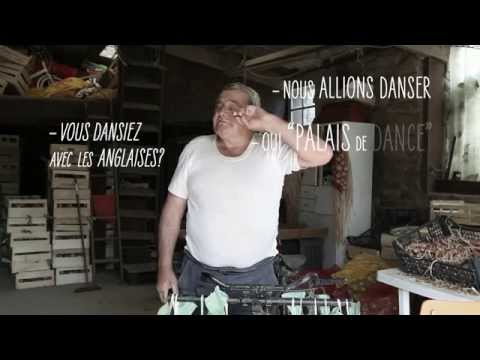 This bilingual French-English short tells the story of the Johnnies, onion sellers from Roscoff who travelled across the Channel. It adds a human and commercial dimension to the town's agricultural identity: the crop was not only grown locally but carried into British streets through seasonal migration. The AOP Roscoff onion association lists the film as a November 2014 feature. It is a historical portrait, not a current report on farming rules or museum hours.
 FRANCE 24 shifts the view from Roscoff to Île de Batz, the island reached by boat across the channel. Its report focuses on year-round island life, agriculture, local supply and the seasonal change brought by visitors. That perspective helps explain why the crossing is more than a short excursion: it links two communities with different rhythms. Published in 2022, the report is not a timetable or live travel advisory; check ferry schedules, tides and visitor information before setting out.