Guingamp is a compact Breton town whose old streets rise above the Trieux, a river that brings a green edge into the historic centre. Its scale is part of its appeal: the basilica, castle remains, timber-framed houses, a former prison turned art centre and waterside paths can all be combined in a visit on foot. INSEE counted 7,111 residents across the whole commune in 2023; that reference population took legal effect on 1 January 2026. The same census recorded 5,149 jobs located in Guingamp, a reminder that the town serves its surrounding area as well as its own residents.
A fortified centre with several layers of history
Begin around the Place du Centre, where the Fontaine de la Plomée and old shopfronts make a natural orientation point. The tourist office dates the fountain to the fifteenth century and describes the square’s timber-framed houses as part of a broad architectural sequence that includes Renaissance doorways. Nearby, the Château de Pierre II gives the centre its fortified outline. The visible castle belongs to the later medieval town; the visitor route places it alongside the basilica and the old prison rather than treating Guingamp as a relic of a single era.
Notre-Dame-de-Bon-Secours is a landmark with a long building history: the official visitor account traces the present church from a Romanesque predecessor to a major Gothic construction and later additions. Its south porch and the Black Madonna draw visitors for different reasons, religious and architectural. A short walk away, the former nineteenth-century prison offers a different kind of heritage. The Ministry of Culture dates its construction to 1834–1840 and identifies its cellular, Pennsylvania-style plan. The building now houses Centre d’art GwinZegal, where photography exhibitions and cultural activity bring a working public use to a site that might otherwise be read only through its past.
The river, local culture and a football town
The Trieux is not a backdrop: footbridges, washhouses and wooded banks make it one of the easiest ways to shift from stone streets into open air. The official 7.6-kilometre circuit takes about two hours at an easy pace and climbs toward Saint-Léonard for a wider view of the town. A shorter heritage circuit takes around an hour and a half; guided visits add stories about the old centre and the river crossings. Check locally for route conditions and tour dates before setting out.
Guingamp’s contemporary identity is also shaped by Breton music and dance. The municipality lists the Festival de la Saint-Loup among its central cultural events, bringing traditional performers and audiences into the town. Football is equally prominent: En Avant Guingamp won the French Cup in 2009 and 2014, and the Roudourou stadium remains a major gathering place. INSEE’s 2024 business data show a service-oriented local economy: commerce, transport and services made up 73.6% of employer establishments, while public administration, education, health and social action accounted for 19.4%. Cafés, shops, cultural venues and visitor services give the centre a practical life beyond sightseeing.
Getting there and planning a visit
Guingamp is a useful rail stop between Rennes and Brest on the TER BreizhGo corridor, with regional services also making onward trips toward nearby parts of the Côtes-d’Armor possible. The station sits within the town, so the historic centre is reachable without a car. From Rennes or Brest, compare current direct departures before travelling; engineering work and seasonal changes can alter the timetable. Guingamp also makes a good base for exploring the wider destination around Pontrieux and Paimpol, though coast and countryside excursions need their own transport planning. Confirm train times, guided-tour availability and the opening schedule of the basilica and art centre before departure.
 Guingamp in three frames: heritage, basilica and Roudourou
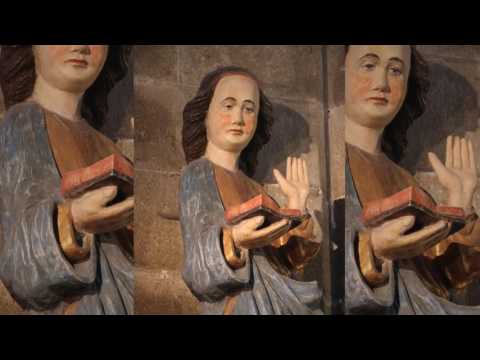 The basilica-focused video brings attention to Notre-Dame-de-Bon-Secours as a place of worship as well as an architectural landmark. It offers a close-up look that complements a walk through the centre and helps visitors notice why the building matters to local heritage. Check current access and service arrangements before visiting, as the video is not a guide to present-day opening times.
 A drone visit to the Roudourou shifts the focus from historic streets to the football culture that is central to Guingamp’s public identity. The aerial perspective makes the scale and setting of the stadium easier to understand, even for visitors who are not attending a match. Fixtures, tours and stadium access change, so consult En Avant Guingamp before planning a visit.