Landerneau is built around a crossing. At the head of the Elorn estuary, its old centre gathers on both banks of the water and around the Pont de Rohan, a bridge whose houses and shopfronts make the route itself part of the town’s architecture. The river setting gives the streets a changing horizon, while the bridge ties together two historic parts of Brittany, Léon and Cornouaille. INSEE counted 16,363 residents in the whole commune in 2023; this legal reference population took effect on 1 January 2026. That makes Landerneau a substantial service town, not simply a stop for photographing the bridge.
A bridge shaped by trade
The municipal heritage archive traces the bridge’s reconstruction to 1510 and describes its gradual transformation into an inhabited crossing lined with houses and commercial spaces. Its story is connected to movement across the Elorn and to the port trade that once linked inland markets to maritime routes. The bridge received full historic-monument classification in November 2022. From its approaches, notice how the building frontage narrows the view of the river, then open out to the quays and water. It is best understood as a working piece of urban fabric, where people still cross between neighbourhoods, rather than as an isolated monument.
Two official heritage circuits make the rest of the town easy to read. The historical route is 1.7 kilometres, with eleven themed stops and twenty-seven panels on buildings from the sixteenth to nineteenth centuries. Its subjects range from the station boulevard and religious architecture to markets, merchants, port commerce and the bridge itself. A second route, 3.9 kilometres long, focuses on Breton intangible heritage: language, music, dance, traditional dress, food and local symbols. Together they allow a visitor to move from built history to the practices that still shape regional identity.
Culture inside the former Capuchin complex
Landerneau’s cultural offer is not confined to its old streets. The Fonds Hélène & Édouard Leclerc pour la Culture, known as the FHEL, occupies the former Capuchin site and stages large changing exhibitions. Its programme currently lists a Warhol exhibition through 24 January 2027, subject to any updated opening notice. The venue is about 200 metres from the railway station, making it an unusually convenient addition to a town-centre walk. Smaller galleries, churches, market streets and the quays fill out a visit that can be as short or unhurried as you like.
The town also works as a living regional centre. INSEE recorded 8,487 jobs located in the commune in 2023 and 524 employer establishments at the end of 2024. Commerce, transport and services accounted for 74% of those establishments, while public administration, education, health and social action made up 17%. Shops, cafés, cultural venues and public services help keep the centre active beyond exhibition season. This everyday activity is part of what makes the bridge feel inhabited in more than a literal sense.
Arriving by rail and exploring the estuary
Landerneau sits on TER BreizhGo’s Rennes–Brest corridor, with rail services connecting it to Brest and onward journeys toward Quimper and Rennes. The station also has local bus connections, bicycle parking and passenger facilities. From Brest, the town makes an easy rail excursion; from farther away, check connections through Rennes and the current departure board. A walk from the station can follow the municipal heritage line toward the bridge and Saint-Thomas, then continue along the quays to see how the built centre meets the estuary. Daoulas and the wider Elorn landscape offer further outings in the surrounding area. Check train and bus schedules, museum opening times and the current FHEL programme before setting out.
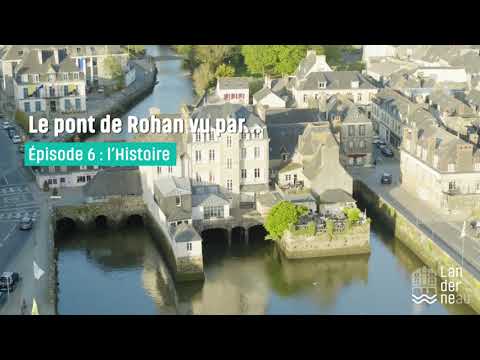 Landerneau in three cultural views: bridge, heritage and art
 In this municipal series, Isabelle Chardonnier of the regional heritage authority explains her perspective on Pont de Rohan. The interview adds an institutional conservation viewpoint to the bridge’s history and helps viewers see why its architectural rarity matters. It is a short, focused contribution, not a practical guide to access or restoration work; check current information before visiting.
 The FHEL’s official 2026 teaser introduces its Warhol exhibition, giving a glimpse of the contemporary art programme housed in the former Capuchin complex. It shows how Landerneau’s visitor offer extends beyond the historic bridge into changing cultural exhibitions. The exhibition is scheduled through 24 January 2027 according to the current official programme; confirm dates and entry details before travelling.