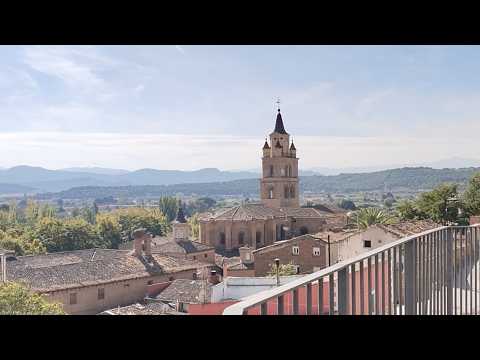
Calahorra sits above the Cidacos valley in eastern La Rioja. Its market gardens and food traditions give the place an identity beyond ancient monuments, while the old street pattern preserves traces of several communities. A walk from the Roman interpretation spaces to the cathedral and the former Jewish quarter is a way to see those layers in one compact town.
Calagurris and the medieval streets
The municipality notes a classical reference to a clash near Calagurris in 187 BCE. That is an early written mention, not proof of the exact date of foundation. The Roman town later became an important regional centre. The Museo de la Romanización explains its material remains and daily life; the municipality also marks a route through the old urban area. Medieval Calahorra developed around churches and new neighbourhoods, including a Jewish quarter in the upper streets.
The Cathedral of Santa María stands lower down, with a cloister and diocesan museum. The city’s suggested two-day route joins it to San Andrés, San Francisco, the Plaza del Raso and the Jewish quarter. The Museo de la Verdura is a different but equally local stop, presenting the produce of the irrigated land. Looking from Plaza de la Verdura towards the Cidacos helps connect the agricultural economy with the town above it. Check opening hours independently, as museums and religious buildings may follow different schedules.
A stay between Rioja and Navarra
Calahorra has hotels, restaurants and shops in town, making it possible to explore on foot without returning immediately to Logroño. Logroño is the principal Rioja city reference; Pamplona and Zaragoza are other useful larger connections by road or rail. Confirm current train or bus services for the specific trip. A short visit can focus on the Roman museum, cathedral and old streets. A longer one gives time for the vegetable museum and seasonal food in local restaurants, without turning the town into a single museum itinerary.