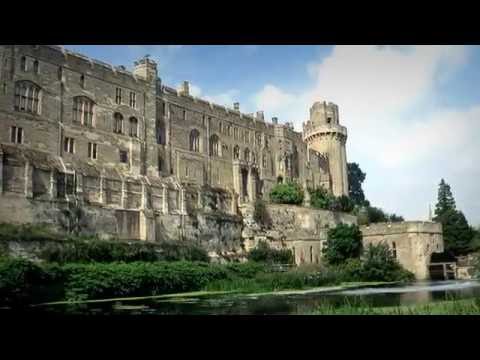
Warwick is the county town of Warwickshire, set above the River Avon. The castle brings many visitors, but the town is also an administrative and residential centre with a railway station, museums, older commercial streets and links to Birmingham and Coventry. Its visible history is not one uninterrupted medieval scene: a Saxon fortified settlement, Norman castle, late medieval buildings and rebuilding after a major fire all occupy the same walkable centre.
Population and the right boundary
The Office for National Statistics estimated 32,063 residents in Warwick civil parish in mid-2021. This figure refers to the parish, not to the whole county or the neighbouring town of Royal Leamington Spa. It places Warwick on a different scale from a small castle village: there are substantial local services and a year-round population behind the visitor economy. Leamington is close enough to share parts of a wider urban area, but its own shops, station and housing market should not be merged uncritically with Warwick's.
Æthelflæd, the Normans and the Great Fire
Visit Warwickshire traces the fortified settlement of Wæringwic to 914, when Æthelflæd, Lady of the Mercians, established a defensive burh above the Avon. This is a documented Saxon stage in Warwick's development, not evidence that the county town was founded as a Roman city. William the Conqueror built a castle here in 1068 to secure Norman control. The medieval earldom and the castle then shaped local power, while markets and the surrounding agricultural landscape supported urban life.
The centre changed dramatically on 6 September 1694 when a great fire damaged a large part of the town. Warwickshire's heritage service explains that houses were subsequently rebuilt in brick and stone, leaving an architectural contrast with older timber-framed survivors. Market Hall, a seventeenth-century building, now houses the county museum and tells more than the castle's story. To understand the town, it helps to notice where the street frontages belong to this post-fire period rather than assuming every old-looking building is medieval.
Castle, museum, church and river
Warwick Castle is the best-known attraction, with buildings and grounds changed repeatedly over many centuries. Outside its gates, Market Hall Museum interprets county archaeology, landscape and social history. St Mary's Church contains the Beauchamp Chapel; the Lord Leycester Hospital at the western end of High Street is another major historic building. These are distinct sites that reward more than a brief dash between castle entrance and car park. Mill Street offers a view of the castle from the town, and St Nicholas Park brings the Avon into the itinerary.
For a longer stay, walk the market area and the riverside or follow the Grand Union Canal towards Hatton Locks. Royal Leamington Spa, Kenilworth and Stratford-upon-Avon are nearby excursions with different histories. The castle may fill a day in its own right, so a visitor who also wants the museum, church and older streets should allow time outside the paid castle visit.
Connections from Birmingham, Coventry and London
Warwick Town station serves the centre. Visit Warwickshire lists direct trains from Birmingham, Leamington Spa, Stratford-upon-Avon, Banbury and London Marylebone. Warwick Parkway is a different station, farther from the centre and useful for some road-and-rail journeys. Buses link Warwick with Coventry, Leamington, Kenilworth and Stratford. By car, the M40 and A46 are the principal regional routes; M40 junction 15 is close to town. The best connection depends on the address and destination, not just the name of the nearest station.
Warwick's transport makes it a realistic place to consider for work in the wider Midlands, but commute times vary with the specific service and time of day. Someone thinking of moving should compare routes from a prospective home to the actual workplace, not assume that the castle's central location applies equally to every neighbourhood. Rail, bus and road options are stronger than in many villages, yet parking and traffic near the centre still need checking.
Staying, eating and considering a home
Hotels, guesthouses, pubs and restaurants are available in Warwick itself. Visit Warwickshire also lists accommodation in nearby Leamington Spa and Stratford, giving alternatives when castle events fill rooms. A stay near the centre allows the museum, church and streets to be explored on foot; a property closer to Warwick Parkway serves a different travel purpose. Check opening days for individual attractions and restaurants rather than assuming that every site follows castle hours.
For a resident, Warwick's appeal is the combination of a historic centre and practical regional connections. The sources consulted do not establish an official current average rent covering every part of the parish, so one town-wide number would conceal important differences. Compare actual listings, housing condition, access to schools and the cost of the intended commute. Warwick is large enough to offer a wider choice of services, but the decision to live here still depends on the particular street and daily route.
Sources
- ONS: mid-2021 parish population estimates
- Visit Warwickshire: Saxon and Norman history
- Warwickshire Heritage: Great Fire
- Warwickshire Heritage: Market Hall Museum
- Visit Warwickshire: town and connections
- Visit Warwickshire: historic buildings
- Visit Warwickshire: rail, bus and road
- Visit Warwickshire: accommodation