Tewkesbury stands where the Avon joins the Severn in Gloucestershire. Its abbey and the battle of 1471 are famous, but the rivers also explain the town's shape, trades and flood risk. Narrow alleys lead from older commercial streets towards the water; mills, bridges and the open Severn Ham recall an economy that depended on river transport and water power. The town is a useful base between Gloucester, Cheltenham and Worcester, provided the last connection from the railway station is planned.
Population and the town boundary
The Office for National Statistics estimated 10,667 residents in Tewkesbury civil parish in mid-2021. This is the town parish, not the much larger Tewkesbury borough, which contains other settlements and rural areas. The distinction matters when comparing services, housing or employment. Tewkesbury has its own shops, schools, museums and places to eat; the nearby cities of Gloucester and Cheltenham expand the range of work, transport and specialist services available to residents.
A Norman abbey in an older river settlement
The site was occupied before the Norman abbey, but an exact foundation date for the town cannot be established from the abbey's construction date. Tewkesbury Abbey says Robert FitzHamon founded the Benedictine house in 1087; work on the present church began in 1102 and it was consecrated in 1121. The building replaced an earlier Saxon religious site. Its large Norman nave and tower still dominate the centre, while later chapels and glass record subsequent patrons. It is a building that changed with the town rather than an isolated relic.
Medieval Tewkesbury grew as a market town serving nearby agricultural land. The rivers carried goods and powered mills; later trades included malting, tanning, brewing and other crafts. The borough council's heritage work explains how the floodplain constrained expansion and preserved the long, narrow form of the old centre. The alleyways between main streets and river are therefore practical traces of land use, not merely picturesque passages. A riverside walk past the Abbey Mill and Town Quay helps connect the street plan to its working landscape.
The battle and what can still be seen
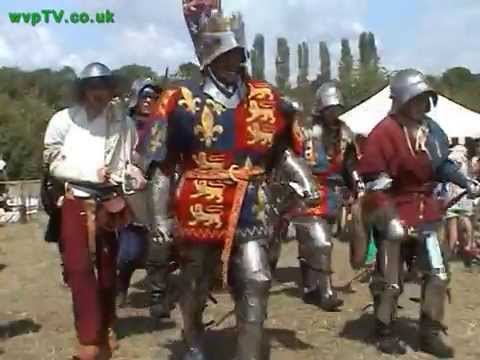
On 4 May 1471, Yorkist forces defeated the Lancastrians south of Tewkesbury in a decisive engagement of the Wars of the Roses. The abbey records the burial of Edward, Prince of Wales, in its choir, although the precise place is unknown. The visitor organisation's battle trail follows the landscape where the armies moved; it is more informative than assuming that every medieval building in town was part of the fighting. The present streets, church and surrounding fields together make the episode understandable.
For a broader visit, walk Church Street, look for the surviving timber-framed houses and narrow alleys, then cross towards the Severn Ham. The open water meadow has a long history of grazing and seasonal flooding. The local museum, Heritage Centre and abbey interpret different parts of that story. Tewkesbury's medieval festival is connected to the battle, but event dates and access change annually and should be checked before travelling.
Gloucester, Cheltenham and Ashchurch
The station serving the town is Ashchurch for Tewkesbury, outside the historic centre. National Rail's station information lists buses to Tewkesbury High Street, while Pulhams operates service 40 between Ashchurch station and town. Stagecoach's 41 links the station and town with Cheltenham; service 71 is among the routes towards Gloucester. These two cities offer larger stations and services. Worcester is another significant regional destination reached by rail via Ashchurch, subject to the current timetable.
By road, the M5 and A46 connect Tewkesbury to the wider region. Do not confuse arrival at Ashchurch station with arrival in the abbey precinct: there is an onward bus or road journey. A visitor can usually plan around it; a prospective resident should test the connection at commuting hours and check the last return. The exact address also matters because the rivers and floodplain make routes and property exposure vary across a short distance.
Where to stay, eat and live with the rivers
Tewkesbury has accommodation and food within the town itself. The local visitor guide lists the Bell Hotel on Church Street, the Tudor House Hotel on High Street and restaurants including Abbots Table and the riverside Boathouse. These are choices for a stay near the abbey and older streets; Gloucester and Cheltenham provide more hotels if rooms in Tewkesbury are unavailable. Restaurant hours and event weekends should be checked before booking.
For anyone considering a move, the rivers are a practical issue as well as a scenic advantage. The borough council documents repeated flooding, including the major 2007 event, and provides information on flood preparation. A prospective buyer or tenant should check official flood maps for the precise address rather than judge risk from a view of the river or the district name. No reliable official town-wide average rent was established in the sources used here; compare current listings, insurance and transport costs for each property. Tewkesbury's heritage is unusually visible, but the same geography that preserved it needs attention in everyday planning.
Sources
- ONS: mid-2021 parish population estimates
- Tewkesbury Abbey: history
- Tewkesbury Abbey: historical timeline
- Tewkesbury Borough Council: town heritage
- Visit Tewkesbury: battle walk
- Visit Tewkesbury: riverside and Severn Ham
- National Rail: Ashchurch station onward travel
- Pulhams: service 40
- Visit Tewkesbury: dining guide
- Tewkesbury Borough Council: flood information