A municipality made of island communities
Vårdö is an archipelago municipality east of Åland's main island, Fasta Åland. Its inhabited places are spread among islands and villages rather than gathered into one compact centre. Vargata, Töftö, Vårdöby, Lövö and Simskäla are useful names to recognise when planning a visit: museums, the church, the old postal route and ferry connections sit in different parts of the municipality. ÅSUB counted 465 residents in the whole municipality on 31 December 2025. That figure describes Vårdö as a municipal unit, not the population of Vargata or any one village.
A road remembered through its crossings
Vårdö's strongest historical thread is the Stockholm–Turku postal route. The local section ran between Båthusviken, by Vargata, and Hullvik near Vårdöby. The municipality records mail transport here from 1638 to 1910, carried by local residents in all kinds of weather. The work connected the islands to a larger communications system, but it also exposed couriers to dangerous water crossings; the municipality says people drowned and maintains a memorial at Hullvik. Milestones mark the old route, and the road between Hullvik and Vårdöby follows part of its former alignment. This is a documented transport history, not evidence for a Roman or other ancient foundation.
From sailing farms to a working archipelago
Vårdö's municipal history also recalls the period when residents sailed their own vessels and prosperous shipowners and captains built substantial farms in Vargata and Grundsunda. The surviving captain's houses give the villages a visible connection to that seafaring economy. Today, a local archipelago development association describes a mix of primary production, specialised greenhouses, apple orchards, small businesses, municipal employment and commuting to Fasta Åland. Summer brings a stronger visitor season, while agriculture remains part of year-round life. In May 2026, Ålands Radio reported the opening of a new 2,500-square-metre dairy barn at Påvals farm on Töftö. The owners said then that they planned to expand their herd; that was a stated plan at the time, not a confirmed later count.
A church with a long, carefully traceable history
Sankt Mathias Church is one of the clearest historical stops. The parish dates its oldest parts to the late 15th century. A porch was built in the 1640s, a sacristy followed in 1659, and a wooden tower was added in the 1690s. The church suffered extensive damage during the Great Wrath of 1713–1721, then was enlarged in the 1780s; later work gave it a stone tower beginning in 1804. These phases make the building a record of repeated local repair and change rather than a monument preserved unchanged. The parish lists summer opening hours, but visitors should check its current notice before making a special trip.
Small museums tell different parts of island life
The Åland School Museum occupies a school building erected in 1888 by teacher Viktor Jansson, who taught and lived there until his death in 1895. Its collection brings together school furnishings from around Åland, with part of the teacher's home also furnished with family belongings. On Simskäla, the house where novelist Anni Blomqvist lived is maintained as a writer's home and museum; her Stormskärs-Maja books made the hardships and routines of archipelago life familiar to readers far beyond Åland. The Seffers heritage farm, with roots in the 19th century, adds a domestic and agricultural perspective. The maritime museum, local heritage farms and Wennström's country store are further stops, though several of these places open seasonally or by arrangement rather than on a daily schedule.
Nature, local services and a practical itinerary
Vårdö also suits visitors who want to move slowly between shore, road and small settlements. The local development association lists walking routes at Horsholm and Lövö, protected sites on Simskäla and elsewhere, swimming at Sandösund, and operators offering kayaking, fishing or seal trips. These activities depend on season, weather and the individual provider. The Gloet project on Simskäla restored a fish passage to a shallow 1.5-hectare spawning lake and reopened overgrown shore meadow; it is a conservation story, so check access before treating the site as a visitor trail. Everyday services include a grocery shop with postal, bank and pharmacy services, a school, daycare, library and health clinic, according to the local archipelago business overview.
From Mariehamn, the straightforward route is by road through Sund to Prästö and across the short cable ferry to Töftö; the crossing is commonly described as about five minutes. A longer island-hopping approach reaches Hummelvik on Vårdö via the Northern Line from Brändö through Lappo, Kumlinge and Enklinge. Public buses serve several ferry connections, but exact links vary by day. Check road and ferry timetables, reserve vehicle space on archipelago services where required, and confirm museum and business opening arrangements before travelling.
 Vårdö in three views: island road, fish habitat and village recreation
 Lokalkraft Leader Åland’s film focuses on the Gloet restoration on Simskäla. Its description identifies a shallow, protected 1.5-hectare lake used by spawning fish and a project that reopened a fish passage and overgrown shore meadow. The accompanying project record dates the work to 2020–2021; this is a conservation account, not confirmation that the site is a marked public visitor trail.
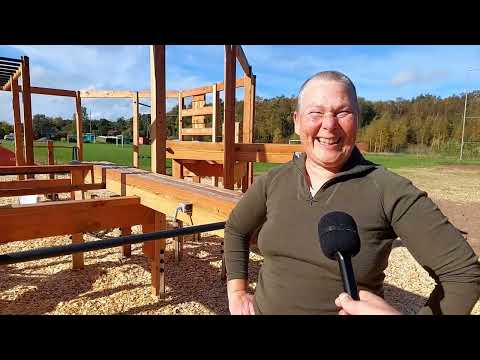 Ålands Radio reports on the outdoor gym built by Folkhälsan in Vårdö and Vårdö’s sports association at the football field in Vårdöby. Published on 28 September 2026, the piece shows a recent local recreation project and describes the reporter’s visit to see how it works. It adds a present-day community angle to the landscape tour and habitat film, without promising visitor access or staffed facilities.