Vantaa is a city of several centres rather than one old town: the railway and museum district of Tikkurila, the airport-facing Aviapolis, western Myyrmäki, and the medieval parish village by the Vantaa River each tell a different part of its story. The city had 252,956 residents on 31 December 2025, according to the municipality’s 2026 interim review. Its position beside Helsinki is practical, but Vantaa rewards visitors who leave the airport corridor and explore its older settlements, river landscapes and forest edge.
Helsinga before the modern capital region
People lived in the area in the Stone Age, when the coastline lay farther inland than it does today. The city museum traces the medieval parish of Helsinga to a written record dated 14 September 1331. A document from 1351 granted fishing rights in the Vantaa River to Padise Abbey, evidence of how waterways connected local livelihoods with wider networks. St Lawrence Church in the old parish village dates from the 1450s, while its bell tower is older, dated to the 1350s. The church is among the oldest surviving buildings in the capital region. Its sculptures, later glazing and post-fire restoration bring several centuries into one interior.
Rail transformed the region. Finland’s first railway crossed the parish in 1862, and Tikkurila’s brick station became a focus for industry and settlement. The former station now houses Vantaa City Museum, making it a useful first stop for understanding how a rural parish became a modern city. Vantaa was made a market town in 1972 and received city status in 1974. Tikkurila’s industrial history includes an oil mill and varnish works that developed into the paint manufacturer bearing its name.
Science, aviation and manor landscapes
Heureka, the Finnish Science Centre, sits beside Tikkurila station and offers interactive exhibitions that make a strong family visit as well as a rainy-day option. Check its current exhibitions, ticketing and opening calendar before going. In Aviapolis, the Finnish Aviation Museum introduces Finnish civil, military and recreational aviation through aircraft, photographs and objects. A new museum is under construction next door, while the current galleries are scheduled to remain open at least until 31 March 2027; construction has changed vehicle access, so check the museum’s latest directions.
For a slower historical visit, Helsinge parish village gathers St Lawrence Church and buildings from different centuries around a still-inhabited village street. Farther east, Håkansböle Manor is a 1908 Jugend-style residence set in a restored park. City museum exhibitions and children’s culture occupy buildings in the grounds, but interior access and seasonal opening vary. These places show Vantaa’s history as a lived landscape rather than a collection of isolated monuments.
Kuusijärvi and the forest side of Vantaa
At Kuusijärvi, the city’s built-up districts give way to swimming, sauna and trails. The Sudentassu bridge links the recreation area to Sipoonkorpi National Park. A marked route from the lake toward Bisajärvi makes it possible to turn a short outing into a longer woodland walk; the out-and-back distance is about six kilometres. Check trail conditions, sauna arrangements, swimming information and seasonal transport before setting out. Håkansböle Manor and the forest gateway make useful east-side additions to a trip centred on Tikkurila.
Getting around and what the city does
Vantaa’s economy is closely tied to Helsinki Airport, logistics, transport, services and tourism, while its neighbourhoods also contain workplaces, schools, parks and everyday shopping. HSL’s I and P trains connect central Helsinki, Tikkurila and the airport on different circular routes; bus 600 also serves the airport corridor. Tikkurila is a convenient rail base for Heureka and the city museum, while the airport station sits beneath the terminal. For Kuusijärvi, Håkansböle and the historic church village, use current HSL journey planning or a car and check the final connection. Construction, seasonal services and timetable changes can affect an otherwise straightforward visit.
Vantaa works especially well as a two-part stay: pair Tikkurila’s museum and science centre with an afternoon at the medieval church village, then reserve another half-day for Kuusijärvi or Håkansböle. Confirm museum access, events and transport schedules; the city’s attractions are spread across distinct districts.
 Vantaa in three stops: medieval parish, lake forest and manor
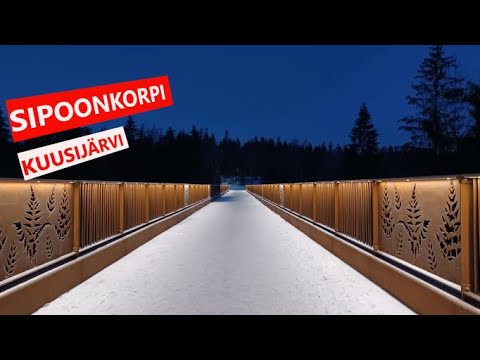 JuJu's KUUSIJÄRVI - SIPOONKORPI film turns to Vantaa's outdoor side, showing the lake recreation area and its relationship with the neighbouring national park. It complements the church history with a landscape-focused view. Current trail, sauna and swimming conditions should be checked with the city.
 The official Vantaa-kanava feature introduces Håkansböle Manor and its Jugend heritage as the site opens its doors. It adds a restored manor-and-park story distinct from the church and forest films. Exhibition dates, interior access and seasonal services can change, so confirm details before visiting.