Sipoo (Sibbo in Swedish) is a bilingual municipality east of Helsinki where the metropolitan edge gives way to fields, forest, a river valley and a broad southern coastline. Statistics Finland recorded 23,006 residents across the municipality on 31 December 2025; that figure covers Sipoo as a whole, not just its administrative centre, Nikkilä. Söderkulla anchors the south, Talma the north, and older villages remain part of the landscape between them. Finnish is the majority language, while Swedish is an official language and a visible part of everyday place-naming.
A river corridor with a long memory
The municipal history describes first Stone Age settlement in the area around 6,000–7,000 years ago, after post-glacial land uplift had brought more of the coast above water. That is evidence of early human presence, not the founding date of today’s municipality. During the Viking Age, people from Häme came to the coast to fish and hunt; the Sipoonjoki River gave them a route toward the Gulf of Finland. Swedish-speaking settlers moved up the river valleys in the 13th and 14th centuries, joining Finnish-speaking residents already there; Estonians also settled in the area. The oldest known document whose text names Sipoo dates to 22 September 1352. Later, the medieval Great Coastal Road, also called the King’s Road, connected the parish to routes between Turku and Vyborg.
Sipoo’s past is not confined to a museum display. At Sibbesborg, near Söderkulla, low earthworks and wall remains mark a medieval fortification beside the Sipoonjoki. Its exact builders, date and original name are not known. Local folklore credits Vikings; another possibility once proposed a Danish expedition in 1191. Municipal archaeological information says newer research points to a brief period of use in the late 14th century, during the reign of Albert of Mecklenburg. The former castle island is now ringed by fields: land uplift has moved the shore, leaving the gulf roughly a kilometre away. The site rewards a visit precisely because the evidence is fragmentary and the landscape makes its changing history legible.
Two churches, one village landscape
Near Nikkilä, the Old Church of St Sigfrid and the later Sipoo Church stand only a few hundred metres apart. The grey-stone medieval church dates to the 1450s; red-ochre and soot-black paintings survive on its walls and vaults. Its unusual plan, with a three-aisled choir and two-aisled nave, sets it apart from many Finnish medieval stone churches. The red-brick Neo-Gothic church, designed by Theodor Decker, was consecrated in 1885 as the parish grew. Both Finnish- and Swedish-speaking congregations use it. Visits are arranged when the church verger is available, so check before travelling. Nearby, the former Nikkilä psychiatric-hospital grounds have become a residential quarter whose paths still preserve the scale and traces of an institutional landscape. The Sibbesgården homestead museum in Gesterby offers another view of village life through historic buildings and local collections; opening is seasonal or by arrangement.
From forest paths to the archipelago
Sipoonkorpi National Park brings a surprisingly large forest experience close to the capital. The municipality lists Byabäcken Nature Trail at 1.4 kilometres one way, or 2.1 kilometres as a loop, and the easy Korvenportti route at 2.2 kilometres one way, or 4.4 kilometres as a loop; the latter takes roughly one to two hours. Longer combinations can fill a day, while the municipality also points visitors toward village scenery, shoreline, islands, beaches and outdoor activities. In summer 2026, a weekend hop-on hop-off service was advertised for the park, but seasonal transport can change. Sipoo’s visitor pages also list cafés and restaurants, accommodation, guided nature experiences and local activities. Grocery shops are available in both Nikkilä and Söderkulla, useful if you are planning a self-guided walk.
Getting there and making a day of it
By car, Sipoo is about a 30-minute drive from Helsinki; the municipality estimates around 30 minutes from Porvoo to Nikkilä and 20 minutes to Söderkulla. The E18/Porvoo Highway and E75/Lahti Highway are the principal road approaches. HSL buses connect Sipoo with Helsinki and link Nikkilä, Söderkulla and Talma; municipal information lists routes including 785, 786, 787, 788, 841 and 848. Travellers arriving by train can use Kerava, the nearest passenger-rail station, and continue by bus. Check HSL or Matkahuolto for the actual departure and connection on your date, especially for the park and village attractions. Sipoo works best as a deliberately varied visit: medieval church and uncertain castle, then a forest walk, then a meal or overnight stay among the southern coast’s villages.
 Sipoo on film: forest, fortress and two churches
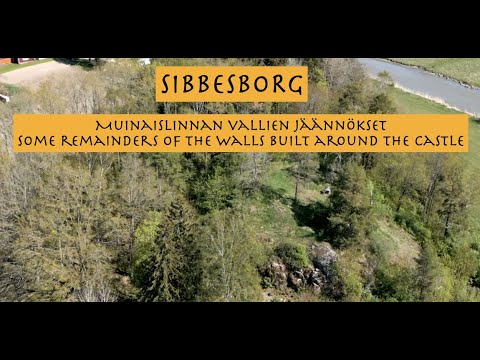 Snaducca’s video focuses on Sibbesborg, the remains of a medieval fortification beside the Sipoonjoki. The municipality says the exact builders, date and original name are uncertain; the Viking origin belongs to local folklore, while newer research points to a short period of use in the late 14th century. The video is a visual introduction to the site, not proof of one origin story. Check local access information before visiting.
 MarkusH’s short “Churches of Sipoo, Finland” brings together two landmarks that make more sense as a pair: the 1450s Old Church of St Sigfrid and the red-brick New Church consecrated in 1885. The municipal page describes their different architecture and close setting near Nikkilä. Treat the video as a visual first look; the churches’ visitor access is arranged, so confirm opening or appointment details separately.