A rural municipality arranged around a river valley
Askola lies in eastern Uusimaa, within the cultivated valley of the Porvoonjoki River. Statistics Finland recorded 4,677 residents across the whole municipality on 31 December 2025. That total includes the church village, Monninkylä and a network of smaller settlements. The landscape is green and gently rolling, with farms and wooded slopes opening along the river. Askola is a place for a self-planned day out: its attractions are spread between villages, and the quiet pace rewards visitors who leave time to move from one site to another.
The municipality was established in 1896. Its visitor information describes the Porvoonjoki as a historical route from the coast inland, and the river valley remains the best way to understand the area's settlement and scenery. Agriculture and rural businesses are part of this setting, while local visitor services are small-scale and distributed rather than concentrated in a resort district.
Twenty giant’s kettles cut into the rock
The most unusual natural attraction is Askolan hiidenkirnut, a group of 20 glacial potholes on a steep rock face by the Porvoonjoki in Korttia village. The municipality describes the largest, Jättiläisen Kuhnepytty, as 4.2 metres wide and up to 10.3 metres deep. The formations were carved by swirling water and stones during the last ice age, around 10,000 years ago. They make geology tangible: a short visit moves from the river valley into hollows shaped by the forces of a much colder landscape.
The site’s modern discovery story belongs to a later period. The municipal account says Soini Järvelä accidentally exposed the potholes in 1950, and that the area became a recognised national attraction at its official opening in 1965. The visitor route begins at a car park about 500 metres away. It includes steep stairs, roots and rocky ground; the site is not accessible for visitors with reduced mobility and receives no winter maintenance. There is a small admission fee, so check current conditions and payment information before leaving. A marked route along the top of the rock gives views across the Porvoonjoki valley, while a lower path and riverside fire shelter add options when conditions allow.
The wooden church and a bread-trade museum
Askola’s church village has a landmark of a different kind: the wooden cross-shaped church completed in 1799, associated with master builder Matti Åkergren. The separate bell tower followed in 1800. The municipal account says a church already stood on the site in the seventeenth century and that the present building retains objects from that earlier church, including a Baroque pulpit. A local historian has interpreted the pulpit as a possible trophy brought from the Thirty Years’ War; that is an attributed interpretation, not a certainty. The church is still used for services and events, so arrange a visit with the parish rather than assuming it is open as a museum.
Next door, the local-history museum occupies an old grain store. Its collection reaches from Stone Age finds to farming tools, vehicles and the history of rye bread, a major product sold from Askola in the late nineteenth century. This small museum places archaeology alongside the daily work that shaped the valley. It opens on summer Sundays from June to August, apart from Midsummer Sunday; check before planning a visit outside those dates.
River walks, villages and local character
Askola’s attractions extend beyond the church village. The municipality’s visitor guide points to the youth home of writer Johannes Linnankoski, the pharmacy museum, rural farms and active village destinations. These sites suit a flexible itinerary rather than a hurried checklist. Monninkylä is the other main service centre, and the municipality identifies groceries, a pharmacy and a fuel stop among everyday amenities there and in the church village. Pick up food in a centre before heading to a rural site, since opening times and services vary.
A simple day can begin at the church and museum, continue to the potholes, then follow the river valley toward Vakkola or another village. The order matters: the pothole path is steep, and wet or icy conditions can make its stairs difficult. The landscape and small settlements are the experience as much as any single attraction; allow time for the drive and stop only where access is public and safe.
Getting there from Porvoo or Helsinki
Porvoo is about 20 kilometres away by road, while the municipality gives Helsinki as roughly 70 kilometres. The simplest drive from Helsinki follows E18 to Porvoo and then main road 55 toward Askola. Public transport is possible through Porvoo: current weekday buses run between Porvoo and Askola, with some continuing to Pukkila. The municipality warns that its posted times are indicative and season-dependent, so check Matkahuolto for the exact date and stop. There is no railway station in Askola; plan the transfer in Porvoo and consider how you will reach sites outside the centres. Check museum opening, bus schedules, pothole access and weather before setting out.
 Askola in three views: glacial potholes, church and river valley
![KoskiK’s 2020 drone film is titled “[Drone] Askola Kirkko Hautausmaa,” focusing on the church and cemetery landscape. It offers an aerial orientation to the village landmark, whose wooden church dates from 1799 and whose separate bell tower is older. The film is a visual complement to a ground visit, not a source for interior access or church opening times.](https://i.ytimg.com/vi/-wrgTAWHTxw/hqdefault.jpg) KoskiK’s 2020 drone film is titled “[Drone] Askola Kirkko Hautausmaa,” focusing on the church and cemetery landscape. It offers an aerial orientation to the village landmark, whose wooden church dates from 1799 and whose separate bell tower is older. The film is a visual complement to a ground visit, not a source for interior access or church opening times.
KoskiK’s 2020 drone film is titled “[Drone] Askola Kirkko Hautausmaa,” focusing on the church and cemetery landscape. It offers an aerial orientation to the village landmark, whose wooden church dates from 1799 and whose separate bell tower is older. The film is a visual complement to a ground visit, not a source for interior access or church opening times.
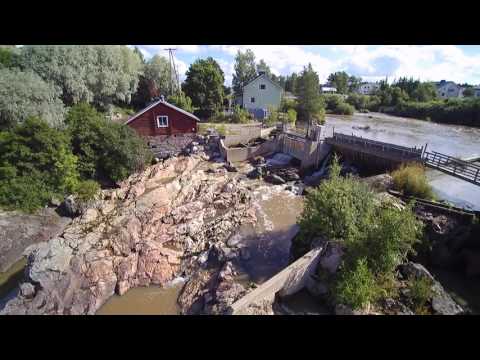 DroneKalevala’s “Porvoonjoki, Vakkolankoski, Askola,” published in 2017, shifts attention from monuments to the river corridor. Its title links the Porvoonjoki with Vakkolankoski and the municipality, giving viewers another way to understand why the valley shaped local settlement. As an older aerial upload, it should not be treated as a current access map or a report on river conditions.