Espoo is not a Finnish town with one old centre and a ring of suburbs. It is a large coastal city whose urban districts grew around several centres, while forests, lakes and islands remain close to daily life. The City of Espoo counted 325,716 residents at the end of 2025; the figure refers to the entire municipality. That scale can mislead a first-time visitor: rather than looking for one central square, choose a district and let the rail and metro network connect it to the next. The reward is a city where a modernist garden suburb, a university campus and a national park all belong to the same municipal story.
A long rural past and a recent city identity
Espoo’s history is visible in more than one layer. The city’s own cultural-environment account traces medieval villages and parish life across the area. Espoo Cathedral, in the district known as Espoon keskus, is the strongest surviving landmark of that older landscape: the grey-stone church was built in the 1480s and 1490s. The transformation into a fast-growing urban municipality came much later. Espoo became a city in 1972, and housing, roads, universities and workplaces expanded rapidly in the second half of the twentieth century. The history is therefore one of settlement and gradual urbanisation, not an invented classical foundation.
That growth did not produce a single downtown. Espoon keskus remains an administrative and transport hub; Leppävaara, Matinkylä, Espoonlahti and Tapiola each have their own services and public spaces. Tapiola is particularly worth walking through. Planned as a garden city from the mid-twentieth century, it brings housing, parks, sculpture and public services into a landscape of paths and planted courtyards. Its identity is still being renewed around the metro station and cultural centre, while the city says the historic garden-city character is to be preserved. WeeGee, with the KAMU Espoo City Museum and other museums, adds exhibitions and architecture to the visit.
Research, everyday services and the coast
Espoo’s working identity is not just tourism. Otaniemi combines Aalto University’s campus, research facilities and companies with cafés, restaurants and other everyday services. Aalto describes the campus as a meeting place for the university, partners and residents; OtaNano, operated by Aalto and VTT, is a research infrastructure serving micro- and nanotechnology. This gives the city a visible knowledge-and-innovation dimension, while shopping, education, public services and commuter travel shape its ordinary economy. Visitors can experience that mix simply by walking from Otaniemi’s campus buildings toward the shoreline or taking the metro to Tapiola.
The sea is another part of the city’s character. Espoo’s coastline runs for nearly 60 kilometres and its waters include more than 160 islands, according to the city. The 40-kilometre Waterfront Walkway links coastal districts on the mainland, while scheduled summer boats reach several recreation islands. Pentala is a rewarding example: its Archipelago Museum interprets fishing life and island settlement, and a nature trail leads toward Pentalanjärvi and the sandy Diksand shore. The museum’s season, boat service and café hours are limited, and island conservation rules matter; check the city’s current guidance before going.
Nuuksio within a metropolitan day trip
Northwest of the built-up centres, Nuuksio National Park brings a different scale into the itinerary: rocky pine ridges, spruce woods, small lakes and marked trails. The Finnish Nature Centre Haltia is both an interpretive stop and a practical gateway, with exhibitions, trail advice, equipment rental and a restaurant. The City of Espoo describes several marked loops from Haukkalampi, ranging from two to seven kilometres, as well as shorter routes around Haltia. Choose a route to match the weather, daylight and your ability; the landscape is close to the capital region but still needs outdoor preparation.
Connections from Helsinki are straightforward if planned by destination. The metro reaches Tapiola and Matinkylä; Espoo’s city information lists the trip from Helsinki Central to Tapiola at about 14 minutes. For Nuuksio, HSL currently directs visitors by commuter train to Espoon keskus and then bus 245, or the seasonal 245A, to Haltia; the ride from Espoon station to the nature centre is about 25 minutes. Service patterns and rail works change, so use HSL’s live planner before departure. A day can combine just one urban district with a nature walk, but trying to cover Tapiola, the islands and Nuuksio at once is better planned as a longer stay.
Espoo’s appeal lies in that contrast without a forced divide: a medieval church and a planned garden city, campus life and a national park, metro stations and summer boat piers. Choose one thread—architecture, coastal walking, museum history or forest trails—and give it time. Opening hours, island boats and bus connections are seasonal; confirm current information before travel.
 Espoo across the forest, garden city and archipelago
 The Tapiola walk gives Espoo an urban counterpoint to the forest. Recorded in January 2023, it takes viewers through the garden-city district and provides a street-level impression of its public spaces and built environment. The video is a personal walk rather than a formal architecture tour, so use it to orient yourself and then explore at your own pace. Tapiola is an evolving centre; construction, shops and access routes can change, and current visitor information should be checked before a planned stop.
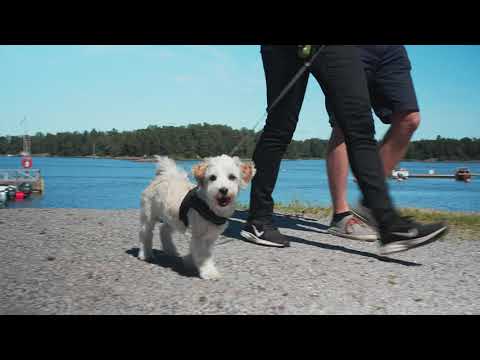 Made by KAMU Espoo City Museum, this film presents the Pentala Archipelago Museum as a summer day trip where a sea crossing, island history and nature belong to one visit. It complements the Nuuksio and Tapiola videos by showing the maritime side of Espoo. The museum and public boats operate seasonally, so the film is best used for inspiration rather than as a current timetable. Confirm the museum season and boat departures with the City of Espoo before travelling.