Urjala is a rural municipality in southern Pirkanmaa where the landscape moves between cultivated fields, lakes and the long working life of a glass village. It counted 4,440 residents on 31 December 2025; the number refers to the whole municipality, whose villages and countryside extend well beyond the Laukeela administrative centre. The appeal here is not a single monumental sight but the way local life, craft production and literary memory remain connected to a broad rural setting.
From lakeside settlement to a new parish centre
Urjala's municipal history records settlement in the area for more than 6,000 years. Stone Age dwelling sites have been identified near the old shores at Huhdin and Hakolahti, while finds from other places help trace later habitation. In the Iron Age, the central area was already settled. Urjalankylä grew between lakes Ruta and Korte, and the first church stood there on an older sacred site. A medieval stone sacristy remains; the parish's historical account says the church served until the early nineteenth century. As Laukeela became the new centre, a new church was built there in 1806. Local stories about cup-marked stones and a so-called luck stone belong to folklore and custom, not to a verifiable claim of ancient magic.
Nuutajärvi: glassmaking as a living craft
The glassworks at Nuutajärvi was founded in 1793 by Jacob Wilhelm Depont. The village's mid-nineteenth-century buildings are now part of a nationally significant built cultural environment. The historic glassworks village has changed hands and functions over time, but glass work continues through independent studios, glass artists, demonstrations, workshops and a museum. The Glass Museum Prykäri presents the village's history; current visitor information also lists a hotel, restaurant, galleries and opportunities to see or try glassblowing. Confirm openings and bookable experiences before travelling, since the schedule differs by day and season.
Urjala's economy is broader than heritage tourism. The municipality's 2026 budget describes services as the largest employment sector in its 2023 structure, followed by processing and primary production; farming and forestry have an unusually visible role for a small municipality. Its agricultural services report about 11,500 hectares of fields and 27,000 hectares of forest across the municipality. Small firms, industry, construction and public services help sustain the dispersed settlements.
Väinö Linna's landscape and visiting today
Writer Väinö Linna was born in Urjala and spent his first eighteen years there. The route associated with him began in 1978 after he invited readers to the landscapes behind his novel trilogy Under the North Star. The route connects real places and rural scenery with the setting that shaped his writing; it does not mean that every fictional character or episode maps directly to a particular farm. Guided visits are occasional, so check the municipality's event calendar rather than assuming a daily tour.
Urjala lies on the road corridor between Tampere and Turku. Direct buses serve Tampere, Toijala, Forssa, Turku, Valkeakoski and other nearby towns, with the bus station at Tampereentie 4. VAU regional service also connects Urjala with Akaa and Tampere or Helsinki. Schedules and school-day variations change; verify the current route before planning a trip. For a first visit, pair Nuutajärvi's village and museum with the parish centre or the Väinö Linna landscape, and allow time for the distances between them.
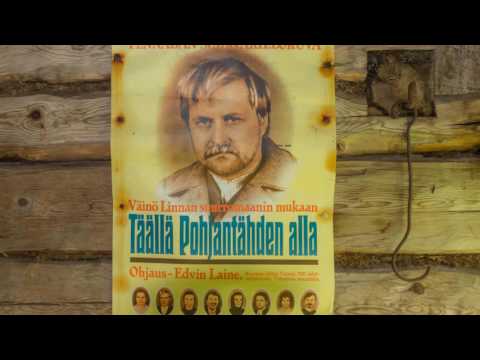 Urjala through three lenses: Linna's route and Nuutajärvi glass
 The official Nuutajärvi Glass Village channel presents the village grounds, a built environment whose industrial history began in 1793 and whose studios and visitor activities continue today. The film gives a place-based orientation to the courtyards and buildings; it is distinct from a live glassmaking demonstration.
 In this official-channel demonstration, master glassblower Eino Mäkelä shapes glass using the Somerso technique, as identified in the title. The craft process offers a close view of the skill carried on in Nuutajärvi. Demonstrations and visitor access operate on published schedules, so the video cannot substitute for current booking information.