Loimaa is often described as a rural city between Turku and Tampere, but its character comes from the way several landscapes and settlement centres meet: the Loimijoki runs through an open agricultural plain, while forests and villages extend across a municipality of 851.93 square kilometres. Statistics Finland counted 15,124 residents here on 31 December 2025. That figure covers the whole municipality, not only the central town, so Loimaa is better explored as a small journey between places than as one compact historic centre.
River, fields and changing livelihoods
The Loimijoki passes the centre, where Rantapuisto and the riverbank offer a quiet pause beside everyday shops and services. The city describes the river as shallow and generally calm for small boats, rowing and paddling, while noting that flow can change, especially after rain. The surrounding fields are part of Loimaa’s working life: agriculture and food production remain important alongside mechanical engineering, metalworking, trade and services. Municipal figures drawn from Statistics Finland count about 6,100 jobs across industries in 2024 and more than 2,300 companies in 2023. Loimaa is a regional centre where farming, manufacturing and public services coexist; tourism is only one part of its economy.
Loimaa’s administrative history explains its present size. The parish is believed to have existed in the 1420s and is first documented in 1439; these dates concern the parish, not the founding of today’s municipal area. Local self-government was established in 1869. When the Turku–Toijala railway opened in 1876, station settlements grew around Vesikoski and helped form the later town centre. Loimaa became a market town in 1921 and a city in 1969. The municipality and city joined in 2005, and Alastaro and Mellilä followed in 2009. The modern map therefore includes several villages and rural districts as well as the centre.
Churches and stories of rural work
Near Hirvikoski, Kanta-Loimaa Church stands above the Loimijoki’s broad fields. Its plans were completed in 1824 and it was consecrated in 1837. A lightning fire destroyed the wooden parts in 1888; the building was rebuilt and later restored. Seen across the low plain, it is a strong landmark in a landscape otherwise defined by long views and cultivated ground. Smaller local collections, including the Hunnaa Local History Museum in Alastaro, preserve settings and tools of rural life. Many such museums depend on local associations and open seasonally, so check current dates before making a special trip.
The Finnish Museum of Agriculture Sarka, about five kilometres from the centre toward Turku, gives the region’s farming landscape a wider context. Its permanent and changing exhibitions trace food production, agriculture and mechanisation across time. Farm buildings, tools and machinery make the subject tangible; a restaurant-café and museum shop allow visitors to stay longer. Sarka is a national specialist museum, and its story is not simply a display of old machinery: it links land, technology, household labour and the food on the table.
Loimaa’s most distinctive art visit is the Alpo Jaakola Sculpture Park. Jaakola, born in Loimaa in 1929, began building his home and workplace there in 1953, then added an atelier and sculpting spaces. He left in 1979, and the park opened to the public in 1992. Large, unconventional sculptures appear among trees and buildings, creating an exploratory visit rather than a conventional gallery sequence. The level “Stone Path of Art” is suitable for wheelchairs and prams, but the buildings are not accessible. A summer café and seasonal gallery add to the visit; confirm the current opening period and hours.
Virttaa: ridge forest, golf and motorsport
At Virttaa, northwest of the centre, dry pine forest and sandy ridges replace the open fields. Harjureitti is a roughly 28-kilometre trail network maintained jointly by Loimaa, Huittinen, Oripää and Säkylä. Its local nickname, “Little Lapland,” refers to the undulating ridge landscape, not to a northern climate. Marked paths, shelters and the Myllylähde nature area support walking and cycling; in winter, skiing depends on snow and trail maintenance. Check conditions before setting out and allow time for the trip from town.
Virttaa also contains Alastaro Circuit and an 18-hole golf course. The circuit hosts scheduled motorsport events and bookable driving experiences, so visitors should check the calendar rather than assume it is open for casual entry. Nearby, the Lasten Harju forest route offers a family-oriented stop. Elsewhere in the municipality, Melliläjärvi has a sandy swimming area, a shallow children’s beach, changing facilities, showers and disc golf. These are separate destinations across a large area; seeing all of them in one day would mean spending much of the visit on the road.
Getting there and planning the last leg
Highway 9 crosses Loimaa between Turku and Tampere, and Highway 2 passes through the municipality’s northern part. Trains stop at Loimaa station on Asemakatu along the Turku–Toijala corridor. The station has a ticket machine and accessible boarding to low-floor trains, but no staffed VR service point or public toilet. The municipality says several bus and train departures operate each day; buses use the station and stops along Highway 9. Check the live VR and Seutu+ planners for the day, fare and exact stop. Local buses mainly serve school journeys, while some rural routes have a pre-booked call-taxi service. For Virttaa and other dispersed sights, plan the final connection rather than assuming a direct bus.
A practical first day can combine the centre, riverbank and Sarka; with a car or a confirmed connection, add Kanta-Loimaa Church or Jaakola’s park. A second day can focus on Harjureitti and Virttaa, or the smaller museums and villages. Loimaa rewards visitors interested in how a Finnish rural region works: food production, transport, industry and culture remain visible in the same landscape.
 Loimaa en tres videos: agricultura, arte y empresas locales
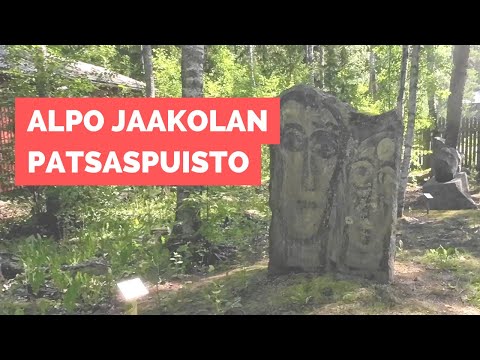 Tero Hannula’s film is specifically titled around Alpo Jaakola’s sculpture park in Loimaa. It points to a very local artistic story: Jaakola built his home and working place on the site from 1953, left in 1979, and the park later opened to visitors. The park’s outdoor works and buildings make it different from a conventional gallery visit. This independent video is a useful preview of the subject, while the municipal art museum remains the source for seasonal access, the level Stone Path of Art and the buildings’ accessibility.
 Loimaa city’s Made in Loimaa film belongs to a campaign produced with local companies and products. Its subject broadens the visitor’s picture of the municipality beyond fields and museums: Loimaa is also a place of manufacturing and enterprise, including the technology and metal sectors named in municipal information. The film is promotional rather than an independent documentary, but it offers a concise introduction to the working town behind the visitor attractions. It complements a visit to Sarka by connecting food production with the wider local economy.