Koski Tl is a small municipality with a surprisingly layered landscape: broad fields, a river broken by rapids, an old north–south road and cultural places within easy reach of the centre. It is not a staged historic town whose past can be reduced to one legend. Its appeal lies in the way the Paimionjoki shaped work and settlement, while today’s museums, riverside spaces and seasonal visitor services let a traveller encounter that history at a human scale.
A rural municipality between Turku and Hämeenlinna
Koski Tl had 2,147 residents on 31 December 2025, according to the figure the municipality attributes to Statistics Finland. This is the population of the whole municipality, not just its central settlement. The area covers 192 square kilometres. Its landscape belongs to the Loimaa clay plain: the municipal profile counts about 9,860 hectares of fields, while the northern end rises into the long ridge of Hevonlinnanharju and the south includes Liipolanjärvi. The Paimionjoki and its rapids cut through the otherwise open agricultural setting.
The name explains the place better than a romantic slogan. “Koski” refers to the rapids of the Paimionjoki, which once powered mills and saws. The letters “Tl” originally distinguished this municipality from Koski Hl, now Hämeenkoski, and referred to the former Turku and Pori Province. That administrative label outlived the province itself: in 2000 the municipal council voted to keep it in the official name.
History with evidence—and a legend left in its place
The municipality was founded in 1869, but the archaeological record of the area reaches much further back. Municipal history describes Stone Age dwelling sites and finds that may connect the earliest activity with the Suomusjärvi cultural phase, perhaps around 6500–6000 BCE. It also describes a long interval before settlement spread into the area again in the Middle Ages, by the 1300s and possibly from the late 1200s. These traces give the wider landscape a deep human past without pretending that the present village is an unchanged prehistoric settlement.
The Hämeen Härkätie passes through Koski. Local historical material presents the road as an old route between the Turku and Häme regions and says its origins may go back to the Viking Age, perhaps the 800s. That dating is a possibility, not a precisely proven birthday for the road. A more vivid local story places a pagan-era fortification on Hevonlinnanharju in the 1100s or 1200s. The municipality is clear on the crucial point: archaeologists have not found remains of the supposed stronghold. It belongs to local tradition, not confirmed architecture.
Myllyranta: where the river tells an economic story
Near the centre, Myllyranta is the best place to see why the rapids matter. The green riverside area is used for walking, relaxing, grilling, fishing and canoeing, and the local visitor information describes panels about the landscape and its past. The wider mill district around Tuimalankoski and Patakoski once had four mills and a saw. The last mill stopped grinding in the 1980s. The buildings have not survived intact; foundations and a few millstones are the tangible remains of an industry built around moving water.
The late-nineteenth-century house once occupied by a miller now anchors Myllytupa, a local heritage site maintained by the community association. Summer exhibitions and an old outbuilding with household and craft objects connect the industrial story to daily rural life. An accessible fishing platform at Patakoski, completed in 2022, adds a practical way to approach the river. The exact facilities and path conditions should be checked before a visit, especially after high water or seasonal maintenance.
Art and everyday heritage in the centre
The Yrjö Liipola Art Museum gives Koski a cultural destination with a story tied directly to the municipality. Liipola, born here in 1881, lived and worked in Hungary for three decades before returning to Finland in 1934. He donated his sculpture collection to his birthplace in the mid-1950s, and the museum building opened in 1970. Its collection now includes about 210 works, the oldest from 1900, alongside a reconstruction of the Liipola home interior and changing exhibitions. The municipality describes group visits by arrangement throughout the year and says the museum is accessible; contact ahead for a guided visit.
Nearby, Kahviaitta occupies an 1818 loan granary. It once lent seed grain and, in famine years, bread grain to local households. Today the building serves as a seasonal café with an exhibition that changes from year to year. That shift from a practical store of grain to a place for coffee and local culture neatly captures Koski’s character: heritage here is woven into working buildings and community spaces, not separated from village life.
The municipal visitor pages also list Koskenkartano Fabriikki, a café and shop in a former manor stable, the village market, the artist Johanna Oras’s studio by appointment, and glamping at Hevonlinna and Liipolanjärvi. These are real options, but many are seasonal or require advance arrangements. Check current details before building a day around them. Koski’s business landscape also remains tied to its road position: the municipality identifies heavy-vehicle and industrial-maintenance activity at Kuovi and industrial or storage premises close to Highway 10, alongside a substantial agricultural landscape. Available sources do not provide a current employment breakdown, so those examples should not be treated as a ranking of the local economy.
How to arrive and plan a day
Koski Tl lies on Highway 10 between Turku and Hämeenlinna. The municipality gives road distances of 57 kilometres from Turku, 30 from Loimaa, 33 from Salo, 36 from Forssa and 90 from Hämeenlinna. The historic Härkätie offers a slower way to approach the area by car, motorcycle or bicycle, linking the village to a much longer cultural route. By bus, the most frequent services use Highway 10; express buses stop near the junction with Koskentie, while other scheduled services use Hämeentie and the Härkätie corridor. Loimaa, Salo and Turku are the nearest rail stations. Use the live Seutu+ journey planner for current departures and connections.
A rewarding first visit can stay compact: walk through Myllyranta, look in on the mill heritage site, and book the art museum or a seasonal café. With a car and more time, follow parts of the Härkätie, pause at Hevonlinnanharju or Liipolanjärvi, and make a meal stop at one of the local businesses currently open. Museum days, restaurant hours, seasonal facilities and bus timetables change; confirm each close to travel.
 Koski Tl on film: river, sculpture and the Hevonlinna ridge
 Finrin Life’s video is titled simply “Koski Tl, Paimionjoki,” and it turns attention from the museum interior to the river that gives the municipality its name. The Paimionjoki is not just scenery here: rapids powered mills and a saw, and Myllyranta preserves traces of that history beside a public riverside recreation area. This video is a fitting companion to a visit along the water, while current access, fishing rules and river conditions should still be checked locally.
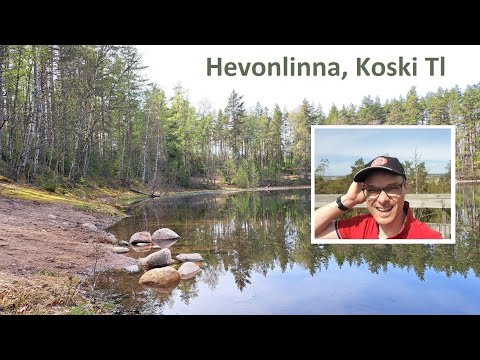 The excursion to Hevonlinna offers a view of another side of Koski Tl: the northern ridge and its lake, rather than the open fields and central river. The video title points to clear water and higher ground, which pairs well with the municipality’s description of Hevonlinnanharju and its deep lake. It is a useful orientation for anyone considering a walk or outdoor stop; use official maps and check conditions before setting out, since a video cannot establish current trail maintenance or services.