Jokioinen is a small municipality in the Loimijoki valley where farming, research and a long manor history still shape the visitor’s view. It had 4,807 residents in December 2025, across an area of 182.03 square kilometres. The municipality describes about half its land as fields and half as forest, with the Loimijoki running through it. That landscape is not a decorative backdrop: it explains why the place’s most distinctive stories involve agricultural land, a powerful estate and a present-day research community.
The municipality’s historical account places permanent settlement here in the 1300s, but this is a broad historical dating, not a documented founding day. A later turning point is much more precisely recorded. In 1562 the Swedish king Erik XIV granted the Jokioinen district to Klaus Kristersson Horn, establishing the manor estate. Over the following centuries the estate shaped the settlement’s economy and social relations. It passed through several owners before Governor Ernst Gustaf von Willebrand acquired it in 1791. He expanded farming and industry, including brickmaking and other workshops; a late-eighteenth-century cowshed and the manor’s main building still anchor the area’s architectural memory.
An estate that changed the surrounding countryside
Work on the present manor house began in 1794. Municipal history describes the three-storey, thirty-room brick building as an early Finnish example of neoclassical manor architecture. The surrounding park has older roots: the municipality dates its origins to the seventeenth century and says it was reshaped into an English-style landscape garden around the turn of the eighteenth and nineteenth centuries. Paths, old oaks and the relationship between the manor, its former working buildings and the river landscape are more revealing than a quick look at the façade. The main estate is also connected with research and land management, so visitors should check access arrangements rather than assume every building or field is open to the public.
The estate became state property in 1918. In the 1920s, land reform divided it into 950 independent farms, ending an older tenant-farming order and changing who owned the surrounding land. That history helps explain Jokioinen’s identity today: the municipality is not simply a manor preserved as a monument, but a farming community shaped by the division of estate land and by subsequent agricultural work. The municipality’s 2023 employment profile records services as the largest share of jobs, followed by processing and primary production. At the same time, Natural Resources Institute Finland (Luke) continues agricultural research in Jokioinen, including field trials and animal-research infrastructure. These are working research sites, not attractions to enter without permission.
Church, vicarage and the local story
Jokioinen’s wooden church is one of the oldest continuously used wooden churches in Finland, according to the parish. The Finnish Heritage Agency describes a seventeenth-century long church whose exterior and interior were substantially renewed in 1862, bringing in wooden neo-Gothic forms. One of the church bells dates to the 1630s. The churchyard and low bell tower make a compact historical stop close to the settlement’s older civic and religious centre. In summer the parish opens the church on weekdays during cemetery staff hours; at other times, access is by arrangement. Confirm entry before making a special journey.
The Pappilamuseo occupies a vicarage built in 1800 for the parish, commissioned by von Willebrand. Its clay walls were packed with straw and moss, then clad in brick. The building served as vicarage, cantor’s residence and housing before opening as a museum in 1959. Its rooms show the scale and daily life of a rural vicarage in the mid-nineteenth century, and the collection includes objects associated with Miina Sillanpää. The museum grounds also include outbuildings, a smoke sauna and a barn. Its 2026 public season was limited to weekends from 6 June to 9 August; that period has passed, so check the municipality for next year’s hours or possible special openings.
A railway built for the region’s work
The Jokioinen Museum Railway gives the countryside a different rhythm. The original narrow-gauge line opened in 1898 to carry passengers and freight between Forssa and Humppila. It operated until 1974; heritage operation in its current form began in 1978. The preserved railway is 14 kilometres long and uses a 750-millimetre gauge, much narrower than Finland’s state rail network. Its three stations are Jokioinen, Minkiö and Humppila. Minkiö is the centre of the railway’s narrow-gauge museum, with historic locomotives, carriages and a preserved station setting; a café and shop serve visitors in season.
Scheduled steam trains normally run on summer weekends, with exact days and departures changing by season. The museum railway’s northern terminus at Humppila connects with the standard-gauge station on the Turku–Toijala route, where VR trains run toward Turku and Tampere. The transfer makes a rail-based visit possible, but the station has limited passenger facilities and is not fully step-free. A municipal Jubilee bus trial also links Forssa bus station with Jokioinen’s Veturiaukio, Minkiö and Humppila station; the municipality’s published trial period extends to the end of 2026. Check whether it has been continued and consult Matkahuolto for current departures and connections.
Open-air learning and useful visitor services
Elonkierto is a free exhibition park about agriculture and natural resources, established in 1998. The municipality describes it as an approximately fifteen-hectare landscape where food production, research and nature can be understood together. Its grounds are open daily from 6 a.m. to 11 p.m.; farm animals and the café are seasonal, generally present from early summer into September. In October the walking landscape remains available, but visitors should not expect to find summer animals or café service. Paths and open fields make it a useful outing for families and for anyone interested in how food is produced, while the exhibits connect local work with broader research questions.
For an indoor stop, Jokioinen Tietotalo is a former manor cowshed built in 1890 and adapted for new use in 2007. It now provides office and meeting space, an exhibition room, a restaurant and a place for local groups to gather. The municipality lists cafés and restaurants in the centre, along with small lodging options in the wider area. These are practical services rather than a large resort infrastructure; opening hours, meal service and room availability vary, so confirm directly. A sensible day can pair the manor landscape and church with a seasonal railway ride or Elonkierto, leaving time for the village centre rather than trying to cover every scattered site in one rush.
Jokioinen rewards visitors who look beyond a single landmark. A manor park, a church with seventeenth-century fabric, a railway built for the region’s old industrial traffic, and active agricultural research all belong to the same landscape. Together they show how the countryside has been reshaped across centuries, from estate power and tenant farming to land reform, food production and scientific work. Plan around seasonal openings and verified transport, and the municipality becomes easier to read as a living place rather than an open-air museum.
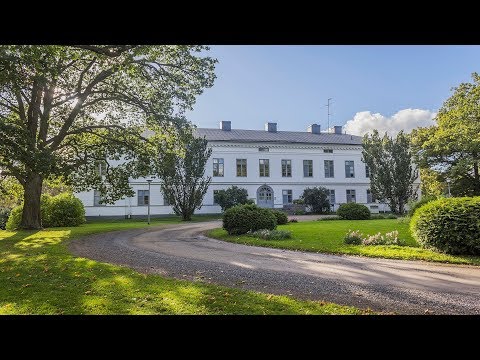 Jokioinen in three films: the manor, museum railway and wooden church
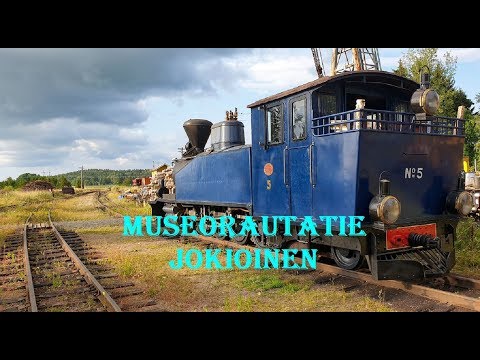 Senjori’s 2019 video is explicitly a visit to the Jokioinen Museum Railway area shared by Jokioinen and Humppila. Its description identifies the narrow-gauge line as a regional railway that once connected Humppila and Forssa. The focus is distinct from the manor: it points toward the locomotives, stations and transport heritage that grew out of local industry and passenger traffic. Use it as an introduction to the line, then consult the railway’s current seasonal timetable before travelling, since heritage trains do not run every day.
 The upload is titled “Jokioisten kirkko,” identifying the subject as the church in Jokioinen. Its available description repeats the title and gives no account of the footage, so this review cannot responsibly describe particular interiors, views or events. The church nevertheless merits a stop: the parish and Finnish Heritage Agency document its seventeenth-century origins, major 1862 renewal and an old bell dated to the 1630s. Treat the video as a location-specific pointer, and check with the parish for current visitor access.