Parkano is a small city with a large forested hinterland in northwestern Pirkanmaa, where the roads from Tampere toward Ostrobothnia meet the railway north. Its landscape shifts between lakes, ridges, marshes and working villages. The municipality had 6,011 residents on 31 December 2025, according to Statistics Finland. That figure covers the whole municipality, not only the built-up centre. A visitor can arrive for hiking or the ITE art that appears in the streets each summer, then discover that both are rooted in a longer story of timber, travel and settlement along the Suomenselkä watershed.
A town built around routes
Parkano's earliest written mention as a settled village is in a 1540 land register from the reign of Gustav Vasa, when it consisted of nine homesteads. In the medieval settlement pattern it was the northernmost village of the Kyrö parish. It belonged to the Ikaalinen mother parish from 1640 and became an independent municipality in 1867. Parkano became a market town in 1972 and a city in 1977. These dates describe the paper trail and civic status; they do not mark a single founding moment.
Transport has repeatedly changed the town's reach. The Pori–Haapamäki railway opened in 1938; the main north–south line followed in 1971. Highway 3 was completed toward Tampere in 1965 and toward the north in 1972, while Highway 23 connected Pori with Parkano in 1967 and extended toward Kihniö in 1971. The meeting of road and rail helps explain why a community surrounded by forests has also grown into a regional centre for trade and industry.
Timber, metal and services
Forests cover about 65 per cent of the municipal area, according to the city. Sawmills began appearing here in the nineteenth century, and wood processing remains part of Parkano's economic identity. The municipality describes a long tradition in machinery and metalworking: Mekes Oy, established in 1962, marked the start of the modern metal industry cluster. Plastics and footwear companies, retail and other services broaden the local economy. Along Highway 3, Kolmoskeskus provides a larger shopping concentration, while smaller specialist shops and public services remain in the centre.
This is not simply a transport stop. The broad municipal territory includes villages and lake country as well as the urban centre; a car or planned transfer helps connect the separate trails and museums. Parkano's character comes from that combination: a working town with a railway station, but also an everyday base for outdoor routes and community-led culture.
Kaidatvedet: geology and an old winter road
Kaidatvedet, also called Kaitojenvet, is a chain of small lakes that joined into a larger body of water after a dam was built at Käenkoski in the 1950s. The lakes occupy a north–south fault valley in the bedrock, the same geological corridor that includes Parkano's centre and Parkanonjärvi. The surrounding landscape offers rocky shores, moraine, forest and wetlands. It also follows the old Kyrönkangas winter road, a route from southern Finland toward Ostrobothnia that was generally used when the lakes had frozen. The municipality records that the Italian traveller Giuseppe Acerbi crossed it in winter 1799 on his journey north.
At the water's edge, Messukallio is a granite outcrop that has served as a natural gathering place and, in local accounts, even as an open-air church. The story behind its name tells of people delayed by a storm while travelling to church who gathered on the rock for a reading. Nearby Sormikivi is a large glacial erratic. A local tale says a giant threw it there; the geological explanation is that ice detached and carried it during the last Ice Age. The legend belongs to local folklore, while the rock's form and origin can be read in the landscape.
From Alkkianvuori to the forest museum
Alkkianvuori rises 201 metres above sea level. Its paths pass post-glacial shoreline boulders, a slope mire, wet meadows and unusual pines. The municipal route page lists the 2.8-kilometre Ellinpolku and 4.3-kilometre Lakilenkki. Some ground is steep and stony, so sturdy footwear and a check of conditions are sensible. A hut, toilet and a rentable lakeside sauna cabin are listed at the area; confirm current access and services before setting out.
At Kaidatvedet, Parkano's Forest Museum gives the landscape its working context. Exhibits follow forestry from the rise of sawmills in the 1860s through the mechanisation of the 1960s, with a logging cabin, stable, sauna and machinery on the grounds. The two-kilometre Kustaa-Hirvi nature trail begins here and is designed especially for families, though its boardwalks and small changes in elevation mean it is not an accessible route. The roughly seven-kilometre Käpykintukka trail connects the museum with Käenkoski; most of it is easy, apart from a more demanding start. Near the centre, the 800-metre Leijonapuisto fishing path follows the river landscape and has a summer café and minigolf nearby.
Local memory and art in the streets
The local-history museum sits in a grain store completed in 1890 beside the church. Its rooms present Parkano's household life, tools and the story of Gustaf Wrede af Elimä, remembered locally as the Parkano Baron. The upper floor preserves church objects, including reminders of the lightning strike that hit the church bell tower on 24 June 1928. The Forest Museum and this small civic collection make useful companions: one explains the forest work that sustained families, the other the homes and characters that gave the town its own voice. Opening is seasonal, so check the municipal schedule.
Parkano has also made contemporary folk art part of its public landscape. ITE art—“self-made life”—has appeared in the city since 2011, and Parkano declared itself an ITE summer town in 2018. Each summer, a changing exhibition spreads through the centre and nearby settings, with a mobile map guiding visitors from one work to another. The result is less a conventional gallery visit than a walk through local creativity and place-making.
Arriving and planning a visit
The city's 2026 visitor guide gives approximate road distances of 80 kilometres to Tampere, 80 to Seinäjoki and 90 to Pori. Highways 3 and 23 meet in Parkano. The railway station lies on the Tampere–Seinäjoki main line, making rail a practical way to arrive; departures and travel times vary by date, so check VR before booking. Regional and local buses also serve Parkano and its neighbouring communities, but routes may run only on selected weekdays or school days. Use Matkahuolto's current journey planner and the city's public-transport information. Confirm museum hours, trail conditions, seasonal facilities and event dates before travelling.
 Parkano videolla: kotiseutumuseo, tuvanelämä ja paikalliset tekijät
 The third Kulttuurikeskiviikko episode appears on the same municipal museum page as “Life in an old Parkano room”. The subject connects with the museum's period room and domestic objects, helping visitors think about how local history is experienced through ordinary interiors as well as formal milestones. It offers a different angle from a general account of the town's railway or forestry: the focus here is the household. The city's page supplies the topic; check the museum's seasonal opening details separately.
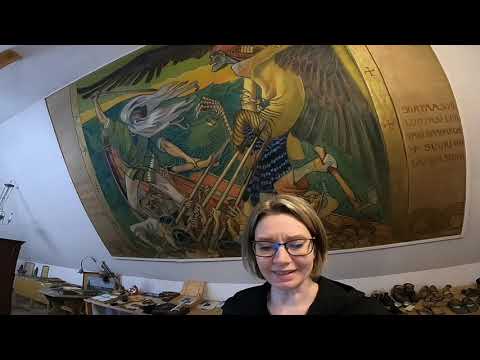 The fifth episode is listed by Parkano as “Village shoemaker Hilja Mäkinen and artist Germund Paaer”. Both names connect to the Local Heritage Museum's account of local trades and cultural life. The municipality specifically notes Hilja Mäkinen's shoemaking tools and Paaer's art, making this a focused companion for visitors interested in the people behind the collection. The review follows the official listing and avoids adding biographical details not confirmed there.