Honkajoki is best understood as a living rural centre with a layered administrative history, not as an isolated municipality frozen in time. It was an independent municipality from 1867 until it joined Kankaanpää on 1 January 2021. Today the name refers to a settlement and former municipal area within the City of Kankaanpää, in northern Satakunta. The distinction matters when looking at population: Statistics Finland’s PAAVO dataset records 1,207 residents in 2024 in postal-code area 38950, labelled Honkajoki Keskus (Kankaanpää). That is the postal area around the centre, not the full former municipality and not the whole city.
The landscape explains much of Honkajoki’s character. The Karvianjoki river corridor, farms and small settlement clusters meet extensive forest and open mire. This is a place to travel between sites rather than expect one compact old town: a church and services near the centre, a cultural landscape at Lankoski, protected bogs on the outlying roads and a sizeable motorsports complex beyond the village streets. A car gives visitors the most flexibility, although a regional bus corridor links the area with Kankaanpää and Karvia.
A documented settlement, not a made-up ancient origin
Honkajoki’s written story is modest but unusually legible. A municipal planning history describes the wider area as former wilderness and records a croft called Jokihonko in what is now the centre from 1673. Other farms and crofts appear in records later in the seventeenth century. This is the earliest documentary foothold in the account, not proof that the settlement was founded in that year or that nobody lived in the area before it. The former name Hongonjoki appears in the area’s historical record. Honkajoki separated from Kankaanpää in 1867, developed its own municipal identity and then returned to a shared administration through the 2021 merger.
That shift can be read in everyday places. The town centre still has a grocery store, library, school services and the Honkala multi-purpose hall, while the city’s Honkajoki committee has represented local needs within the larger municipality. The landscape around it remains rural, but the local economy includes industry that reaches far beyond the village’s population.
A wooden church and a village-scale museum
Honkajoki’s church is its clearest architectural landmark. The Finnish Heritage Agency describes it as a wooden, equal-armed cross church that began as a prayer house for Ikaalinen. The parish says work began in 1804 and the church was dedicated on 14 January 1810; the Heritage Agency record dates construction under the builder through 1812. Both accounts identify church builder Salomon Köykkä-Köhlström. The modest timber exterior gives way to a colourful interior: painted architectural details frame the room, and the altar painting by J.G. Hedman belongs to the church’s nineteenth-century decorative layer. It is worth checking with the parish before setting out, since access for visitors depends on services, events and current arrangements.
Nearby, Honkajoki’s local-history museum and mill museum make a different kind of visit. The collection follows domestic life, farming, animal husbandry and craft through objects made in Honkajoki and the surrounding area, from the eighteenth century into the late twentieth. The local museum was founded in 1958 in a former loan granary; the mill museum stands by the water at its original mill site near the Lankoski bridge. The city’s visitor page stated that the local-history museum was closed during summer 2026, so check for a reopening notice before planning around it. The river setting and older farm landscape at Lankoski are also reasons to slow down, even when the museum doors are shut.
Walk out into the mires
Huidankeidas offers a striking contrast to the settled river valley. Its trail lies in the Haapakeidas mire protection area, one of western Finland’s broadest mire wildernesses. From the Honkajoki–Siikainen road, visitors turn onto Haukantie and follow signs to the parking area; the marked route begins beside the car park. The official visitor guide describes roughly a kilometre of walking to the bog edge and bird tower. There is no fire-making place at the tower, so bring food and water with that in mind. Wet ground, weather and seasonal conditions can change the feel of the route; suitable footwear and a check of current trail information are sensible.
Rynkäkeidas extends the same open, quiet landscape of bogs, forest islands and small pools. In season, the surrounding woods and mires are used for berry picking and mushroom gathering, but what a visitor sees depends on timing and conditions. At Satamakeidas, a bird tower and shelter stand beside a wetland created on former peat-production ground. The city describes the water area as 17 hectares and notes waterbirds there; wildlife sightings are never guaranteed. Honkajoki’s GEO learning environment at the local upper secondary school gives the region another lens, linking geology, biodiversity and environmental education. Its access and visitor programme are arranged through the school and city rather than offered as an always-open museum.
Industry, sport and practical services
Kirkkokallio is one of the most distinctive parts of Honkajoki’s present-day identity. The eco-industrial park brings several companies into a setting designed around industrial symbiosis: materials, energy and residual heat from one process can serve another. Honkajoki Oy processes animal-industry by-products into materials used for animal nutrition, fertilizers and biofuels, while the business park includes energy and food-production companies. This is a working industrial area, not a public attraction to enter without arrangements, but it helps explain why a small rural centre has a nationally visible circular-economy profile.
For visitors looking for an active stop, Pesämäki Motorsports Centre is a genuine local draw rather than a generic activity listing. The centre has karting, motocross and rallycross facilities; kart rentals and track use should be arranged ahead. Its operator also lists sauna facilities and accommodation for up to twenty people. Competition weekends bring a very different atmosphere from the quiet bog trails, so check the event calendar, availability and admission details before travelling.
In the centre, Honkahovi combines a hotel and restaurant beside the main road, and local visitor listings also name Ailan Honkapirtti, two grocery stores, a library and Honkala’s indoor and community facilities. These are useful services for a stay or a day outdoors, but opening hours change; confirm the current schedule directly. For a longer itinerary, Kankaanpää adds more accommodation and dining, while Karvia is the next named stop on the regional bus corridor.
Getting there and making a day of it
Seutu+ routes 330–333 connect Kankaanpää, Honkajoki and Karvia. The operator’s autumn 2026 timetable notice says that this group of routes changed to its autumn schedule on 13 August 2026; check the journey planner for the exact date, direction, connections and service restrictions. If starting in another city, plan any transfer through Kankaanpää separately. By car, the dispersed sights are easier to combine: allow time for the church and Lankoski, then choose either the Huidankeidas trail or a booked visit to Pesämäki rather than trying to rush every stop into one short visit.
Honkajoki rewards visitors who are interested in how a place works as much as in how it looks. A painted timber church, a river mill site, open bogs, a busy rural service centre and an industrial circular-economy park sit within the same former municipality. Together they tell a grounded story of northern Satakunta: its documented settlement, practical resilience and continuing ability to connect landscape, livelihoods and local life.
 Three Honkajoki videos: community life, circular industry and rallycross
 Honkajoen kunta’s 2018 film is explicitly about Kirkkokallio and circular economy. The title makes it a useful introduction to the industrial site that now shapes an unusual part of Honkajoki’s identity. The city’s current business information explains the park’s industrial-symbiosis model, but the old video should not be read as a current visitor offer: Kirkkokallio is a working production area, and access needs to be arranged with its operators.
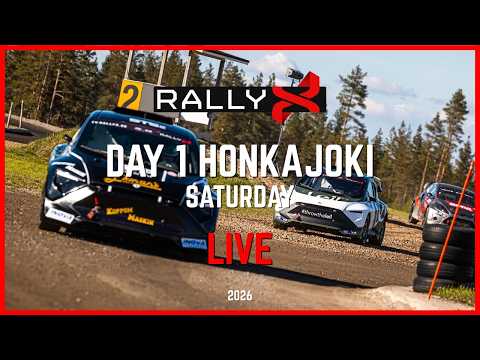 RallyX TV describes this as a live broadcast from RallyX 2026 in Honkajoki, day one on Saturday 23 May. The event schedule places the meeting at Pesämäen Motorsports Centre, giving viewers a record of the competition that has made the venue visible beyond the region. It is motorsport coverage, not a general travel guide, so check Pesämäki’s own information for future race dates, access and visitor arrangements.