Hämeenkyrö is a municipality in Pirkanmaa, northwest of Tampere, with more than one centre and no single “village” that stands for the whole place. Its administrative centre sits by Kirkkojärvi; Kyröskoski grew into a separate industrial and service town around the river. Between them, and beyond them, are farmsteads, hamlets, ridges and the lakeside fields of Mahnala. Statistics Finland counted 10,249 residents in the municipality on 31 December 2025. That figure describes the entire municipality, not just either built-up centre.
A landscape that shaped a writer
Hämeenkyrö is closely associated with Frans Emil Sillanpää, born here in 1888 and awarded the 1939 Nobel Prize in Literature. The small Myllykolu croft in Kierikkala was his childhood home; it is now a museum that introduces visitors to the rural household and landscape he knew. Its rooms and modest scale are more revealing than a grand memorial: they show the material conditions behind a writer whose fiction returned to ordinary people and their relationship with nature. A local museum association acquired the house in 1958 and it opened as a museum in 1962. A summer theatre operates in the same yard, connecting literary memory with living local performance. Check seasonal opening and current performances before setting out.
The municipal centre offers a second historical anchor. The wooden, cruciform Hämeenkyrö Church dates to 1782. Opposite it, the local heritage museum occupies a former crown granary built in 1820 and displays roughly 4,000 objects, most collected in the municipality. At Jumesniemi, a church-school building from 1909–1910 is a distinctive reminder that small rural communities once combined education and worship under one roof. These places make a good cultural day, but they are separate stops and some open mainly in summer.
Kyröskoski: water power and an industrial town
Kyröskoski gives the municipality a different identity from the farm-and-lake landscape. The local waterfall drops about 22 metres. Before industry, village mills and a few crofts used the river; the municipal built-environment inventory says the area around the rapids remained largely wooded until the 1860s, and that an industrial settlement began to develop there from the 1870s. A paper mill later became central to the town’s history. The result is a place where the river’s force, industrial memory and everyday services sit close together. The rapids are not necessarily in a dramatic release whenever a visitor arrives: public “rapids shows” are scheduled events, so check the calendar rather than expecting a free-flowing spectacle.
The old industrial centre is also a practical base. Municipal information describes Kyröskoski as one of the municipality’s two main built-up areas, with shops, schools, everyday services and the Tippavaara service cluster. Café and meal options, local producers and small shops appear in the visitor directory. Frantsila’s organic herb farm adds a local-enterprise story to the visit; its shop and restaurant are useful stops when open, but their hours and seasonal offerings should be confirmed directly.
Mahnala, ridges and outdoor routes
For a slower excursion, follow the rural roads around Mahnala and Heinijärvi, where fields, lakes and ridges give the municipality its open, cultivated character. The local tourism service groups farm visits, cafés, a short nature trail by Mahnala Environmental School and a swimming stop at Mihari into a family day route. These are not one continuous walking path, so plan the transfers between them. In and around the built-up areas, Poussanharju has fitness and outdoor facilities; the broader tourism directory also maps walking, cycling and longer forest routes. A drive along the area’s scenic road lets visitors see how farms, villages and lake shores fit together, while a walk or swim gives the day a more active focus.
Hämeenkyrö’s past should be read from evidence rather than embellished with an ancient founding tale. A municipal heritage inventory places early settlement around the sheltered shores of Kyrösjärvi and Kirkkojärvi. The river corridor at Kyröskoski was comparatively lightly settled before the mill and industrial period. The municipality’s history collections contain archaeological and local-history material, but the public record cited here does not justify a Roman or other classical foundation story. The more compelling account is the documented change from lakeside settlement and agriculture to a water-powered industrial centre and, later, a pair of connected service centres.
Work, food and local services
The municipality’s 2026 budget, using Statistics Finland’s 2024 employment data, shows a mixed economy: services accounted for about 64 percent of jobs, processing for 27 percent and primary production for 8 percent. Retail and vehicle repair, construction, transport and manufacturing all feature in the local business mix, while agriculture remains visible in the countryside and in direct-to-visitor food experiences. The visitor economy is not limited to one attraction: it includes the Sillanpää sites, summer theatre, museums, farm shops, cafés, event venues and outdoor recreation.
Seasonal events and performances can add context to a visit, but dates change from year to year. The municipal event calendar and visitor pages are useful for checking what is open, finding meals and identifying local services. If time is short, choose one cultural anchor—Myllykolu or the church-and-museum pair—and one landscape experience around Mahnala or Kyröskoski, rather than trying to cover every village in a single afternoon.
Getting there
By car, Hämeenkyrö lies on the northbound Highway 3 corridor from Tampere, with local roads leading to the church centre, Kyröskoski, Myllykolu and the rural attractions. Long-distance buses on the Tampere–Ikaalinen–Kankaanpää corridor stop at Hämeenkyrö; municipal services also connect the centre with villages such as Sasi and Mahnala, though some run only on school days. Use the current Matkahuolto or operator timetable to plan the journey and transfers. The municipality is spread out, so reaching Myllykolu, a farm, the rapids and a lakeside stop in one day is easier with a car or a carefully planned bus-and-walk itinerary. Confirm opening hours, event dates and transport shortly before departure.
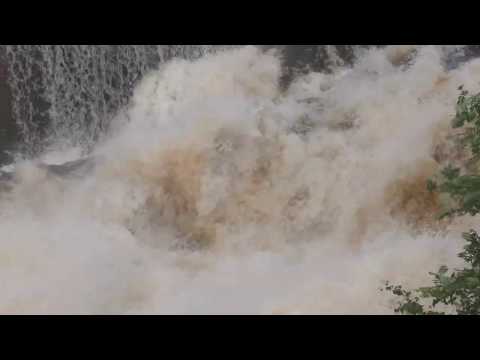 Hämeenkyrö in three videos: rapids, a herb farm and local theatre
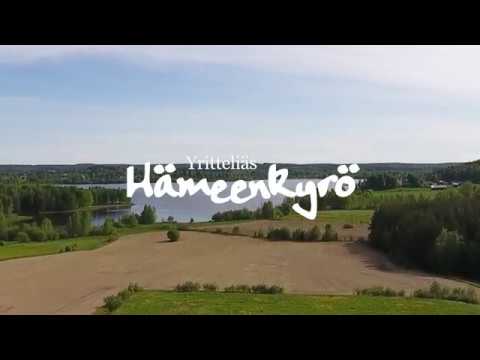 Hämeenkyrö’s municipal channel profiles Frantsila’s organic herb farm as a local business. The short feature offers a different view of the municipality from its better-known church, literary and river heritage: it presents a working enterprise connected to local production and visitor services. The video can help visitors decide whether the farm belongs on their route, but it does not confirm today’s shop or restaurant hours. Check directly with Frantsila before travelling.
 The title identifies this as a Myllykolu summer-theatre production of “Myllykolun Eemeli,” a play associated with the local stage tradition at Sillanpää’s childhood home. It gives a glimpse of how the literary site has also become a place for community performance, rather than only a museum stop. This is a record of a production, not a preview of the current season. Check the theatre’s latest programme and the museum’s opening times before planning a visit.