Kihniö is a small municipality in Pirkanmaa where the landscape does much of the talking: dark conifer woods, open mires, ridges and lakes shape a quiet rural region on the Suomenselkä watershed. Statistics Finland counted 1,248 residents across the municipality at 31 December 2025. The figure covers the whole municipal area, whose communities are spread between the centre, lake shores and forest country. Visitors come for outdoor space, but Kihniö’s appeal also lies in the way its museums make work, local memory and changing land use visible.
A rural centre shaped by its own institutions
Kihniö’s documented story is not a claim to a legendary ancient foundation. For generations, it belonged to the parish of Parkano; local residents’ campaign for their own church eventually produced a separate parish in 1918. The wooden Kihniö church, begun in 1915 and completed in 1917, became a landmark of that civic effort. The municipality followed in 1920. A cultural-environment inventory describes the centre’s growth through the 1920s and later decades, when a dairy, cooperative store, granary and community hall joined the church and parsonage, followed by a railway and a network of schools. The main street still reads as the service spine of a dispersed countryside rather than a compact old town.
Near the church, the municipal Esinemuseo gives that history a more personal scale. It opened in 1945 in a protected parish granary built in 1921. More than 2,500 objects, gathered mainly by local merchant Tarmo Markkula, range from everyday rural tools to hunting and fishing equipment. The collection offers a record of how people made a living and used the surrounding woods and waters. Its courtyard also includes the Sampo monument, a modern expression of local heritage-making; it should be read as cultural symbolism, not evidence that events from the Kalevala took place in Kihniö. The museum opens at announced seasonal times or by arrangement, so check before setting out.
From peat industry to a landscape in transition
Aitoneva is the place where Kihniö’s industrial past and environmental present meet most clearly. Industrial peat production began here in the early 1940s, when fuel was needed by railways and industry during wartime. The former production area now has a peat museum, an outdoor display of machinery, an environmental trail, a bird tower and resting shelters. The oldest machines date from the 1940s. Interpretive material follows the work and technology of peat extraction, while the trail shows restoration and wetland management on land shaped by production. This is not an untouched bog: traces of industry are part of what visitors see.
The municipality’s wider nature setting is protected in several places, including the extensive Päretkivenneva–Teerineva–Pohjoisneva mire conservation area in the north. Käskyvuori offers a different encounter with the terrain: a marked loop of about two kilometres passes the Käskylamminneva bog and climbs over rocky ground to a lookout tower and shelter. The final ascent is steep, so the route is not an easy stroll despite its short length. For a longer outing, the 63-kilometre Geopark circuit links Pyhäniemi, Käskyvuori and Aitoneva. Its Pyhäniemi–Käskyvuori section is used year-round; other sections are for snow-free conditions and may serve as snowmobile routes in winter. Check signs, conditions and fire restrictions before leaving the road.
Lake days, local culture and useful services
At Pyhäniemi, a sandy shore and pine forest frame Lake Kankarinjärvi. Holiday cabins and a restaurant make it the municipality’s most developed visitor base, with activities including swimming, fishing, cycling, tennis, padel and miniature golf listed by local tourism services. An electric fat bike can be rented for the Aure cycling route around the lake. In the centre, Puumila Taitotalo hosts an exhibition on Germund Paaer, the first chief designer of Kalevala jewellery, who spent his childhood and summers in Kihniö. A separate display in Ihantola recalls entrepreneur Kalevi Keihänen and the travel businesses associated with him. Opening arrangements vary.
Local economic plans identify metal, wood, tourism and services as development priorities; Aitoneva’s peat history is an especially visible industrial chapter, while today’s visitor offer rests on small-scale accommodation, food businesses and outdoor recreation. The centre has practical basics listed by the municipality’s tourism directory, including a grocery store, pharmacy, library and health services. Kihniö lies along Highway 23. Parkano is the rail gateway usually worth checking, but the onward bus timetable is seasonal and can be limited to school days; confirm a same-day connection with the operator or arrange a road transfer. Check all museum hours, restaurant service and trail access before travelling.
A rewarding visit can pair the church and Esinemuseo with an afternoon by Kankarinjärvi, then give a separate day to Aitoneva and Käskyvuori. The landscape is the constant, but each stop changes the view: a rural centre built around shared institutions, a working peatland turned into an open-air industrial archive, and lakeside paths that invite visitors to slow down.
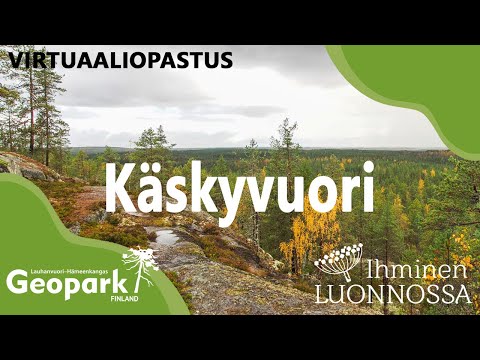 Kihniö in three videos: Käskyvuori, the village and Aitoneva
 This aerial introduction presents Kihniö as a whole and names three of its signature places: Käskyvuori, Pyhäniemi and the Aitoneva peat museum. It is an older promotional overview, so treat it as a visual first impression rather than a current service guide. The sequence is useful for understanding how lake shore, forest heights and industrial heritage sit within one rural municipality.
 The video is devoted to the Aitoneva peat museum in Kihniö. It offers a focused preview of a site where industrial peat-production history is interpreted alongside old machinery and a changing wetland landscape. Use it to decide whether the subject interests you; current opening dates, access and safety instructions should be checked with the site operator.