A small settlement in a lived-in valley
Ovanåker is a quiet church village in Hälsingland, set among fields, wooded slopes and the river country of Voxnan. Its scale is easy to miss if you treat it only as a stop between Edsbyn and Alfta; the church, old road and nearby farms make a compact place with a long parish story. Statistics Sweden counted 212 residents in the statistical locality of Ovanåker on 31 December 2010. That is a dated count for the settlement boundary used in that statistical release, not a present-day estimate and not the population of the much larger municipality.
What the records document
The municipal history places Edsbyn in a farmers’ list in 1276; that reference belongs to Edsbyn, not to Ovanåker. It then recounts how, in the sixteenth century, Edsbyn farmers sought a chapel to shorten their journey to services. The first chapel at Ovanåker was built in 1621–1622, and in 1639 Queen Christina’s decision allowed the parish to separate from Alfta. These are documented steps in the growth of a local religious centre, rather than evidence for an ancient town foundation.
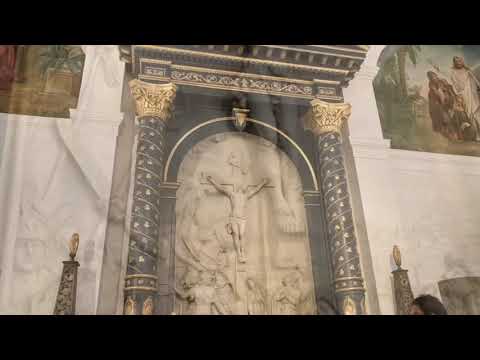
The present stone church was built from 1744 to 1753 close to the site of the earlier timber church. Its separate wooden bell tower keeps the silhouette modest. Inside, look for the altar relief by Carl Johan Dyfverman, dated 1890, and the older altar piece, once removed from the old church and now displayed near the font. The organ façade was made in 1845 by Jonas Wengström of Vängsbo; the instrument behind it has since been replaced. The parish account says services are generally held on Sundays and public holidays, but visitors should check the current calendar before planning to enter.
Churchyard, farms and the old road
The village is best approached slowly: the church and its setting sit within an agricultural landscape where the road network, farms and open fields still explain how people moved and worked. Municipal planning documents recognize cultural-environment values around the church, the rectory grounds and the older village fabric. Along the nearby Voxnan, the old road is also a recreational corridor. The parish’s Pilgrimsleden Hoppet follows about seven kilometres of Gamla landsvägen between S:t Olofs chapel and Ovanåker church. Its route notes mention milestones and farms along the way. It can be walked as a historical landscape route whether or not one approaches it as a religious pilgrimage; check trail conditions and daylight before setting out.
The municipality’s history also records iron discovered at Gymåsberget in 1725 and permission the following year for a furnace and bar-iron hammer at Selmån, the beginnings of Voxnabruk. This is a wider local industrial chapter, not an industry to attribute to the village centre itself. Today the municipality’s plan describes Edsbyn as more industry-oriented and Alfta as having a stronger service profile, with both offering a mix of shops, workplaces, homes and older farms. Alfta’s Ol-Anders farmhouse is the visitor centre for the decorated farmhouses of Hälsingland. Nearby Pallars and Jon-Lars are among the seven farms included in the UNESCO listing made in 2012; some houses are privately owned and open only on selected dates or by arrangement.
Getting around and planning a visit
Ovanåker works well as a short walking visit paired with time in Edsbyn or Alfta. The parish route page says bus 100 returns from the road junction towards Edsbyn or Söderhamn, but public-transport schedules change, so check the operator’s current timetable and the stop before relying on that connection. Visitor information for the municipality lists accommodation, food and activities across the area rather than promising a particular service in the village. Confirm opening hours for the church, visitor centre and farmhouse visits, and check seasonal trail conditions before travelling. The appeal here is not a crowded attraction but a clear view of how a parish centre, farm landscape and old river road fit together.
 Three Ovanåker videos: church, village and Hälsingland farms
 “Flyover - Ovanåker, Sweden” is the only item here centred on the village as a place. The uploader describes a short aerial flight over Ovanåker, also called Kyrkbyn in the description, recorded on 10 May 2020; the page gives a publication date of 12 May 2020 and a runtime of 6:09. That makes it a dated visual orientation, not a current map or evidence of present road or trail conditions. Pair it with the municipality’s current local information when planning a visit.
 Destination Hälsingland’s “Decorated Farmhouses of Hälsingland - Världsarvet Hälsingegårdar” broadens the view from one church village to the region’s decorated farm heritage. The verified description introduces the seven farmhouses included in the World Heritage listing, while the municipality identifies Pallars and Jon-Lars in Ovanåker municipality among them. The 6:59 video is useful context, but it should not be taken as confirmation that every property is open. Several are privately owned or receive visitors only on particular dates or by arrangement, so confirm access before travelling.