A hilltop village looking over the Potenza valley
Montelupone rises above the lower Potenza valley in the hills of Macerata province. From the edge of its historic centre, the land opens in long folds toward the Adriatic: fields, olive groves, vineyards and small settlements form the setting for a town whose beauty comes from its scale as much as its monuments. The Comune describes a landscape where arable fields and olive cultivation still sit alongside industry and a growing visitor economy. The result is a place with a working countryside around a compact, walkable old centre.
Istat’s provisional demographic balance records 3,380 residents in the entire municipality on 31 December 2025. That figure includes the central settlement, San Firmano and homes scattered across the municipal territory; it is not a count of people living only inside the medieval walls. The town centre stands about 272 metres above sea level. Macerata is roughly 13 kilometres away, Recanati about nine, and the Adriatic coast around 12 kilometres. These distances make Montelupone a useful inland stop between the provincial capital, the historic town of Recanati and the coast.
Four gates and a civic square
The older town keeps the outline of a fortified settlement. Its walls still frame the lanes and four historic entrances, while worn paving and short climbs lead visitors toward Piazza del Comune. This square is the village’s civic room: the fourteenth-century Palazzo del Podestà, also called the Palazzo dei Priori, faces the Torre Civica and the later town hall. The palace’s arcaded front and pointed windows give the square a recognisably medieval profile; the tower rises directly beside it, a practical landmark as well as a reminder of the town’s communal authority.
Inside the Palazzo del Podestà, the Pinacoteca Civica Corrado Pellini brings church art, local collections and archaeological pieces together. One of its best-known works is an Immaculate Conception painted in 1631 by the Flemish artist Ernst Van Schayck. The collection also includes sculpture, liturgical objects, furniture and archaeological finds associated with the area. Nearby churches extend the visit: San Francesco and the collegiate church preserve paintings and altarpieces, including works attributed to the sixteenth-century painter Antonio da Faenza. The civic museums and theatre do not follow a dependable daily tourist schedule in the listings consulted, so contact the Comune before building a visit around an interior opening.
A small theatre with a painted sky
The nineteenth-century Teatro Nicola degli Angeli occupies the town hall. It offers a different scale of cultural encounter from the larger theatres of the region: a local stage in a small community, used for performances and public events rather than as a monument kept apart from everyday life. The ceiling, painted by Domenico Ferri in 1887, turns the room into a bright illusion of clouds and young musical figures. The Regione Marche included the theatre in its 2026 museum-opening programme, confirming that it remains part of the town’s cultural offer; access depends on the programme, so check before travelling.
San Firmano, down in the valley
Montelupone is not only its hilltop centre. In the flatter Potenza valley, the hamlet of San Firmano is home to the Romanesque abbey dedicated to the town’s patron saint. Parish history places the foundation in 986, but the building visible today records later rebuilding and artistic additions. The complex was damaged in the thirteenth century; local ecclesiastical accounts date the recovery of San Firmano’s remains to 1256, when the presbytery was raised and a crypt created. Inside, a high staircase leads to the sanctuary and a fifteenth-century fresco of the Madonna and Child with Saints Firmano and Sebastian, attributed to Giacomo di Nicola da Recanati. A painted terracotta statue of the saint is kept in the crypt.
A popular devotional custom asks visitors to pass beneath an arch in the crypt several times for relief from bone pain. It belongs to local religious tradition, not to medical evidence. The abbey is an atmospheric counterpart to the fortified centre: quieter, set in the valley, and best reached as a separate stop by car or on a planned local excursion.
The artichoke that belongs to this place
Montelupone’s distinctive agricultural emblem is the carciofo montelupone, known locally as scarciofeno. The Marche regional register lists it as a traditional product, and the regional agricultural biodiversity catalogue records its local growing area. Its season is in spring, when the tender artichokes appear in fresh dishes and preserved preparations. The annual artichoke fair gives the product a public setting, with food, music and local associations; the exact dates change, so check the next programme rather than relying on an old calendar. Small growers also sell seasonal produce directly, but availability depends on harvest and each producer’s arrangements.
The artichoke is part of a broader rural economy rather than a decorative brand alone. The municipal programme describes olive growing, mixed crops and fields in the Potenza basin, while artisans, services and industry provide work beyond agriculture. Visiting in spring makes it easier to connect the landscape, seasonal food and community events, but the old town has reasons to visit throughout the year: its streets, art, theatre and valley setting do not depend on a festival weekend.
Walks, nearby towns and a practical route
Give yourself time to walk the wall circuit, stop in the main square and look out over the valley before driving down to San Firmano. The surrounding countryside suits short walks on local roads and rural paths, but route markings and access can change; ask locally for current conditions rather than assuming every line on an old map is maintained. Recanati makes a natural next stop for its literary and civic heritage; Macerata offers a larger set of museums, theatres and services, while Potenza Picena and Civitanova Marche connect the inland hills to the Adriatic.
Contram lists a regional bus corridor between Macerata, Montelupone, Potenza Picena and Civitanova Marche. Its published timetable distinguishes ordinary weekdays from school-day and other limited services. Check the operator’s current trip planner for the date and direction you need, especially at weekends and during school holidays. By car, the municipal plan places Montelupone close to the road along the Potenza valley, which links Macerata with the coast; local roads climb from the valley to the historic centre. Museum, church and theatre access can vary, so confirm openings as well as transport before setting out.
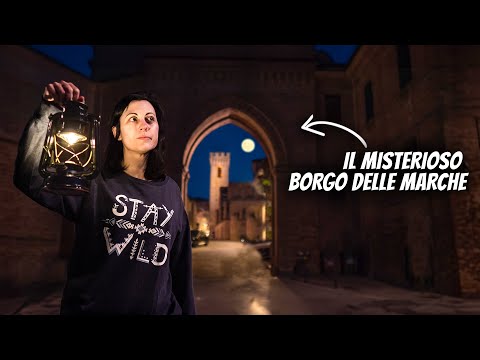 Montelupone in tre video: il borgo, San Firmano e il carciofo
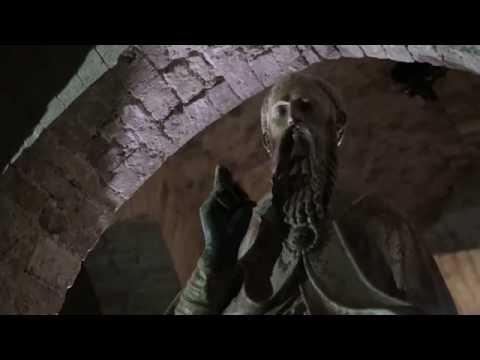 Marche Tourism’s one-minute film introduces the Abbey of San Firmano through its brick Romanesque structure and interior, especially the raised presbytery and staircase. It is a concise visual orientation rather than a full interpretive guide. The narration associates the abbey with a foundation in 986; that is a traditional historical date, while the present building also reflects later phases of rebuilding and decoration. Pairing the film with a visit makes the valley location and the church’s unusual interior easier to appreciate.
 AMAP Marche dedicates this episode of its regional food and agricultural-biodiversity series to the Montelupone artichoke. The piece is useful for understanding why the crop carries local identity: it is treated as a cultivated variety and a food tradition, not simply as a dish on a festival menu. It gives the visitor a way to connect the surrounding fields with seasonal cooking and local producers. The programme is an agricultural feature, not a schedule of farms or tastings; check directly before arranging a visit.