Ripatransone rises on a ridge in southern Marche, between the valleys of the Tesino and the Menocchia and about twelve kilometres from the Adriatic. The historic centre sits around 494 metres above sea level, while Colle San Nicolò reaches 508 metres. The municipality covers roughly 74 square kilometres, so the town seen from its viewpoints is only one part of a wider territory of farms, woods and small settlements. ISTAT’s estimate for 1 January 2026 gives 4,105 residents for the whole municipality. The view is the first reason to stop, but Ripatransone rewards a slower walk: its five hills, narrow lanes, small squares and long Corso Vittorio Emanuele form a layered civic landscape rather than a single postcard street.
What the records say—and what remains tradition
Archaeological evidence from the area includes prehistoric material and finds associated with the Piceni, whose culture flourished in this part of central Italy between the ninth and third centuries BCE. These traces establish long human presence; they do not by themselves prove that the present town began as a Roman foundation. The municipal history presents the story of four early hilltop castles—Monte Antico, Capodimonte, Roflano and Agello—as a tradition, and treats the proposed derivation of the name from ripa, a slope or cliff, and a landholder called Transone as a hypothesis. A firmer civic marker is 1205, when a contract with Bishop Adenolfo granted residents the rights to elect consuls and make a statute. Pope Pius V elevated Ripatransone to city and diocesan seat in 1571. Surviving walls and towers help explain the later epithet Propugnaculum Piceni, the bulwark of Piceno.
Walk the ridge and look inside
Start at Porta di Monte Antico, a fifteenth- and sixteenth-century entrance in the old defensive circuit, then follow the historic route toward Largo Giuseppe Speranza and the belvedere at San Nicolò. On a clear day the outlook spans the Adriatic, coastal towns and the Apennines. The medieval street pattern continues along Corso Vittorio Emanuele, where churches and palaces built between the fifteenth and nineteenth centuries accompany the walk. The former parish church of San Nicolò is particularly telling: its apse is attributed to the ninth century, while the entrance and later interior alterations belong to different phases. Piazza XX Settembre is the civic heart, with the town hall and tourist office nearby.
For a small hill town, Ripatransone has an unusually broad museum offer. The archaeological museum Cesare Cellini, founded in 1877, presents prehistoric, Picene and Roman finds from the territory. Palazzo Bonomi-Gera holds art collections including a picture gallery and plaster casts; other collections explore sacred art, rural life and crafts. The historic Luigi Mercantini theatre adds a performance venue to the centre. Opening arrangements vary: the Fire Horse museum, for example, is listed as visitable by reservation, and church or museum access may change seasonally. Ask the IAT in Piazza XX Settembre before building a day around indoor visits.
Vineyards, woods and a shared tradition
Vines and olive trees are part of the local economy as well as the scenery. The municipal landscape account describes about 500 agricultural businesses and identifies wine and olive growing as leading activities; it names Pecorino, Passerina and Montepulciano among local grape varieties. Small fields, vineyards and olive rows make a patchwork across the hills, alongside cereals, fruit and vegetables. A tasting or farm visit can round out a stay, but arrange it directly with the producer. Walking and cycling itineraries continue beyond the walls toward woodland, the calanchi and the natural area between Ripatransone and Cupra Marittima.
The Cavallo di Fuoco, the town’s best-known annual event, joins religious observance and public spectacle. Local accounts trace it to the Easter octave of 1682, when a fireworks maker celebrating the coronation of the Madonna di San Giovanni improvised a fiery display; residents repeated the scene the following year and developed it into a tradition. This is the town’s historical account of the custom, not evidence of an ancient pagan survival. The date shifts with Easter and crowd arrangements change, so consult the current municipal programme.
Getting there and planning a visit
San Benedetto del Tronto is the practical rail gateway on the Adriatic line. From there, START extra-urban routes 11EXTR and 12EXTR serve Ripatransone through Grottammare and neighbouring hill communities; frequency depends on the day. From Ascoli Piceno, the regional bus corridor reaches San Benedetto, where a change may be needed for the hill route. Check the operator’s current timetable and same-day connection before setting out. By car, Grottammare, Cupra Marittima and San Benedetto make natural coastal additions; inland, Cossignano and Offida offer another view of the Piceno. The tourist office can confirm museum hours, events and guided walks. The steep lanes are best explored on foot with time for pauses; the wider agricultural territory is easier to reach by car or a pre-arranged local excursion.
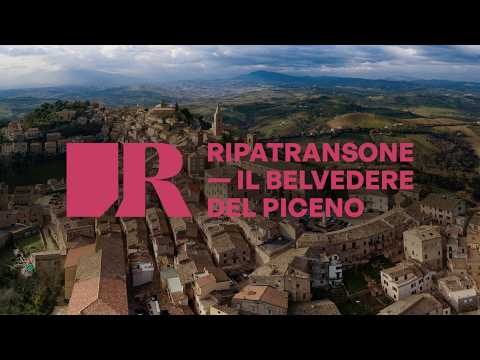 Ripatransone on film: the belvedere, local life and the Fire Horse
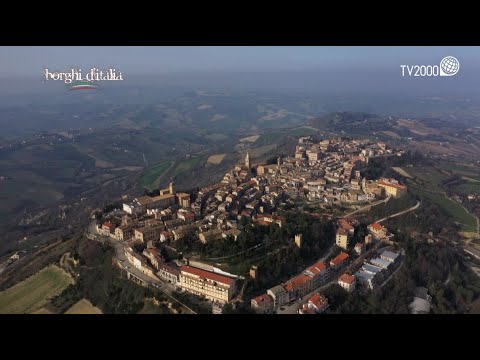 TV2000’s Borghi d’Italia episode is the broadest of the three selections. Its published programme description says it meets the mayor, parish priest and other residents, visits the historic centre and cathedral, and covers the diocesan, archaeological and rural-life museums, the Fire Horse and local wine and food. That range shows how heritage, faith, agriculture and community life sit together. It was published in 2021, so its museum scenes are not proof that every collection is open today; check present-day notices before planning a visit.
 Dennis Vagnoni’s 2024 recording focuses on the Cavallo di Fuoco itself, giving the set a view of the event rather than another general town introduction. The title and upload date identify the edition, while the local account traces the custom to the Easter octave of 1682 and explains its later development. This independent recording is best used to see the scale and atmosphere of the celebration; it does not provide current crowd arrangements, safety information or the date for the next edition. Those details change and should come from the municipality’s current programme.