A hill town between the Adriatic and the Apennines
Montefiore Conca stands on a high ridge above the Conca valley, where the coastal plain gives way to the rolling inland hills of Rimini province. The fortress dominates the skyline, but the town is more than the castle on its summit: houses gather in a half-circle against the walls, lanes thread through old gates, and the surrounding countryside remains a mix of farms, olive groves, woodland and small settlements. On clear days, the municipality says, the castle’s headland offers a view across a broad stretch of the Adriatic coast.
Istat’s provisional demographic balance records 2,312 residents in the whole municipality on 31 December 2025. That is a municipal population, not a count for the historic centre alone. The distinction helps explain the place visitors encounter: a small town with a compact medieval core, a local community and services spread through its territory, rather than a self-contained monument built only for tourism.
What the records say about the fortress
The Comune’s heritage account says the Castrum Montis Floris first appears in a twelfth-century document. Later records use forms such as Mons Floris and Montefiore. The Malatesta acquired rights over the place in 1322, and by 1347 the Rocca was sufficiently established to host the King and Queen of Hungary. It began as a defensive stronghold, then grew into a residence and political centre in the first half of the fourteenth century; Sigismondo Pandolfo Malatesta further strengthened and embellished it in the early fifteenth century.
There is a useful correction to the familiar single-date story. Older summaries often give about 1337 as the castle’s foundation under Malatesta Guastafamiglia. The municipality now notes that archaeological work begun in 2006 changed how the site and written records are understood. The surviving evidence supports a longer sequence of occupation and building; it does not make one year the complete story. The town’s published historical record begins in the twelfth century, and the castle’s later stages are more securely connected to documented Malatesta ownership and use.
After the Malatesta period, the fortress and town passed through the contest between the Malatesta and Montefeltro powers and later came under other rulers, including papal, Borgia and Venetian control. The castle served both as a military position and as a residence able to receive important guests. Its elevated position mattered because the Conca valley was a route inland from the coast, while its rooms and painted halls expressed the family’s authority as well as its taste.
Inside the Rocca: rooms, paintings and archaeological finds
The Rocca Malatestiana is the town’s central visit. Its severe square mass and high walls make a strong contrast with the softer landscape beyond. Inside, long stairways link floors and restored rooms, including the Sala dell’Imperatore, where fourteenth-century paintings are attributed to Jacopo Avanzi. Municipal material describes frescoes drawing on the Aeneid and a high vaulted space; the castle’s rooms also preserve later residential decoration and displays connected with the building’s history.
Excavations recovered objects that bring ordinary life into view: glazed ceramics from different periods, Venetian glass, coins, work tools, weapons and a bronze seal. Together they speak of a lived-in court and fortress, not only the battles associated with the Malatesta name. The castle has seasonal public hours and guided visits; the current regional heritage listing gives an autumn and winter schedule that changes as the season turns. Check its latest opening days, ticket rules and booking instructions before travelling. Narrow stairs and uneven historic surfaces can make access different from the open streets below, so ask the ticket office about mobility needs.
San Paolo and the artistic life of the borgo
A short walk through the old ring of streets leads to the parish church of San Paolo, near Porta Curina. The municipality dates its origins to the twelfth century and describes a late-thirteenth-century stone portal with a relief of the Mystic Lamb. Inside, much of the present appearance follows later rebuilding, but the art spans several periods: a Madonna della Misericordia altarpiece attributed to Bernardino Dolci, a Madonna of the Milk fresco linked to the same artist or workshop, and a fourteenth-century painted wooden Crucifix by a Rimini painter in the circle of Baronzio. These details make San Paolo a destination in its own right, not merely a stop on the way to the castle.
The nineteenth-century Teatro Malatesta adds a civic cultural space. The Comune lists a 168-seat auditorium used for performances, workshops and seasonal programmes. Recent municipal notices show that the town’s cultural calendar includes theatre, talks, art and food events, but access depends on the programme. A small settlement’s public life is visible in these places as much as in its medieval walls.
Between history and the story of Costanza
Montefiore’s most famous romantic tale concerns Costanza Malatesta and the knight Ormanno, said to have met in the castle and to have been killed there in 1378. The town’s visitor material retells the story with strong conviction, while the regional heritage listing introduces the lovers as a legend. Without a cited contemporary record establishing the romance and murder, it should be presented as local storytelling, not as settled fact. A walk named for Donna Costanza and the castle’s themed events keep the tale alive; the documented history of the Malatesta family and the fortress can be appreciated without treating a haunting or a clandestine love story as evidence.
This distinction matters because the town’s real past is already compelling: the twelfth-century written reference, the Malatesta takeover, royal guests, archaeological finds and later political changes are enough to make the fortress vivid. Legend adds a layer to how people remember a place, but it cannot replace the historical record.
Food, farming and the seasons
The local landscape supports olives, chestnuts, vineyards, small farms and food producers. The municipality’s tradition page highlights an olive festival in the hamlet of Serbadone and an autumn chestnut gathering; its recent Mangiarsano programme brought local producers of meat, flour, bread, cheeses, honey, preserves, wine and spirits into the borgo. These examples show a rural economy linked to agriculture and regional food culture, alongside hospitality, cultural visits and community events. They do not imply that every producer has a permanent shop or tasting room in the old centre, so contact businesses before making a visit part of the itinerary.
Rocca di Luna, held in July, turns the streets and fortress into a multi-day programme of music, theatre, crafts and fantasy. Its 2026 edition used dragons, archers and imagined medieval settings; it is a contemporary festival, not a reconstruction of a single historical event. The annual Good Friday procession, chestnut season and olive gathering offer different ways to encounter the town’s religious and rural calendar. Dates change, and the municipal event page is the best place to confirm the next programme.
Walking routes and places nearby
The municipal visitor brochure describes a roughly one-kilometre walk around the wall circuit, known as the Passeggiata di Donna Costanza, with ten towers and information panels. The name refers to the local story, not proof of the romance. The same guide lists a wider network of more than 40 kilometres of trails for short or longer walks. There are also cycling routes across the Valconca and the Malatesta fortresses; the Comune describes one circuit as challenging, with repeated climbs. Check current maps and conditions, and choose a route that matches your fitness and daylight.
Montefiore works well as a base for exploring the valley rather than as an isolated stop. Nearby Mondaino and Saludecio preserve their own historic centres; Morciano is a service hub, while Cattolica and Rimini connect the inland hills to the coast. The municipal route guide links the town with this wider network of villages, food producers and historic sites. Allow enough time for the twisting roads and the stop itself rather than trying to cover the whole valley in one quick outing.
How to arrive and plan the day
Start Romagna’s current winter 2026–27 timetable groups lines 174, 175 and 180 along the Rimini–Riccione–Morciano–Montefiore–Mondaino–Tavoleto corridor. Line 180 serves the stop at Piazza Libertà in Montefiore and connects with Morciano; other listed journeys run from Rimini and Riccione, but some services are limited to school days or particular weekdays. Check the operator’s live timetable for the date and direction of travel, including any changes or substitutions. By car, approach inland through the Conca valley and Morciano, then follow the local road up to Montefiore; allow for winding roads and seasonal traffic.
A balanced day combines a walk through the old lanes, a visit to the Rocca and San Paolo if open, and a meal or tasting arranged with local producers. If you have more time, add a marked trail or another town in the valley. Opening hours, event dates, bus connections and access inside historic buildings all vary; verify them before leaving.
 Montefiore Conca in tre video: la Rocca, le tradizioni e la Valconca
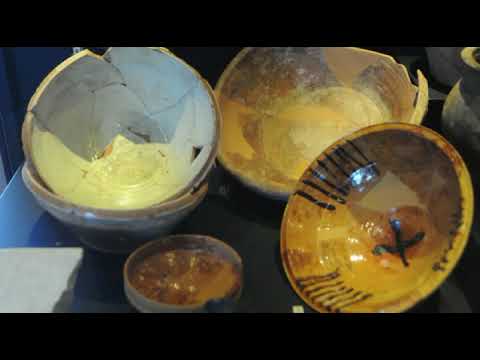 Emilia Romagna Tourism presents the Rocca through a short castle story that draws on the tale of Costanza Malatesta and Ormanno and its supernatural afterlife. That framing makes the film engaging as folklore, but its ghostly elements should be understood as storytelling rather than historical evidence. The fortress has a documented record of Malatesta ownership, later building phases and archaeological finds; those are the firmer basis for reading the site. The video works best as an atmospheric introduction, followed by a visit to the castle’s rooms and the municipality’s historical material.
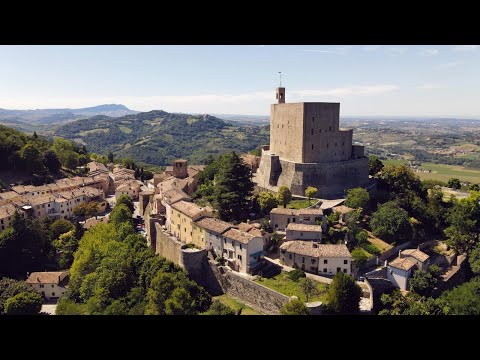 The municipality’s Valconca film places Montefiore within a wider itinerary of hill villages, countryside and wine culture. Its value is the regional perspective: the town is not an isolated castle stop, but one point in a landscape connected by local roads, agricultural production and neighbouring settlements. The video’s route is a useful source of ideas, while actual winery visits, tastings and transport need separate checking because services and opening times vary. The tourism portal lists the item in 2024, whereas YouTube records the upload in 2022; the original platform date is used here.